Tesla Optimus released this year?
$105.44K
2
2
Tesla Optimus released this year?

$105.44K
2
2
AI Analysis
Trader mode: Actionable analysis for identifying opportunities and edge
About This Event
Before 2027 If the Tesla Optimus (or another humanoid robot) is on sale to the general public before Dec 31, 2026, then the market resolves to Yes. Early close condition: If this event occurs, the market will close the following 10am ET. If this event occurs, the market will close the following 10am ET.
Current Market Outlook
Prediction markets price a Tesla Optimus general release before 2027 at just 16%. That is a low probability, meaning traders see this as a long shot. A $105K combined volume across Kalshi and Polymarket suggests moderate interest, but the 7.5% spread between platforms signals real disagreement. Polymarket prices higher, which could reflect a more speculative trader base there.
Key Factors Driving the Odds
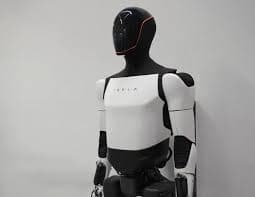
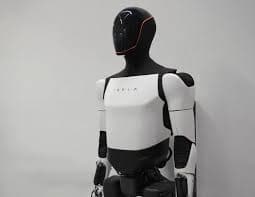
Tesla has shown Optimus prototypes walking, picking up objects, and sorting parts in controlled factory settings. But a general public release requires far more. The robot needs reliable autonomy, safe operation around humans, mass production capability, and regulatory approvals. None of these exist yet.
Elon Musk has a track record of aggressive timelines. In 2021 he said Optimus would be ready in 2022. It was not. In 2023 he claimed production would start in 2024. It did not. The market is pricing in this pattern of overpromising.
The hardware itself is not the bottleneck. Tesla can build actuators, sensors, and batteries. The software is the problem. General purpose humanoid robots that work in unstructured environments like homes or offices do not exist anywhere. Boston Dynamics has spent decades on this and still sells only to researchers. Figure AI raised $675 million and has no commercial product.
What Could Change These Odds
A major catalyst would be Tesla announcing a specific release date with preorders. If Musk says Optimus ships in Q3 2026 and shows a working unit performing real tasks, odds could jump to 40% or higher. But that same announcement would need to survive his habit of missing deadlines.
Another trigger would be a competitor like Figure or Agility Robotics actually delivering a commercial humanoid robot. That would prove the technology is real and pressure Tesla to accelerate. But it could also show how hard the problem remains.
The biggest risk to the current 16% price is that it is too high. If 2026 passes with no Optimus release, this resolves to No and traders lose. Given Musk's history, betting Yes at 16% looks like a gamble on a miracle, not a calculated trade.
AI-generated analysis based on market data. Not financial advice.
Overview
The Tesla Optimus humanoid robot, initially announced in 2021, represents Elon Musk's vision for a general-purpose bipedal robot designed to perform dangerous, repetitive, or physically demanding tasks. The prediction market question asks whether Tesla will release Optimus to the general public by June 30, 2026. The market defines 'release' as making the robot available for purchase by consumers, excluding internal factory use, employee-only programs, or enterprise pilots. This distinction is critical because Tesla has demonstrated Optimus prototypes in factory settings and on stage, but has not yet offered it for sale. Tesla first unveiled a concept version of Optimus at its AI Day in August 2021, with Musk claiming the robot could eventually be produced for under $20,000. In September 2022, Tesla showed a working prototype that could walk and wave. By May 2024, Musk stated that Optimus was already performing tasks in Tesla's factories, such as sorting battery cells. However, these demonstrations have been limited and controlled, and the company has not announced a consumer release date or price. Interest in Optimus is driven by the broader humanoid robotics race, with competitors like Boston Dynamics' Atlas, Figure AI's Figure 01, and Agility Robotics' Digit also developing commercial humanoid robots. Tesla's advantage lies in its vertical integration: the same battery, motor, and AI technology used in Tesla vehicles can be adapted for Optimus. Musk has described Optimus as potentially more valuable than Tesla's car business, projecting a market of 10-20 billion robots globally. Skeptics point to the history of overpromised timelines from Musk, including the long-delayed Tesla Cybertruck and Full Self-Driving technology. The question matters because a consumer release of Optimus would mark a major milestone in robotics, potentially transforming labor markets, manufacturing, and home automation. It would also test whether Tesla can move beyond automotive manufacturing into a new hardware category. The market's June 2026 deadline gives Tesla roughly two more years to move from factory prototypes to a commercial product, a timeline that many robotics experts consider aggressive but possible.
Historical Context
The concept of humanoid robots dates back to the 1970s, when Japanese researchers at Waseda University developed WABOT-1, the first full-scale humanoid robot capable of walking and basic communication. In the 1990s, Honda's ASIMO project became the most famous humanoid robot, demonstrating bipedal walking and stair climbing but never moving beyond research demonstrations. ASIMO was retired in 2018 without ever being commercialized. Boston Dynamics, spun out of MIT in 1992, pushed humanoid robotics further with the PETMAN and later Atlas robots. Atlas has demonstrated parkour, backflips, and complex manipulation, but remains a research platform not for sale. The company was acquired by Hyundai in 2020 for $1.1 billion. Agility Robotics, founded in 2015, took a different approach with Digit, a bipedal robot designed for warehouse logistics, and began limited commercial sales in 2023. Tesla's entry into humanoid robotics in 2021 surprised many because the company had no prior robotics experience outside of vehicle manufacturing. However, Musk argued that Tesla's expertise in batteries, electric motors, sensors, and AI gave it a unique advantage. The company's approach differed from competitors by emphasizing low-cost manufacturing from the start, claiming Optimus could be built for under $20,000 compared to Boston Dynamics' Atlas which costs millions per unit. Tesla's history of product launches shows a pattern of ambitious announcements followed by delays: the Cybertruck was announced in 2019 and began deliveries in late 2023, the Roadster was announced in 2017 and still has no delivery date, and the Semi truck was announced in 2017 with first deliveries in 2022.
Why It Matters
If Tesla releases Optimus to consumers by June 2026, it would be the first mass-produced humanoid robot available to the general public. This would have immediate implications for labor markets, particularly in industries like manufacturing, logistics, and retail where repetitive physical tasks dominate. Companies like Amazon, FedEx, and Walmart are already testing robots for warehouse work, but a consumer-grade humanoid could accelerate automation in smaller businesses and even homes. The economic impact could be substantial: Goldman Sachs estimated in 2022 that the humanoid robot market could reach $6 billion by 2030 and $154 billion by 2035 if technical challenges are solved. The broader significance extends beyond economics. Widespread humanoid robot adoption raises questions about job displacement, safety standards, and ethical use. Tesla's approach of using the same AI system as its cars means that any flaws or failures in Optimus could have legal and reputational consequences for the company. The market's resolution will also affect investor confidence in Tesla's ability to execute on new product categories, influencing the company's stock price and future fundraising. For the robotics industry as a whole, a successful Tesla launch would validate the humanoid form factor for commercial use, potentially triggering a wave of investment and competition.
Current Status
As of early 2025, Tesla has demonstrated Optimus performing factory tasks such as sorting battery cells and moving boxes in controlled environments. The company released videos in December 2023 and February 2024 showing the second-generation Optimus walking more smoothly and handling objects with improved dexterity. However, Tesla has not announced a consumer release date, price, or production timeline. Musk stated in April 2024 that Optimus would be 'in limited production' by the end of 2024, but this has not materialized. The robot remains in prototype phase, with no evidence of mass production capability or regulatory approvals needed for consumer sales. Competitors like Figure AI and Agility Robotics have also not released consumer humanoid robots, though Agility's Digit is available for enterprise purchase at around $250,000 per unit.
Frequently Asked Questions
When will Tesla Optimus be available for purchase?
Tesla has not announced a specific consumer release date. Elon Musk has said limited production could begin in 2024 or 2025, but these statements have not been backed by concrete plans. The prediction market resolves on whether a consumer release happens by June 30, 2026.
How much will Tesla Optimus cost?
Elon Musk has said the robot could cost under $20,000, but no official price has been announced. The actual cost will depend on production scale, component costs, and whether Tesla can achieve the manufacturing efficiencies it claims.
Educational content is AI-generated and sourced from Wikipedia. It should not be considered financial advice.