This event has ended. Showing historical data.
Will Russia enter Stinky by...?
$39.18K
1
1
Will Russia enter Stinky by...?

$39.18K
1
1
AI Analysis
Trader mode: Actionable analysis for identifying opportunities and edge
About This Event
This market will resolve to “Yes” if, according to the ISW map, Russia captures any territory of Stinky, Donetsk Oblast, (48.578829902717374° N, 37.73960567273168° E) between market creation and the specified date (ET). Territory will be considered captured if any part of the specified territory is shaded under a below specified layer on the ISW map (https://storymaps.arcgis.com/stories/36a7f6a6f5a9448496de641cf64bd375) by the resolution date. Otherwise, the market will resolve to “No”. For an
Current Market Outlook
Polymarket traders currently price a Russian capture of Stinky, Donetsk Oblast, by May 31 at just 18%. That's a roughly 1-in-5 chance, meaning the market views this as a possible but unlikely outcome. The settlement criteria hinge on the Institute for the Study of War's map, which must show any portion of the village shaded as Russian-controlled by the resolution date. With only $39,000 in volume, this is a thin market, so the price reflects a small number of informed positions rather than deep consensus. The market is now past due, which suggests either the resolution process is lagging or the event itself is in a gray zone on the ground.
Key Factors Driving the Odds
Stinky sits near the T-0504 highway southwest of Kostiantynivka, a town that has become a focal point of Russian offensive operations in western Donetsk. Russian forces have been grinding through the area for months, but their advance has slowed considerably since late 2024 due to attrition and Ukrainian defensive lines anchored on the Vovcha River. The 18% price likely reflects two competing realities: Russian tactical pressure is real, but the village's position behind a series of fortified settlements makes a clean, verifiable capture within the window unlikely. ISW's map updates are also conservative, often lagging actual ground truth by days or weeks, which historically depresses yes-prices on these micro-territory markets.
What Could Change These Odds
The biggest catalyst would be a confirmed Russian breakthrough at Kostiantynivka itself, which would open a direct corridor to Stinky. That hasn't happened, and Ukrainian forces have been rotating fresh brigades into the sector. If Russian assaults intensify following spring thaw conditions, which typically favor defensive positions, the odds could shift. But the resolution window has effectively closed. The market's real value now is as a snapshot of how traders assessed a niche tactical question during a period of positional warfare, not as a live trading opportunity.
Cross-Platform Analysis
This market trades only on Polymarket, with no Kalshi equivalent. That's unsurprising given the hyper-local scope. Kalshi tends to list broader geopolitical contracts with higher public interest, while Polymarket's long tail accommodates these granular military developments. The absence of a cross-platform comparison means the 18% price carries no arbitrage signal, but it also means the figure is more fragile, driven by a handful of traders with specific ISW map knowledge.
AI-generated analysis based on market data. Not financial advice.
Overview
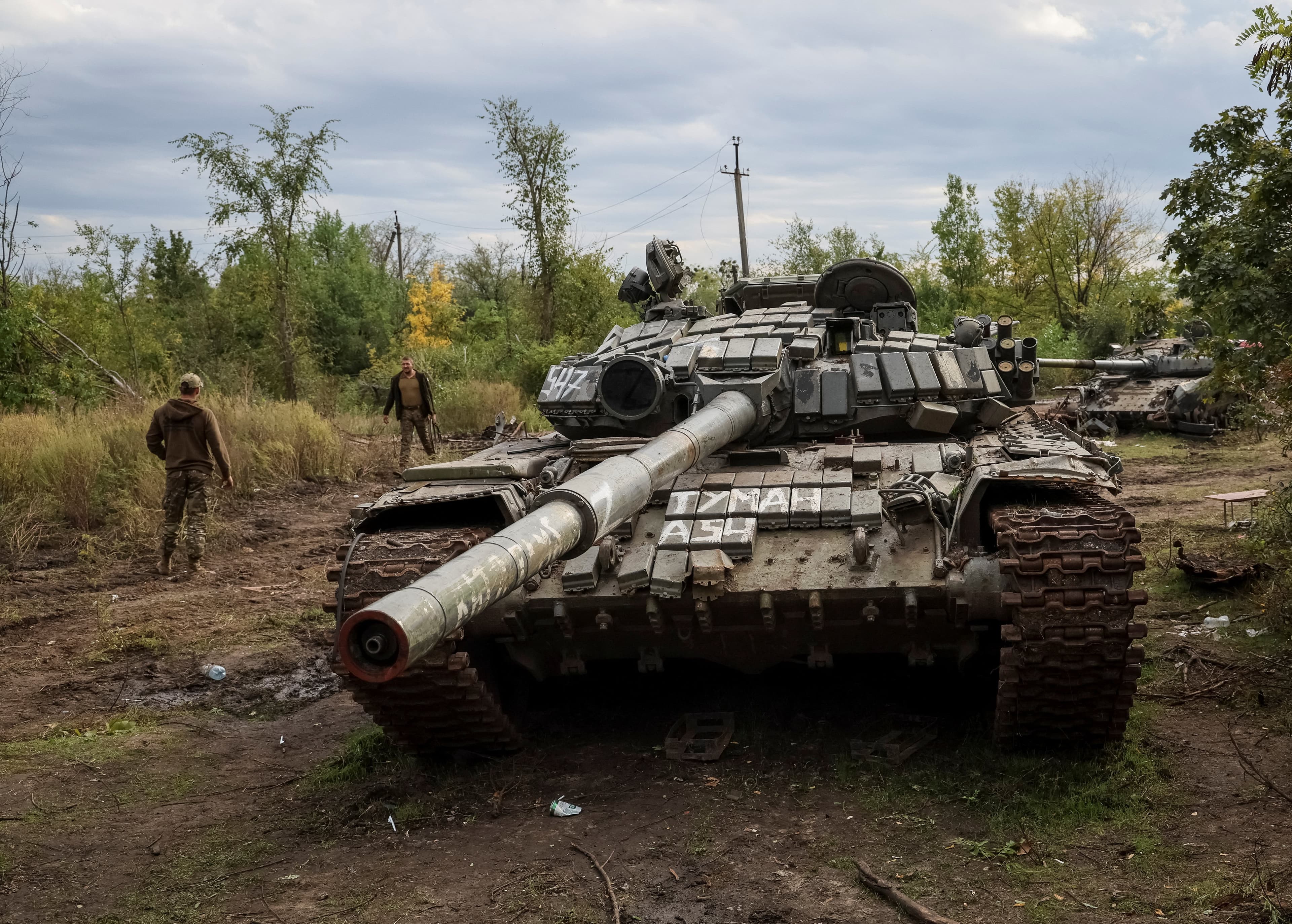
This prediction market asks whether Russian forces will capture any part of a small settlement in Donetsk Oblast, Ukraine, referred to as 'Stinky' (coordinates 48.5788° N, 37.7396° E), by a specified date. The resolution relies on the Institute for the Study of War (ISW) map, which tracks territorial control in Ukraine based on open-source intelligence. A 'Yes' outcome requires that any part of the settlement be shaded as Russian-controlled on the ISW map by the resolution date. The settlement, likely a village or small town, sits in the eastern Donetsk region, an area that has seen heavy fighting since Russia's full-scale invasion in February 2022. The market captures the granular, localized nature of modern conflict tracking, where even tiny settlements become strategic indicators of broader military progress. For analysts, such markets reflect real-time assessments of battlefield dynamics, often drawing on daily ISW updates, Ukrainian General Staff reports, and geolocated combat footage. The interest in this market stems from the intense public and strategic focus on the Donbas, where Russia has made incremental advances, and where the capture of even small villages can signal shifts in frontline stability. The market also highlights the role of crowd-sourced prediction in geopolitical forecasting, offering a data point beyond official statements. The outcome hinges on both military operations and the accuracy of ISW's mapping methodology, which relies on verified visual and satellite evidence, making it a reliable but not instantaneous source. As of late 2025, the frontline in Donetsk remains dynamic, with Russian forces attempting to push westward toward key logistical hubs like Pokrovsk and Kostiantynivka, and the fate of 'Stinky' is part of that larger offensive. The market's resolution date, though unspecified in the prompt, would likely be within weeks or months, reflecting the fast-paced nature of territorial changes in the region. For those tracking the war, this market offers a microcosmic view of the grinding attritional conflict, where every kilometer gained or lost carries symbolic and operational weight.
Historical Context
The settlement known as 'Stinky' is part of the Donetsk Oblast, a region that has been a focal point of the Russo-Ukrainian War since 2014, when Russian-backed separatists seized parts of the oblast. The Minsk agreements and subsequent ceasefire lines created a frozen conflict that lasted until February 24, 2022, when Russia launched a full-scale invasion. Since then, the frontline in Donetsk has shifted repeatedly, with major battles for cities like Mariupol, Bakhmut, and Avdiivka. The area around 'Stinky' lies near the town of Chasiv Yar and the city of Kostiantynivka, which have seen sustained Russian offensives in 2024 and 2025. In the spring of 2024, Russian forces captured Avdiivka after months of attritional fighting, and by late 2025, they were advancing westward toward Pokrovsk, a critical logistics hub. The pattern of warfare in this region involves the systematic destruction of settlements through artillery and aerial bombardment, followed by infantry advances. The capture of small villages like 'Stinky' is often a prelude to larger operations, as they provide staging grounds for further attacks. Historically, the ISW has documented numerous instances where Russian forces claimed control of settlements that were later verified, but also cases where control was contested or reverted. The dynamic nature of the front means that a 'Yes' resolution could occur quickly if Russian forces break through, or the market could remain 'No' if the line holds. The region's geography, with its rolling steppe and scattered tree lines, offers limited defensive advantages, making it vulnerable to mechanized assaults. The winter months typically slow offensive operations, but with the onset of spring, fighting intensifies. This historical context underscores the volatility of the situation and the difficulty of predicting territorial changes with precision.
Why It Matters
The capture of a small settlement like 'Stinky' may seem insignificant on a global scale, but it carries broader implications for the war's trajectory. Each village taken by Russian forces brings them closer to key cities like Pokrovsk and Kostiantynivka, which are vital to Ukraine's defensive logistics and supply lines. Losing these urban centers could cripple Ukrainian resistance in Donetsk and potentially lead to a collapse of the frontline, forcing Kyiv to negotiate on less favorable terms. For Russia, every territorial gain is used as propaganda to demonstrate progress and justify the war's costs, which have been immense in terms of casualties and economic sanctions. For the international community, the pace of Russian advances influences decisions on military aid, with Western allies closely monitoring frontline changes to assess whether additional support is warranted. The market also reflects the growing use of prediction markets as a tool for real-time geopolitical analysis, where traders synthesize open-source intelligence to forecast outcomes. A 'Yes' resolution could signal that Russian momentum is accelerating, prompting renewed calls for peace negotiations or increased military assistance to Ukraine. Conversely, a 'No' outcome might indicate that the Ukrainian defense is holding, boosting confidence in their ability to resist. Beyond the immediate military impact, the fate of 'Stinky' is a human tragedy, as its residents face displacement, injury, or death. The settlement's capture would likely result in further destruction and humanitarian suffering, adding to the millions already affected by the war. Thus, this market, while focused on a tiny piece of land, encapsulates the larger stakes of the conflict.
Educational content is AI-generated and sourced from Wikipedia. It should not be considered financial advice.