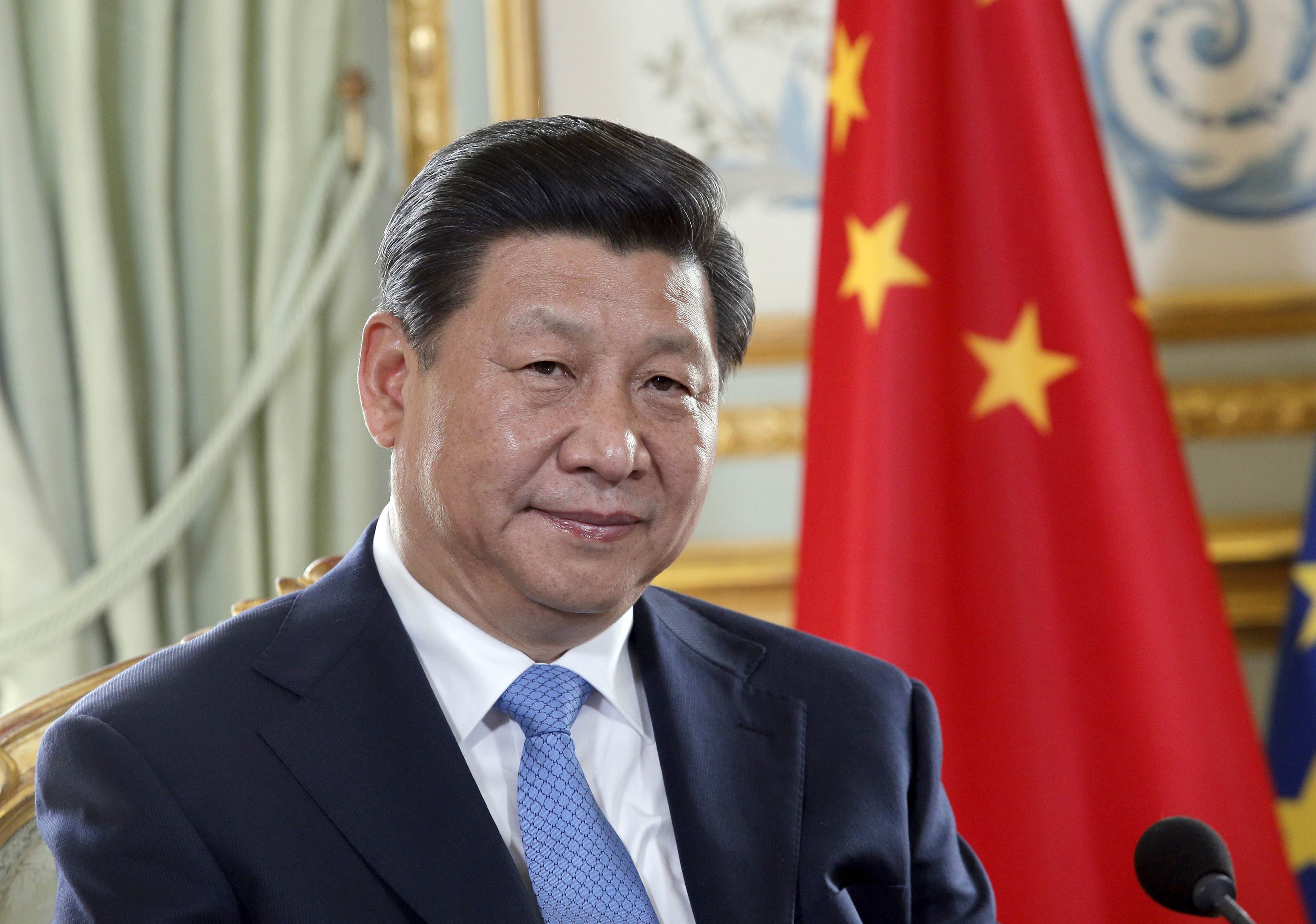
Xi Jinping out before 2027?
PM $14.89M
1
1
Xi Jinping out before 2027?
PM $14.89M
1
1
AI Analysis
Trader mode: Market mechanics, assumptions and risks
PM $14.89M
Reported volume · provider units
1
Saved contracts
0
Reviewed equivalent pairs
Source snapshot: Oct 15, 2026, 4:13 PM UTC
About This Event
This market will resolve to "Yes" if China's General Secretary of the Communist Party, Xi Jinping, is removed from power for any length of time between July 3, 2025, and December 31, 2026, 11:59 PM ET. Otherwise, this market will resolve to "No". CCP General Secretary Xi Jinping will be considered removed from power if he announces his resignation from his role as General Secretary, or is otherwise dismissed, detained, disqualified, or otherwise loses his position or is prevented from fulfilling his duties as General Secretary within this market's timeframe. The primary resolution source for this market will be a consensus of credible reporting.
This saved analysis is awaiting a background update. Its prices and claims may be outdated; compare them with the dated market data above.
Current Market Outlook
Polymarket traders give Xi Jinping just a 5% chance of leaving power before 2027. That is a very low probability, meaning the market sees his removal as a genuine tail risk but not a scenario worth betting on. With $11.5 million in volume, this is one of the most liquid political markets on the platform, suggesting serious money is behind that 5% price.
The market resolves if Xi resigns, is dismissed, detained, disqualified, or otherwise prevented from fulfilling his role as General Secretary. It does not require a formal transition of power. Even a temporary removal counts.
Key Factors Driving the Odds
First, Xi faces no formal term limits. China abolished presidential term limits in 2018 specifically to keep him in power indefinitely. The CCP has no internal mechanism for removing a sitting General Secretary unless the Politburo Standing Committee turns against him, which has not happened in decades.
Second, Xi consolidated power more aggressively than any leader since Mao. He purged rivals like Zhou Yongkang and Sun Lijun, packed the Politburo with loyalists, and elevated the "Core" status to near-absolute authority. There is no faction with the institutional weight to challenge him.
Third, China's economy is weak. GDP growth slowed to 5.2% in 2024, property markets are in crisis, and youth unemployment remains above 20%. Historically, Chinese leaders face more risk when growth falters. But Xi has blamed external factors and tightened censorship, not loosened control. The market sees economic pain as insufficient to trigger a coup or resignation.
What Could Change These Odds
A sudden health crisis is the most obvious catalyst. Xi turned 72 in June 2025. If he suffers a serious medical event and cannot perform duties, the market could spike to 30-40% quickly. But Chinese state media would likely hide the severity, making resolution ambiguous.
A major internal power struggle could also shift odds. If a faction within the Politburo detects weakness and moves against him, the probability rises. But no credible reporting suggests such a faction exists.
The biggest unknown is a mass protest wave similar to 1989 or 2014 Hong Kong. If millions take to the streets demanding Xi's removal, and the military refuses to crack down, the odds could jump to 50% or higher. But China's surveillance state and rapid response make that scenario remote.
At 5%, the market is pricing Xi's tenure as essentially locked in through 2026. Anyone betting "Yes" is betting on a black swan.
AI-generated analysis based on market data. Not financial advice.
Saved Jul 28, 2026 UTCThis saved content is awaiting a background update. It may contain outdated claims; use the dated market data and provider rules for the latest available information.
Overview
This prediction market concerns the political future of Xi Jinping, the General Secretary of the Communist Party of China (CPC), and whether he will be removed from power between July 3, 2025, and December 31, 2026. Removal is defined broadly: resignation, dismissal, detention, disqualification, or any other loss of his position as General Secretary. The market does not cover his other titles, such as President of the People's Republic of China or Chairman of the Central Military Commission, but in practice, these roles are intertwined. Xi Jinping has been the paramount leader of China since 2012, when he became General Secretary and President. He consolidated power in 2018 by removing term limits for the presidency, allowing him to remain in office indefinitely. Speculation about his removal is rare in official discourse but surfaces in Western media and among analysts of Chinese politics, often tied to health rumors, factional struggles, or economic crises. The topic gained traction after the 20th Party Congress in 2022, where Xi secured a third term, and the subsequent 2023 National People's Congress, which elevated his allies. Interest in this market reflects broader questions about the stability of China's leadership, the strength of its institutions, and the potential for internal challenges to Xi's rule. While public dissent is minimal, observers watch for signs of elite discontent, policy failures, or health issues that could lead to a leadership transition. The market's resolution date extends to end of 2026, which is before the next scheduled Party Congress in 2027, making any removal a significant departure from normal procedures.
Historical Context
The removal of a Chinese leader from power before their term ends is rare in the modern era. The last involuntary removal of a General Secretary was Mao Zedong's ouster of Liu Shaoqi during the Cultural Revolution in 1968, though Liu was formally removed from all posts in 1968 and died in 1969. More recently, Hu Jintao (2003-2013) and Jiang Zemin (1993-2003) served full terms and retired voluntarily. Xi Jinping's predecessor, Hu Jintao, served two five-year terms as General Secretary and President, stepping down in 2012. Xi himself was re-elected in 2017 and again in 2022, with no term limits after the 2018 constitutional amendment. The CPC has a history of elite politics where factional struggles can lead to purges, but these typically target lower-level officials, not the top leader. The anti-corruption campaign under Xi has removed thousands of officials, including former Politburo members like Zhou Yongkang, Bo Xilai, and Sun Lijun, but these were not challenges to Xi's position. The only precedent for a leader being removed while in office is the case of Zhao Ziyang, who was purged after the 1989 Tiananmen Square protests. Zhao was placed under house arrest and died in 2005, but he was never formally prosecuted. The CPC has since maintained strict unity around the leader, with no public dissent allowed. The 20th Party Congress in 2022 saw Xi secure a third term, and the 2023 National People's Congress confirmed his allies in key positions. This consolidation makes removal unlikely under normal circumstances, but external shocks like a severe economic crisis, a major scandal, or a health emergency could theoretically trigger a transition.
Why It Matters
Xi Jinping's removal from power would have profound implications for China and the world. Domestically, it would signal a breakdown in the CPC's unity and could trigger a power struggle among factions, potentially leading to political instability. The Chinese economy, already facing challenges from a property crisis, demographic decline, and trade tensions, could suffer further if investors lose confidence in policy continuity. Xi's signature initiatives, such as the Belt and Road Initiative, the Made in China 2025 plan, and his anti-corruption campaign, might be reassessed or abandoned by a successor. Internationally, a leadership change could alter China's foreign policy, which under Xi has become more assertive, especially regarding Taiwan, the South China Sea, and relations with the United States. A new leader might seek to de-escalate tensions or continue Xi's hardline stance, depending on who takes over. The global balance of power, supply chains, and security alliances are all affected by China's leadership. For markets, this event would be a black swan, creating high volatility in Chinese stocks, bonds, and the yuan. The outcome of this market is thus a proxy for broader geopolitical and economic risk assessments.
Frequently Asked Questions
Can Xi Jinping be removed from power?
Yes, in theory. The CPC's constitution allows for the removal of a General Secretary by a vote of the Central Committee or the Politburo. However, such a move would require a consensus among top leaders, which is unlikely given Xi's consolidation of power and the lack of a clear successor.
AI-written background. References identify the evidence used; Wikipedia links under Learn More are additional reading. Prices and provider rules are dated snapshots. This is not financial advice.
Market Insights
Price gaps of 2 pp+
0
Reviewed equivalent pairs
0
No currently reviewed equivalent pairs with both binary Yes prices are available.
Price differences do not establish arbitrage. Check each pair's review, current order prices, fees and settlement rules.