$198.91K
1
5

$198.91K
1
5
Trader mode: Actionable analysis for identifying opportunities and edge
This market will resolve according to the number of tornadoes recorded in the United States during the specified month, based on the monthly count published on the National Centers for Environmental Information U.S. Tornadoes Time Series page (see: https://www.ncei.noaa.gov/access/monitoring/tornadoes/time-series). Only tornadoes appearing in the final NCEI dataset for that month will count. As of market creation, the relevant report is scheduled to be released on March 9, 2026, at 5:01 PM GMT
Prediction markets estimate a roughly 19 in 20 chance that the United States will see between 30 and 59 tornadoes in February 2026. This is the market's most confident forecast. Traders see it as very likely that the final count will fall within this middle range, avoiding either an extremely quiet or extremely active month.
The high confidence in a count of 30-59 tornadoes comes from historical weather patterns. February is typically a transitional month. It is not the peak of tornado season, which usually arrives in spring, but it is also not the quietest period. The average number of U.S. tornadoes for February over the last 20 years is about 44.
Recent climate trends also inform this prediction. Warmer winter temperatures, particularly in the Gulf of Mexico, can increase the moisture available for storm systems. This can lead to more frequent severe weather events even in late winter. Traders are likely weighing this potential for increased activity against the historical data, landing on the familiar average range as the safest bet.
The definitive report from the National Centers for Environmental Information (NCEI) is scheduled for release on March 9, 2026. This is the only date that matters for the final resolution of this market.
Before then, the market could shift based on real-time severe weather outbreaks during February itself. A major tornado outbreak in the first week could cause traders to move money toward the higher prediction brackets (60+ tornadoes). Conversely, an unusually stable and cold weather pattern across the central U.S. throughout the month might increase bets on the lower bracket (under 30 tornadoes).
Prediction markets are generally reliable for forecasting outcomes based on stable historical data and clear metrics, like an official government count. The NCEI dataset is the final authority, leaving no room for subjective interpretation.
However, weather remains inherently unpredictable in the short term. Markets can be slow to react to a sudden change in conditions. While the historical average is a strong guide, a single powerful storm system can produce dozens of tornadoes in a day, potentially pushing the total beyond the expected range. The market's 95% confidence reflects high certainty based on probabilities, but it is not a guarantee against a statistical outlier.
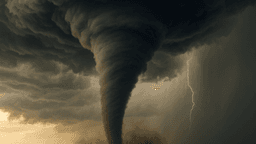
Prediction markets on Polymarket show high confidence in a typical February tornado count. The leading market, asking if 30 to 59 tornadoes will occur in the United States in February 2026, trades at 95 cents. This price indicates a 95% probability the final count falls within that range. With only 9 days until the official National Centers for Environmental Information (NCEI) report, the market views this outcome as nearly certain. Other buckets for lower or higher counts trade at minimal probabilities, showing a strong consensus around a mid-range result.
The pricing directly reflects historical climatology. According to NCEI data, the 1991-2020 average for U.S. tornadoes in February is approximately 29. The 30-59 bracket comfortably captures this average and the typical variability seen in most years. February is not a peak month for tornado activity, which usually surges in spring. Recent preliminary reports from storm prediction centers likely show no signs of an exceptionally active or quiet February 2026, allowing the market to anchor to the long-term norm. The high confidence suggests traders see no anomalous weather patterns that would push the count outside this standard deviation.
The odds are stable because the resolution source is a finalized government dataset, not real-time estimates. The critical risk is a significant data revision by the NCEI before its March 9, 2026, publication. Their process involves validating preliminary local storm reports, which can sometimes lead to downward adjustments in the final count. A revision placing the count at 29 tornadoes would cause the 30-59 market to resolve to "No," creating a major upset against the 95% confidence. However, such a revision large enough to drop below 30 is statistically rare for a monthly count already near the average. The market effectively bets this will not happen.
AI-generated analysis based on market data. Not financial advice.
This prediction market focuses on forecasting the number of tornadoes that will be officially recorded in the United States during a specific February. The outcome resolves based on the monthly tornado count published by the National Centers for Environmental Information (NCEI), a division of the National Oceanic and Atmospheric Administration (NOAA). The NCEI's U.S. Tornadoes Time Series page provides the definitive, quality-controlled dataset used by meteorologists, insurers, and government agencies. This dataset includes tornadoes confirmed through post-storm damage surveys conducted by National Weather Service offices across the country. February tornado activity is a subject of particular interest because it sits in the transition between the typically quieter winter months and the more active spring severe weather season. Variability in atmospheric patterns, such as the position of the jet stream and the availability of warm, moist air from the Gulf of Mexico, can lead to significant year-to-year differences. Accurate seasonal and monthly predictions are challenging, making this a suitable topic for a prediction market that aggregates diverse forecasts. Interest in this metric comes from multiple sectors, including emergency management officials who plan for disaster response, the insurance industry which models catastrophic risk, agricultural businesses vulnerable to early-season storms, and climatologists studying potential shifts in severe weather patterns. The final NCEI count, typically released in early March, serves as the authoritative settlement value.
Systematic recording of U.S. tornadoes by federal agencies began in 1950, establishing the modern climatological record. February has historically been a month of low tornado activity compared to spring and early summer, but it is not without significant events. The deadliest February tornado outbreak on record occurred on February 19-20, 1884, across the Southeastern U.S., claiming an estimated 178 lives. In the modern era, a notable outbreak happened on February 5-6, 2008, during the Super Tuesday primary elections. That outbreak produced 87 tornadoes across nine states, causing 57 fatalities and demonstrating that destructive tornado seasons can begin very early. The variability of February counts is high. For example, February 2016 recorded an unusually high 102 tornadoes, driven by a strong El Niño pattern that enhanced jet stream energy over the South. In contrast, February 2010 saw only 2 tornadoes nationwide, one of the quietest months on record. This wide range, from single digits to over one hundred, illustrates the high uncertainty inherent in forecasting February activity. Long-term trend analysis is complicated by changes in reporting practices and improved detection technology, particularly the deployment of Doppler radar in the 1990s, which increased the identification of weak tornadoes.
The February tornado count has practical implications for public safety and economic planning. For emergency managers and local governments, an active February can strain resources early in the year and serve as a test of warning systems and community preparedness before the peak spring season. A higher-than-average count may prompt reviews of sheltering plans and public communication strategies in vulnerable regions. Economically, the insurance and reinsurance industries closely monitor early-season activity. A spike in February tornadoes, especially if they cause substantial damage, can influence the pricing of catastrophe bonds and reinsurance treaties for the remainder of the year. For the agricultural sector, early-season tornadoes can damage winter crops, storage facilities, and farm infrastructure, impacting commodity markets and farm incomes. From a scientific perspective, anomalies in February activity contribute to the study of how climate variability, such as El Niño Southern Oscillation (ENSO) phases, influences severe weather. Researchers analyze these patterns to improve seasonal outlooks and understand potential future changes in the timing and location of tornado threats.
As of early 2025, the most recent complete data is for February 2024. The final NCEI count for that month was 45 tornadoes, which is above the 1991-2020 average of 29. This activity included several outbreaks, particularly in the Midwest and Great Lakes regions in late February. Seasonal outlooks from the SPC and other forecasting entities for the upcoming February will begin to be formulated in January, based on prevailing climate signals like ENSO state and projected jet stream patterns. The market for February 2026 will be influenced by these outlooks, real-time medium-range forecast models as the month approaches, and analog comparisons to past years with similar atmospheric configurations.
The National Weather Service dispatches teams of meteorologists to conduct ground surveys after reported severe weather. These teams analyze damage patterns to determine if it was caused by a tornado, estimate its intensity on the Enhanced Fujita (EF) scale, and map its path. Only events confirmed through this process are included in the official NCEI database.
Initial media reports often overcount tornadoes by reporting multiple segments of a single tornado's path as separate events. The NWS damage survey process consolidates these reports. The final NCEI count reflects this quality-controlled analysis, which can take weeks to complete, hence the data release lag.
Research is ongoing, but some studies suggest a potential shift in the timing of tornado season and an increase in the frequency of outbreaks. However, attributing any single month's activity to climate change is extremely difficult due to high natural variability and limitations in the long-term historical record.
The primary risk area is the southeastern United States, including the Gulf Coast states from Texas to Florida, and northward into the Tennessee and Ohio Valleys. This 'Dixie Alley' region is particularly vulnerable during the winter and early spring.
A tornado watch, issued by the Storm Prediction Center, means conditions are favorable for tornadoes to form in a large area. A tornado warning, issued by a local National Weather Service office, means a tornado has been spotted or indicated by radar and immediate action to seek shelter is required.
Educational content is AI-generated and sourced from Wikipedia. It should not be considered financial advice.
5 markets tracked

No data available
| Market | Platform | Price |
|---|---|---|
![]() | Poly | 97% |
![]() | Poly | 3% |
![]() | Poly | 1% |
![]() | Poly | 0% |
![]() | Poly | 0% |


No related news found
Add this market to your website
<iframe src="https://predictpedia.com/embed/-yqLWX" width="400" height="160" frameborder="0" style="border-radius: 8px; max-width: 100%;" title="How many Tornadoes in the US in February?"></iframe>