Events
GroupPOLYMARKET
Event GroupPOLYMARKETPolitics
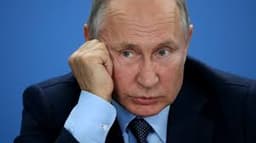
Putin out as President of Russia by end of 2026?
Total Volume
$2.53M
Events
1
Markets
1
Putin out as President of Russia by end of 2026?
Platform StatsQuick Platform Comparison
Polymarket
1
markets · $2.53M
Kalshi
0
markets · $0.00
Price Spread
0.0%avg
max 0.0%
Arbitrage
0
of 0 cross-platform
Volume DistributionTotal: $2.53M
100%
Polymarket leads
Price ChartMatched Markets Price Graph
1 market tracked
Putin out as President of Russia by end of 2026?
No data available
Single-Platform Markets(1)
| Market | Platform | Price |
|---|---|---|
| Poly | 11% |
AI Analysis
Trader mode: Actionable analysis for identifying opportunities and edge
11%
Top Probability
$2.53M
Volume
1
Markets
1
Platforms
About This Event
This market will resolve to "Yes" if Russia's president, Vladimir Putin, is removed from power for any length of time between July 6, 2025, and December 31, 2026, 11:59 PM ET. Otherwise, this market will resolve to "No". President Vladimir Putin will be considered to be removed from power if he resigns, is detained, or otherwise loses his position or is prevented from fulfilling his duties as President of Russia within this market's timeframe. The primary resolution source for this market will
What Prediction Markets Are Forecasting
Prediction markets currently give about an 11% chance that Vladimir Putin will no longer be Russia's president by the end of 2026. In simpler terms, traders collectively see a roughly 1 in 9 chance of his removal within that timeframe. This indicates a strong consensus that Putin is very likely to remain in power through at least the end of 2026. The high trading volume, over $2.5 million, shows significant public interest in this question, even if the perceived odds of change are low.
Why the Market Sees It This Way
The low probability reflects Putin's entrenched control. He has led Russia as either president or prime minister since 1999, and the political system has been reshaped around him. Constitutional changes in 2020 allow him to potentially stay in office until 2036. There is no obvious, powerful political rival or successor waiting in the wings.
Recent history also informs this view. The market's timeframe follows Russia's 2024 presidential election, which Putin won with a reported 87% of the vote. While not considered free or fair by international observers, the election solidified his formal hold on power for another six-year term. Furthermore, past periods of internal crisis, like the brief rebellion led by Yevgeny Prigozhin in 2023, did not ultimately threaten Putin's position. The market odds suggest traders believe the system he has built is stable enough to withstand significant pressure.
Key Dates and Events to Watch
The main formal event has already passed: the March 2024 presidential election. With that securing Putin's next term, the focus shifts to other potential sources of instability.
Watch for signs of major internal conflict, such as another significant challenge from Russian military or security factions. The health of the Russian economy under continued sanctions and the costs of the war in Ukraine could also create public pressure over time. Any visible deterioration in Putin's own health would be a major catalyst for market movement, as speculation about succession would intensify. Outside of a sudden, unforeseen event, the next major political milestone is not until later in the decade.
How Reliable Are These Predictions?
Prediction markets have a mixed but often insightful record on political stability questions. They are generally better at aggregating known information about institutional structures, like term limits and electoral systems, than at forecasting unpredictable shocks like coups or health emergencies. For a figure like Putin, who has dominated the system for decades, the market's low probability of near-term removal aligns with most expert analysis. However, the 11% chance acknowledges that unexpected, high-impact events in authoritarian states are always possible, even if they cannot be reliably predicted. The market is essentially saying the known facts point to continuity, while leaving a small opening for the unknown.
Current Market Outlook
Prediction markets assign an 11% probability that Vladimir Putin will be removed as President of Russia before the end of 2026. With a price of $0.11 for a "Yes" outcome, this is a low-confidence bet. The market sees a forced or voluntary exit as unlikely within this timeframe. The substantial $2.5 million in trading volume indicates strong interest and a liquid market, meaning this price reflects a considered consensus rather than speculative noise.
Key Factors Driving the Odds
The low probability directly reflects Putin's consolidated control. The Russian political system is engineered around his authority, with potential rivals systematically marginalized or removed. The 2020 constitutional changes reset presidential term limits, allowing him to remain in power until 2036. Following the full-scale invasion of Ukraine in 2022, internal repression intensified, making organized opposition or a palace coup extremely hazardous. Markets are pricing in the stability of an entrenched autocracy where the costs of removal are catastrophically high for any plotters.
What Could Change These Odds
A sudden shift in the war in Ukraine remains the most plausible catalyst. A catastrophic military defeat that visibly fractures the Russian elite or triggers widespread domestic unrest could increase pressure for a change. Putin's health is a perennial source of speculation. Verified news of a serious medical issue would likely cause the "Yes" probability to spike. The market's long resolution window, ending in December 2026, allows for unforeseen political shocks, but the current pricing shows traders believe the regime's defenses against these shocks are formidable.
AI-generated analysis based on market data. Not financial advice.