Event GroupPOLYMARKETMentions
What will Hillary Clinton say during her Epstein testimony?
Total Volume
$104.40K
Events
1
Markets
21
What will Hillary Clinton say during her Epstein testimony?
Vol
$104.40K
|
Events
1
|
Markets
21
$104.40K
1
21
$104.40K
1
21
Trader mode: Actionable analysis for identifying opportunities and edge
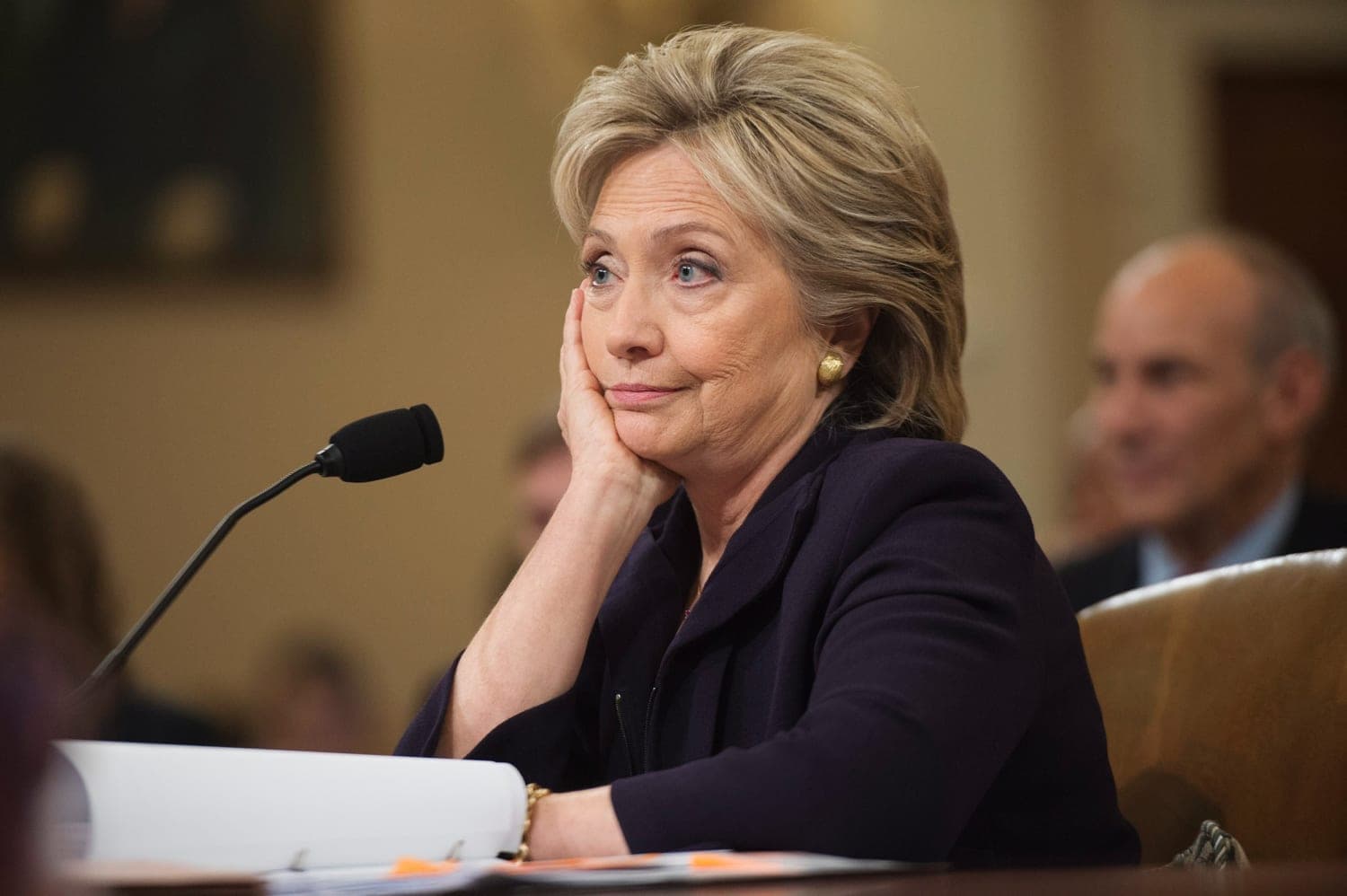
Hillary Clinton is scheduled to testify before a congressional committee regarding Jeffrey Epstein. (https://www.nbcnews.com/politics/congress/clintons-scheduled-give-house-oversight-testimony-rcna259822) This market will resolve to "Yes" if Hillary Clinton says the listed term during the event on February 26, 2026. Otherwise, the market will resolve to "No". Plural and possessive forms of the listed term will count toward the resolution of this market regardless of context; however, other for
Traders on Polymarket currently give about a 97% chance that Hillary Clinton's scheduled congressional testimony about Jeffrey Epstein will not be publicly aired. In simple terms, the market believes it is almost certain the public will not see or hear her remarks live or in full. This represents an extremely high level of confidence, suggesting traders see a clear, non-public proceeding as the expected outcome.
Two main factors explain these odds. First, congressional testimony, especially on sensitive topics, often occurs behind closed doors or in classified settings. This is standard procedure for investigations involving potential national security elements or witness privacy. The Epstein case intersects with intelligence and law enforcement matters, making a private session more likely.
Second, the specific market language asks if her "remarks" will "not air." This phrasing covers both a completely closed hearing and a situation where only a redacted transcript is later released. Given the legal and political sensitivity, a controlled release of information is the norm. Historical precedent for similar high-profile testimonies supports this expectation.
The testimony itself is scheduled for February 26, 2026. The key signal to watch will be any official announcement from the House Oversight Committee in the days before the event. This announcement will specify whether the hearing is open to the public, closed, or partially closed. Any statements from Clinton's representatives or committee members about the format could also shift the predictions, though major changes are now unlikely given the proximity of the date.
Prediction markets are generally reliable for forecasting procedural and binary outcomes like this one, where the result is a formal, verifiable fact (aired or not aired). They aggregate many informed opinions, often from people closely watching political processes. However, the main limitation here is that the outcome could be influenced by a last-minute, unilateral decision by the committee, which is hard to predict. For similar "will it be public?" political events, markets have a solid track record.
Prediction markets assign a 97% probability that Hillary Clinton's remarks during her Epstein testimony will not air publicly. This price, trading at 97¢ for "Yes" on Polymarket, indicates near-certainty among traders. With over $100,000 in total volume, the market has substantial liquidity, meaning this consensus is backed by significant capital. A 97% chance is a strong signal; the market views a non-broadcast as almost guaranteed.
Two primary factors explain this extreme pricing. First, congressional testimony, especially from high-profile figures in sensitive investigations, is frequently conducted behind closed doors or released in heavily redacted transcripts. The specific subject matter involving Jeffrey Epstein and associated political figures increases the likelihood of a classified or private session. Second, historical precedent is clear. Similar high-stakes testimonies related to intelligence or scandal often result in delayed or entirely withheld public records. The market is pricing based on this standard operational procedure rather than the content of Clinton's potential statements.
The odds could shift only with a definitive, pre-emptive announcement from the House Oversight Committee confirming a live or immediately public broadcast. Such an announcement is considered highly unlikely given the topic's sensitivity. The scheduled date of February 26, 2026, means no immediate catalyst exists. The main risk to the current pricing is an unexpected political decision to force transparency, perhaps due to public pressure. However, the 97% price reflects a judgment that institutional norms will prevail over transparency demands in this instance.
AI-generated analysis based on market data. Not financial advice.
This prediction market focuses on whether Hillary Clinton will mention specific terms during her scheduled congressional testimony about Jeffrey Epstein. Clinton is expected to appear before the House Committee on Oversight and Accountability on February 26, 2026. The testimony is part of a broader congressional investigation into the Epstein case, which has spanned multiple administrations and involved numerous high-profile figures. The market resolves based on whether Clinton utters a predetermined word or phrase during the official proceedings. The interest stems from Clinton's long political career and her documented connections to Epstein's social circle. Public records show she traveled with her husband, former President Bill Clinton, on Epstein's private jet, dubbed the 'Lolita Express,' in 2002 and 2003. While she has denied any knowledge of Epstein's criminal activities, her scheduled testimony marks the first time she will answer direct, sworn questions from Congress on this matter. The hearing is expected to cover the nature of her interactions with Epstein and what, if anything, she knew about his sex trafficking operation. Recent developments include the committee's issuance of a formal subpoena to Clinton in late 2025, following a year of negotiations between her legal team and congressional investigators. The committee has stated its intent to examine the 'extent of relationships between powerful individuals and convicted sex offenders.' This testimony follows similar appearances by other figures, including former President Donald Trump's deposition in 2024, though Trump invoked his Fifth Amendment rights over 400 times during that proceeding. People are interested because the testimony could reveal new information about elite networks and accountability. It also tests the limits of congressional oversight into matters involving former high-ranking officials. The prediction market allows participants to speculate on the specific language Clinton might use, reflecting broader public curiosity about what she will confirm, deny, or avoid discussing under oath.
The Jeffrey Epstein case entered public consciousness in 2005 when the Palm Beach Police Department began investigating allegations he paid underage girls for massages that escalated into sexual acts. A controversial 2008 plea deal, negotiated by then-U.S. Attorney Alexander Acosta, allowed Epstein to plead guilty to state charges of soliciting prostitution from a minor and serve only 13 months in a county jail with work release. This deal shielded him from federal charges and protected his co-conspirators from prosecution, a fact that sparked enduring controversy. Epstein was arrested again on federal sex trafficking charges in July 2019 following investigative reporting by the Miami Herald. His death in custody one month later left numerous questions unanswered about the full scope of his operation and his associates. In the years since, civil litigation and journalistic investigations have continued to unveil connections between Epstein and figures in politics, finance, and academia. The U.S. Department of Justice's Office of Professional Responsibility released a report in 2020 criticizing Acosta's handling of the 2008 case, but no high-profile associates faced criminal charges directly related to Epstein's crimes. Congressional interest has waxed and waned. In 2020, the Senate Homeland Security Committee held a hearing focusing on the DOJ's handling of the Epstein case. The current House investigation, launched in 2023, represents a more direct effort to question individuals within Epstein's social orbit. This hearing with Hillary Clinton follows a pattern of Congress using its oversight powers to investigate matters of significant public scandal, though the legal consequences for witnesses are typically limited to potential charges of perjury or contempt of Congress.
This testimony matters for political accountability and public trust. It represents a rare instance where a former senior official and presidential nominee must answer questions under oath about associations with a convicted sex trafficker. The answers, or evasions, could influence public perception of transparency among political elites. For Epstein's victims, the testimony is another step in a long quest for a full public accounting of who enabled Epstein's crimes. The proceedings also test the strength of congressional oversight. Success in obtaining candid testimony could empower future investigations into sensitive matters involving former officials. Failure, characterized by legal stonewalling or non-responsive answers, could demonstrate the limits of congressional power. The political ramifications are significant, as the hearing will be viewed through a partisan lens, potentially affecting the 2026 midterm elections and shaping narratives about accountability within both major political parties.
As of early 2026, Hillary Clinton is scheduled to testify before the House Committee on Oversight and Accountability on February 26. The committee issued a subpoena in November 2025 after preliminary negotiations. Clinton's legal team has agreed to the appearance but the scope of questioning remains a point of discussion. The committee has indicated it will focus on her travels, communications, and knowledge related to Jeffrey Epstein between 2001 and 2005. Recent weeks have seen committee staff reviewing previously obtained documents, including flight logs and witness interviews from related civil cases, to prepare for the hearing.
Flight logs show Hillary Clinton was a passenger on Epstein's private jet, the 'Lolita Express,' on at least two occasions in 2002 and 2003 alongside her husband. She has stated these were trips for Clinton Foundation business and that she had no knowledge of his criminal activities.
The testimony itself is not a criminal proceeding. However, if she knowingly makes false statements under oath, she could be charged with perjury. The primary purpose of the hearing is congressional oversight, not criminal prosecution.
The House Committee on Oversight and Accountability launched this investigation in 2023 to examine the extent of relationships between powerful individuals and convicted sex offenders, citing unfinished public interest and new information from civil lawsuits.
As of February 2026, Bill Clinton has not given sworn testimony to Congress about Epstein. He provided a voluntary statement in 2019 through a spokesperson denying recent contact with Epstein.
If she refuses to answer questions without a valid legal privilege, the committee could vote to hold her in contempt of Congress. This could lead to a referral to the Department of Justice for potential prosecution, though such outcomes are historically rare for former high-level officials.
Educational content is AI-generated and sourced from Wikipedia. It should not be considered financial advice.
21 markets tracked
No data available
| Market | Platform | Price |
|---|---|---|
| Poly | 97% |
| Poly | 8% |
| Poly | 4% |
| Poly | 3% |
| Poly | 3% |
| Poly | 3% |
| Poly | 3% |
| Poly | 3% |
| Poly | 2% |
| Poly | 2% |
| Poly | 2% |
| Poly | 2% |
| Poly | 2% |
| Poly | 2% |
| Poly | 2% |
| Poly | 2% |
| Poly | 2% |
| Poly | 2% |
| Poly | 2% |
| Poly | 2% |
| Poly | 1% |
No related news found
Add this market to your website
<iframe src="https://predictpedia.com/embed/0mzniX" width="400" height="160" frameborder="0" style="border-radius: 8px; max-width: 100%;" title="What will Hillary Clinton say during her Epstein testimony?"></iframe>