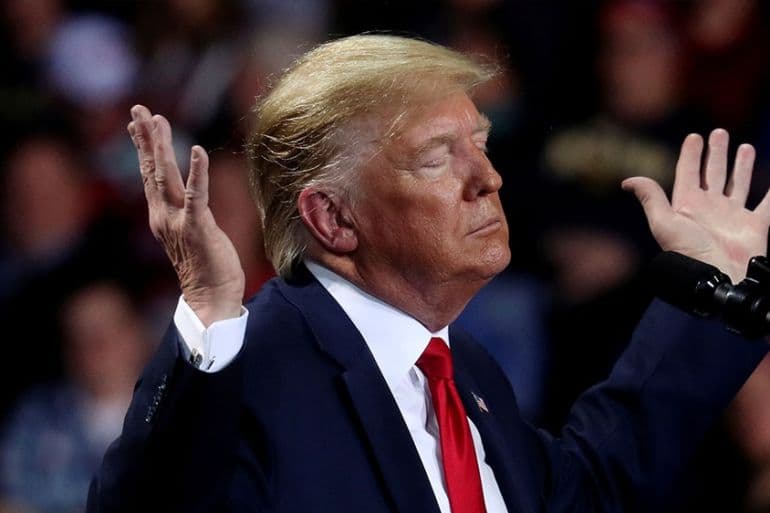
Will Trump be impeached?
$4.17M
2
9
Will Trump be impeached?
$4.17M
2
9
AI Analysis
Trader mode: Actionable analysis for identifying opportunities and edge
About This Event
Before 2028 If the President of the United States has been impeached before X 1, 2027, then the market resolves to Yes. Early close condition: This market will close and expire following the occurrence of the event. The President must hold the office when an impeachment resolution passes against him or her . This market will close and expire following the occurrence of the event.
This saved analysis is awaiting a background update. Its prices and claims may be outdated; compare them with the dated market data above.
Current Market Outlook
Prediction markets price a 60% chance that the President will be impeached before January 1, 2028. That is a clear majority view, but not a slam dunk. It means traders see impeachment as more likely than not, but they also see a 40% chance it does not happen. The 19% spread between Kalshi and Polymarket is unusual. Kalshi prices this higher, which may reflect different trader demographics or liquidity constraints rather than a genuine information gap.
The market closes in 157 days, but the event window runs through 2027. That is a long runway for a process that historically takes months to unfold.
Key Factors Driving the Odds
The 60% probability rests on three realities. First, the current President already faced two impeachments in his first term, both along party lines. Historical precedent matters. Second, the House is narrowly divided. A unified Democratic majority could pass articles of impeachment with relative ease, assuming they win control in 2026. Third, the President faces multiple ongoing criminal investigations and civil lawsuits that could produce new evidence or convictions before 2028. Any of these could provide the political cover for swing-district Republicans to support impeachment.
The market is not pricing in a specific scandal. It is pricing in the structural incentives of a divided government and a President with a long track record of legal exposure.
What Could Change These Odds
The biggest swing factor is the 2026 midterm elections. If Republicans expand their House majority, impeachment odds drop sharply. If Democrats retake the House, odds climb toward 80% or higher. The other catalyst is a major legal development. A federal conviction or a blockbuster revelation from ongoing investigations could push the probability above 75% overnight.
The risk to the consensus view is that the President simply outlasts the clock. Impeachment requires sustained political will. If the public grows tired of the process or if no single scandal breaks through, the House may never hold a vote. The 60% price reflects a market that expects something to happen, but is not certain what.
AI-generated analysis based on market data. Not financial advice.
Saved Jul 27, 2026 UTCThis saved content is awaiting a background update. It may contain outdated claims; use the dated market data and provider rules for the latest available information.
Overview
This prediction market asks whether the United States House of Representatives will approve at least one article of impeachment against President Donald Trump between July 24, 2025, and December 31, 2026. Impeachment is a constitutional process where the House, by a simple majority vote, formally accuses a sitting president of 'Treason, Bribery, or other high Crimes and Misdemeanors.' The market resolves to 'Yes' if the House passes such articles, regardless of whether the Senate holds a trial or convicts. The timeframe covers the latter half of 2025 and all of 2026, a period that includes the 2026 midterm elections. Trump, the 45th president, was impeached twice during his first term (2019 and 2021), both times by a Democratic-controlled House. He was acquitted by the Senate both times. Since leaving office in January 2021, Trump has remained a dominant figure in Republican politics and is the party's presumptive nominee for the 2024 presidential election. His ongoing legal challenges, including four criminal indictments, have kept impeachment discussions alive among some Democrats and anti-Trump Republicans. The market's start date, July 24, 2025, is significant because it falls after the 2024 election and the first half of 2025, allowing for post-election political dynamics to settle. The end date, December 31, 2026, aligns with the end of the 119th Congress (2025-2027). The House's composition will be determined by the 2024 and 2026 elections. A Republican majority would make impeachment highly unlikely, while a Democratic majority would make it possible but not certain. The market thus captures uncertainty about both electoral outcomes and political will. People are interested because impeachment is a rare and consequential constitutional mechanism. Only three U.S. presidents have been impeached: Andrew Johnson (1868), Bill Clinton (1998), and Trump (2019, 2021). Richard Nixon resigned before a House vote in 1974. The possibility of a third Trump impeachment, especially if he wins the 2024 election, would be unprecedented. The market also reflects broader debates about accountability, presidential power, and the role of Congress in checking executive authority. It is a proxy for political polarization and the willingness of lawmakers to use extreme measures against a former or future president.
Historical Context
The U.S. Constitution, Article II, Section 4, states that the president 'shall be removed from Office on Impeachment for, and Conviction of, Treason, Bribery, or other high Crimes and Misdemeanors.' The House has sole power to impeach (charge) a federal official, while the Senate holds the trial and can convict by a two-thirds majority. Only three presidents have been impeached. Andrew Johnson was impeached in 1868 for violating the Tenure of Office Act, but was acquitted by one vote. Bill Clinton was impeached in 1998 for perjury and obstruction of justice related to the Monica Lewinsky scandal; the Senate acquitted him. Donald Trump was impeached twice. The first, in December 2019, charged him with abuse of power and obstruction of Congress for pressuring Ukraine to investigate Joe Biden. The House vote was 230-197 and 229-198. The Senate acquitted him in February 2020, with only one Republican (Mitt Romney) voting to convict on one article. The second impeachment came in January 2021, after the January 6 Capitol attack, charging Trump with incitement of insurrection. The House voted 232-197, with 10 Republicans joining all Democrats. The Senate acquitted him again in February 2021, with 57 guilty votes (including 7 Republicans) falling short of the 67 needed. No president has ever been convicted by the Senate. Richard Nixon faced certain impeachment in 1974 for the Watergate scandal but resigned before a House vote. The House Judiciary Committee approved three articles of impeachment against him. The 2024 election will be a key determinant. If Trump wins, he would be the first president to be impeached while in office after having been impeached previously. If he loses, he would be a private citizen, but the House could still impeach him for conduct during his previous term or campaign, though some legal scholars debate whether former officials can be impeached. The market's timeframe also includes the 2026 midterms, which could shift House control.
Why It Matters
Impeachment is one of the most serious checks Congress has on the executive branch. A third Trump impeachment would further test the boundaries of the Constitution and the political system's ability to hold a president accountable. It would also deepen partisan divisions, as each prior impeachment has been largely along party lines. The process consumes significant congressional time and media attention, potentially crowding out other legislative priorities like budget negotiations, healthcare, and foreign policy. The economic implications include market volatility, as impeachment creates political uncertainty. The 2019 impeachment saw the S&P 500 rise slightly, but the 2021 impeachment occurred during a period of high political tension. If Trump is president during an impeachment, it could affect investor confidence, government spending, and international relations. For the public, impeachment polls show consistent partisan gaps. A 2023 Gallup poll found 47% of Americans thought Trump should have been convicted in his second trial, while 51% disagreed. The issue mobilizes both parties' bases, potentially affecting voter turnout in 2026. The downstream consequences include potential changes to impeachment procedures, such as rules for witnesses or evidence, and legal precedents about what constitutes an impeachable offense for a former president. The market also matters because it is a rare event that forces a direct confrontation between the legislative and executive branches, with no clear resolution other than removal (which has never happened) or acquittal.
AI-written background. References identify the evidence used; Wikipedia links under Learn More are additional reading. Prices and provider rules are dated snapshots. This is not financial advice.