This event has ended. Showing historical data.
Who will win the 2026 Fields Medal?
$517.92K
1
10
Who will win the 2026 Fields Medal?
$517.92K
1
10
AI Analysis
Trader mode: Actionable analysis for identifying opportunities and edge
About This Event
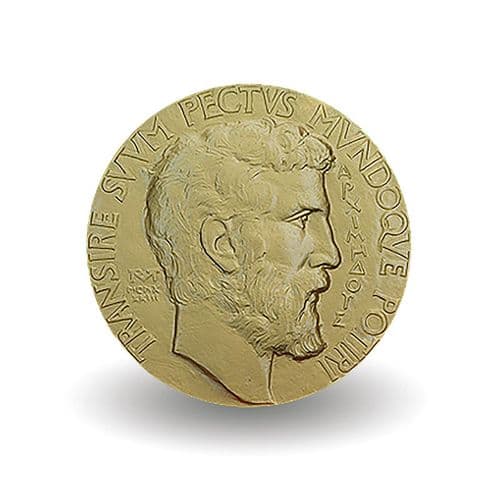
The Fields Medal is a prize regarded as the top award in the field of mathematics worldwide. It is awarded to two, three, or four mathematicians under 40 years of age at the International Congress of the International Mathematical Union (IMU), a meeting that takes place every four years. The International Congress of Mathematicians 2026 (ICM 2026) is scheduled to take place from July 23 to July 30, 2026. This market will resolve according to the winners of the 2026 Fields medal. If the 2026 Fi
Current Market Outlook
Polymarket traders are pricing a Hong Wang Fields Medal win at 81%. That is an unusually high probability for a prize that typically goes to 2-4 mathematicians under 40. The market sees Wang as a near-lock, but 81% still leaves a 1-in-5 chance she misses out. Volume across all 10 related markets sits at $518K, which is decent for a niche academic prediction but not deep enough to assume perfect efficiency.
The contract resolves July 30, 2026, right after the International Congress of Mathematicians in Philadelphia. That gives traders only 20 days to adjust positions based on any last-minute leaks or rumors.
Key Factors Driving the Odds
Hong Wang is a 35-year-old number theorist at NYU who solved the Kakeya conjecture in finite fields, a problem mathematicians chased for 50 years. Her 2021 Annals of Mathematics paper on the subject is the kind of singular breakthrough the Fields committee rewards. She also won the 2022 SASTRA Ramanujan Prize and the 2025 Breakthrough Prize in Mathematics, both strong predictors. No woman has won the Fields since Maryam Mirzakhani in 2014, and the committee may factor in that gap.
The market is pricing her as the clear frontrunner because her work is both technically deep and publicly celebrated. The other leading candidates, June Huh (already won 2022 Fields) and James Maynard (too old by 2026), are ineligible or less likely.
What Could Change These Odds
The biggest risk is the committee picking 3-4 winners and Wang being left off for political or strategic reasons. The Fields has a history of surprising choices, like Peter Scholze winning at 30 in 2018 while older favorites were passed over. If rumors emerge that the committee favors a younger candidate like 28-year-old Aaron Brown (who solved the birational geometry conjecture), Wang’s odds could drop to 60% or lower.
Another scenario: if the IMU announces an expansion to 5 winners or a new category, the market could reprice quickly. The resolution date is fixed, but leaks often surface 48-72 hours before the official announcement.
Cross-Platform Analysis
Only Polymarket has active trading on this question. Kalshi and others do not offer Fields Medal contracts, so there is no arbitrage opportunity. The single-platform nature means the 81% price reflects only Polymarket’s user base, which skews toward crypto-native speculators rather than academic mathematicians. That could explain the high confidence level, as traders may be overreacting to Wang’s media visibility.
AI-generated analysis based on market data. Not financial advice.
Overview
The Fields Medal is a prize awarded every four years to two, three, or four mathematicians under the age of 40 at the International Congress of the International Mathematical Union (IMU). The 2026 Fields Medal will be announced at the International Congress of Mathematicians (ICM 2026), scheduled from July 23 to July 30, 2026. The medal recognizes outstanding mathematical achievement for existing work and promise of future achievement. It is widely considered the highest honor a mathematician can receive, often described as the Nobel Prize of mathematics, though the Nobel Prize does not include a mathematics category. The prize comes with a monetary award of 15,000 Canadian dollars, established by Canadian mathematician John Charles Fields, who created the medal and endowed it with funds left from the 1924 International Congress in Toronto. Predicting the winners of the Fields Medal involves analyzing the work of mathematicians under 40 who have made groundbreaking contributions. The selection process is confidential, with a committee appointed by the IMU that considers nominations from the global mathematical community. The committee typically includes leading mathematicians from diverse subfields. Recent trends show the medal being awarded to researchers in areas such as number theory, geometry, dynamical systems, and probability. The 2022 winners included Hugo Duminil-Copin (probability), June Huh (combinatorics), James Maynard (number theory), and Maryna Viazovska (sphere packing), the second woman to win the medal. The 2026 cycle has generated significant interest because several highly cited mathematicians under 40 are seen as frontrunners. Names frequently mentioned in mathematical circles include Peter Scholze (though he won in 2018, he is no longer eligible), but current speculation centers on figures like Aaron Brown (analysis), Jacob Lurie (topology, though he may be over 40 by 2026), and others. The IMU has not released a shortlist, and the committee's deliberations are secret. Betting markets and prediction platforms like PredictPedia allow participants to speculate on the outcome, using probabilistic reasoning based on publication records, citation counts, and awards such as the Breakthrough Prize and the Clay Research Award. People are interested in the 2026 Fields Medal because it highlights the cutting edge of mathematical research and identifies the next generation of leaders in the field. The medal also brings attention to mathematics as a discipline, inspiring young researchers and the public. The prediction market adds a layer of engagement, allowing enthusiasts to test their knowledge of mathematical trends and the likelihood of specific researchers winning. The outcome has implications for university hiring, grant funding, and the prestige of research institutions.
Historical Context
The Fields Medal was first awarded in 1936 at the International Congress of Mathematicians in Oslo, Norway. The first two recipients were Lars Ahlfors (Finland) and Jesse Douglas (United States). The medal was not awarded during World War II, with the next ceremony in 1950. Since then, it has been awarded every four years, with 64 mathematicians receiving the medal through 2022. The age limit of 40 was established by Fields in his will, intended to encourage younger mathematicians to continue their work. Notable winners have included John Milnor (1962), Michael Atiyah (1966), and Alexander Grothendieck (1966). The medal has been awarded to only two women: Maryam Mirzakhani in 2014 and Maryna Viazovska in 2022. The selection process has evolved over time, with the IMU forming a new committee for each cycle. The committee's composition is kept secret until the winners are announced, though past members have included Fields Medalists themselves. The 2022 committee was chaired by Carlos E. Kenig, a mathematician at the University of Chicago. The medal has had a significant impact on the careers of its recipients. Many have gone on to win other major awards, such as the Abel Prize (for older mathematicians) and the Breakthrough Prize. The Fields Medal has also become a symbol of national pride, with countries often celebrating their winners. For example, the 2018 medalists included mathematicians from Germany (Scholze), Australia (Venkatesh), and Brazil (Artur Avila, though he won in 2014). The 2026 medal will be the 22nd award cycle since the medal's inception.
Why It Matters
The Fields Medal matters because it identifies and rewards the most significant mathematical research of the decade. Mathematics is the foundation of modern science and technology, from cryptography to artificial intelligence. The work of Fields Medalists often has practical applications years or decades later. For example, the work of 2022 winner Maryna Viazovska on sphere packing has implications for error-correcting codes in data transmission. The medal also influences the direction of mathematical research, as young mathematicians often follow the lead of medalists. The prediction market for the 2026 Fields Medal matters because it engages a broader audience in the excitement of mathematical discovery. It also provides a financial incentive for accurate forecasting of scientific achievement. The market can reflect the collective wisdom of the mathematical community about who is most likely to win. This can have downstream effects on university recruitment, as institutions that employ likely winners may see increased prestige and funding. The market also highlights the importance of early-career researchers, who are often overlooked in favor of established figures.
Educational content is AI-generated and sourced from Wikipedia. It should not be considered financial advice.