$237.38K
1
12

$237.38K
1
12
Trader mode: Actionable analysis for identifying opportunities and edge
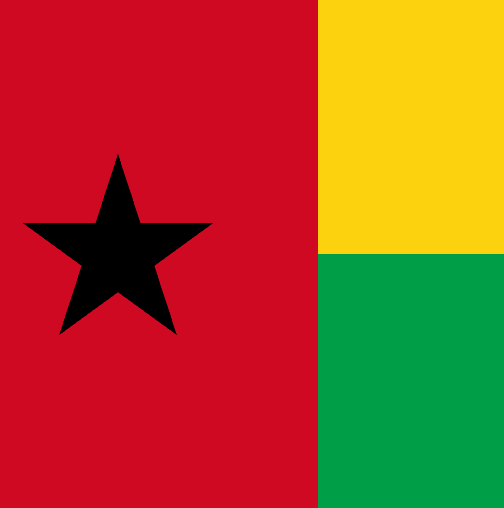
Presidential elections are scheduled to be held in Guinea-Bissau on November 23, 2025. If no candidate secures more than 50% of the valid votes in the first round, a second round will be held on November 30, 2025. This market will resolve according to the listed candidate that wins this election. This market includes any potential second round. If the result of this election isn't known by December 31, 2026, 11:59 PM ET, the market will resolve to "Other". This market will resolve based on t
AI-generated analysis based on market data. Not financial advice.
The Guinea-Bissau Presidential Election scheduled for November 23, 2025, is a pivotal political event in the West African nation's history. This election will determine the country's head of state for the next five years, following the constitutional framework established after the 2014 constitutional review. The election occurs against a backdrop of persistent political instability, with Guinea-Bissau experiencing nine successful or attempted coups since gaining independence from Portugal in 1974. The electoral process follows a two-round system, where a candidate must secure more than 50% of valid votes to win outright in the first round, otherwise a runoff between the top two candidates will occur on November 30, 2025. The election represents a critical test for the nation's democratic institutions and its ability to conduct peaceful transitions of power. International observers, including the African Union, Economic Community of West African States (ECOWAS), and United Nations, are expected to monitor the process closely given the country's history of electoral disputes and military interventions. The outcome will significantly influence Guinea-Bissau's relationships with international partners and its ability to address pressing economic and security challenges. Voter turnout, candidate legitimacy, and post-election stability will be key indicators of democratic progress in a country that has struggled with governance since independence.
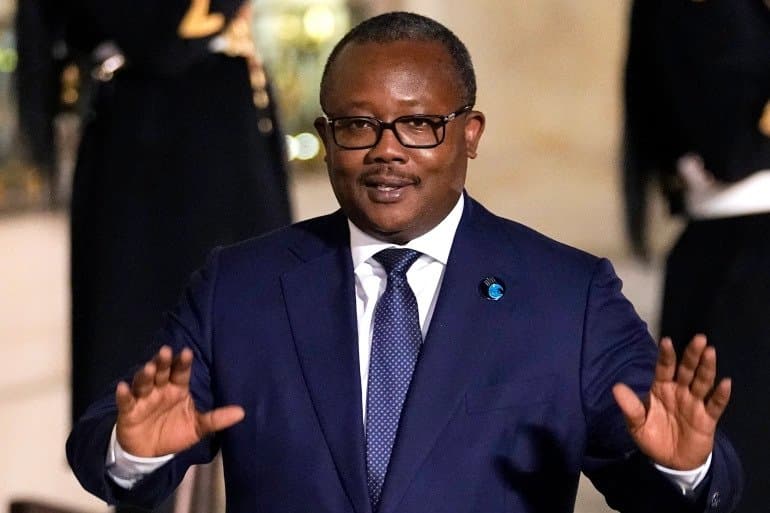
Guinea-Bissau's presidential elections have been consistently turbulent since the country adopted multi-party democracy in 1994. The first multi-party presidential election in 1994 saw João Bernardo Vieira win after previously ruling as a military dictator. This pattern of military figures transitioning to elected office has persisted throughout the nation's political history. The 2019 election that brought Umaro Sissoco Embaló to power was particularly contentious, requiring a Supreme Court ruling to validate his second-round victory over Domingos Simões Pereira. Embaló's subsequent decision to dissolve parliament in May 2022 and call early legislative elections further exacerbated political tensions, creating the current divided government where the presidency and parliament are controlled by opposing parties. This institutional conflict between executive and legislative branches has paralyzed governance and delayed crucial reforms. Historically, Guinea-Bissau has experienced frequent military interventions in politics, including coups in 2003, 2012, and an attempted coup in February 2022. The 2025 election occurs in this context of chronic instability, with the military historically playing a kingmaker role despite formal democratic processes. Past elections have been marred by allegations of fraud, voter intimidation, and post-election violence, particularly in 2019 when opposition parties initially rejected the results.
The 2025 presidential election will determine Guinea-Bissau's trajectory in addressing its severe economic challenges, including a poverty rate exceeding 67% and heavy dependence on cashew nut exports, which account for 90% of export earnings. The election outcome will influence the country's ability to implement reforms required by international financial institutions, particularly the International Monetary Fund's Extended Credit Facility program worth $36.4 million approved in 2022. Political stability following the election is essential for attracting foreign investment and developing the country's offshore oil and gas resources, which could transform its economy. Regionally, a stable electoral process in Guinea-Bissau would strengthen democratic norms in West Africa, where several countries have experienced military takeovers since 2020. Conversely, electoral disputes or military intervention could further destabilize a region already grappling with security threats from jihadist groups in the Sahel. The election also tests international peacebuilding efforts, as the United Nations Integrated Peacebuilding Office in Guinea-Bissau (UNIOGBIS) concluded its mandate in 2020, transferring responsibility for stability to national institutions and regional organizations.
As of late 2024, political campaigning has not officially begun, but potential candidates are positioning themselves for the 2025 contest. The National Election Commission is preparing voter registration updates, with technical support from international partners including the United Nations Development Programme. President Umaro Sissoco Embaló has not formally declared whether he will seek re-election, though he has consolidated power through recent cabinet reshuffles. Opposition parties, particularly the PAIGC, are negotiating potential alliances to present a unified challenge to the incumbent. Security preparations are underway following the attempted coup in February 2022, with ECOWAS maintaining a stabilization force in the country. The government continues to implement economic reforms under its IMF program, with inflation stabilization and public financial management improvements being key achievements that may influence voter perceptions.
Guinea-Bissau uses a two-round system for presidential elections. If no candidate receives more than 50% of valid votes in the first round on November 23, 2025, a second round between the top two candidates will be held on November 30, 2025. The president serves a five-year term and can be re-elected once consecutively.
The dominant parties are the African Party for the Independence of Guinea and Cape Verde (PAIGC), which ruled for decades after independence, the Movement for Democratic Alternation (MADEM-G15) led by President Embaló, and the Assembly of the People United-Democratic Party (APU-PD). Several smaller parties often form coalitions around elections.
Yes, Guinea-Bissau has experienced peaceful transfers twice: in 2000 when Kumba Ialá defeated incumbent Malam Bacai Sanhá, and in 2014 when José Mário Vaz won election following the death of President Malam Bacai Sanhá. However, many transitions have been disrupted by military interventions or contested results.
The military has historically played a decisive role, having executed or attempted nine coups since independence. While formally subordinate to civilian authority, military leaders frequently influence political outcomes, particularly during election periods and transitions of power.
Election disputes are adjudicated by the Supreme Court of Justice, which has the final authority to validate election results. In the 2019 election, the Supreme Court intervened to certify the second-round results after initial opposition challenges.
Educational content is AI-generated and sourced from Wikipedia. It should not be considered financial advice.
Share your predictions and analysis with other traders. Coming soon!
12 markets tracked

No data available
| Market | Platform | Price |
|---|---|---|
![]() | Poly | 10% |
![]() | Poly | 4% |
![]() | Poly | 3% |
![]() | Poly | 2% |
![]() | Poly | 2% |
![]() | Poly | 2% |
![]() | Poly | 1% |
![]() | Poly | 1% |
![]() | Poly | 1% |
![]() | Poly | 1% |
![]() | Poly | 0% |
![]() | Poly | 0% |


No related news found
Add this market to your website
<iframe src="https://predictpedia.com/embed/1L4Eja" width="400" height="160" frameborder="0" style="border-radius: 8px; max-width: 100%;" title="Guinea-Bissau Presidential Election"></iframe>