$582.97K
1
1

1 market tracked

No data available
| Market | Platform | Price |
|---|---|---|
![]() | Poly | 7% |
$582.97K
1
1
Trader mode: Actionable analysis for identifying opportunities and edge
This market will resolve to “Yes” if the U.S. or Israel carries out a kinetic military strike against the Fordow Fuel Enrichment Plant in Iran between the time of market creation and the listed date, 11:59 PM ET. Otherwise, this market will resolve to “No”. This includes, but is not limited to, drone and missile strikes, aerial bombings, and kinetic actions carried out by U.S. or Israeli operatives on the ground. Cyber attacks, sanctions, or diplomatic actions will not count toward the resoluti
AI-generated analysis based on market data. Not financial advice.
This prediction market addresses the possibility of a kinetic military strike by the United States or Israel against Iran's Fordow Fuel Enrichment Plant. The Fordow facility is an underground uranium enrichment plant built into a mountain near the city of Qom. It is one of Iran's most sensitive nuclear sites and is heavily fortified against potential attacks. A strike would involve physical military action such as missile launches, aerial bombings, or ground operations, explicitly excluding cyber operations or sanctions. The market resolves based on whether such an attack occurs before the specified deadline. Interest in this topic stems from escalating tensions between Iran and Western powers over Iran's nuclear program, which has advanced significantly since the collapse of the 2015 Joint Comprehensive Plan of Action (JCPOA). Recent increases in uranium enrichment levels at Fordow, combined with heightened rhetoric from Israeli and American officials about preventing a nuclear-armed Iran, have made the prospect of military action a subject of intense speculation among analysts, policymakers, and investors. The market essentially functions as a collective assessment of the risk of a major escalation in the Middle East.
The Fordow facility's history is central to the nuclear crisis. Its existence was revealed by the U.S., UK, and France in September 2009, after Western intelligence discovered its construction. Iran had not declared the site to the IAEA, violating its safeguards obligations. The plant is built under approximately 260 feet of rock, making it a hardened target designed to withstand aerial attack. The 2015 JCPOA nuclear deal specifically addressed Fordow, converting it into a nuclear physics and technology center where no uranium enrichment was permitted. Only 1,044 IR-1 centrifuges were allowed at the site, and they could not be used for enrichment. Following the U.S. withdrawal from the JCPOA in 2018 under President Donald Trump and the re-imposition of sanctions, Iran began gradually violating the deal's restrictions. A pivotal moment came in January 2021, when Iran announced it had resumed 20% uranium enrichment at Fordow. This was followed by the start of 60% enrichment in early 2023. These actions reversed the core limitations of the JCPOA and returned Fordow to a central role in Iran's enrichment cascade. Israel has a precedent for unilateral action, having conducted an airstrike that destroyed Iraq's Osirak nuclear reactor in 1981 and a similar strike on a suspected Syrian nuclear reactor in 2007.
A military strike on Fordow would represent the most direct and severe confrontation between Iran and its adversaries in the history of the nuclear standoff. It would almost certainly trigger a major regional war. Iran has vowed a 'crushing response' to any attack on its nuclear sites, which would likely involve missile barrages from its own territory and through its proxies like Hezbollah in Lebanon and the Houthis in Yemen, targeting U.S. bases and Israeli cities. Such a conflict could close the Strait of Hormuz, a chokepoint for roughly 20% of the world's oil trade, causing immediate global energy price shocks and economic disruption. Politically, it would fracture international diplomacy, forcing countries to choose sides and potentially ending any residual hope for a negotiated solution to the nuclear issue. Domestically in Iran, an attack could either galvanize national unity behind the government or trigger unrest if the regime is seen as having provoked a devastating war through its policies.
As of mid-2024, tensions are at a high point. The IAEA reports that Iran continues to enrich uranium at 60% at Fordow and has substantially increased its stockpile. Diplomacy to restore the nuclear deal is effectively dormant. Following the October 7, 2023 Hamas attack on Israel and the subsequent war in Gaza, regional hostilities have increased, with Iran-backed groups attacking U.S. and Israeli interests. In April 2024, after an Israeli strike on an Iranian diplomatic building in Damascus, Iran launched a direct missile and drone attack on Israel, marking an unprecedented escalation. While that exchange did not target nuclear facilities, it demonstrated a new willingness for direct confrontation, raising fears that a future clash could spiral into an attack on sites like Fordow.
The Fordow Fuel Enrichment Plant is located near the city of Qom, roughly 100 miles south of Tehran, Iran. It is built into the side of a mountain within a Revolutionary Guards military base, which provides an additional layer of security.
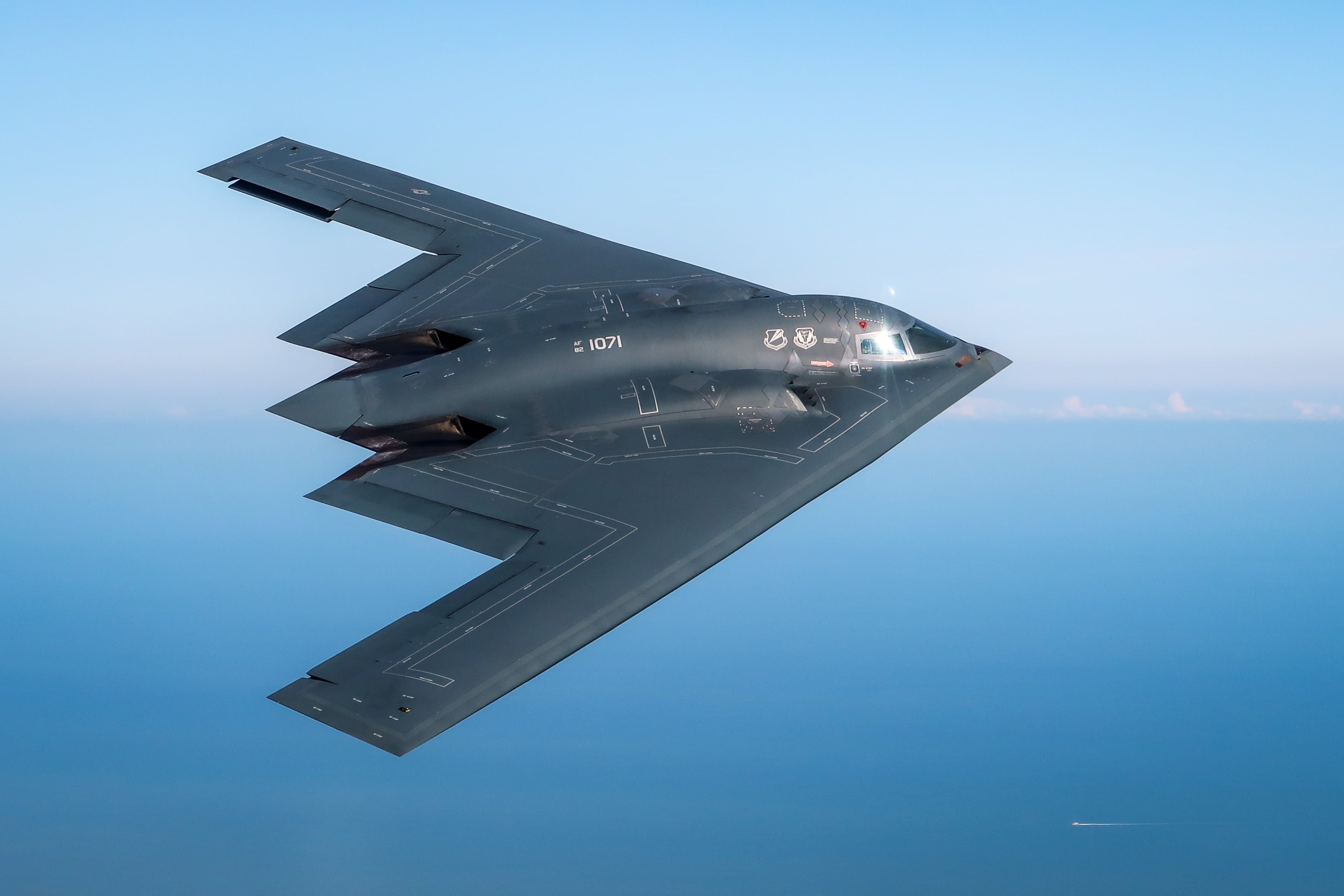
The U.S. military's GBU-57 Massive Ordnance Penetrator (MOP) is designed to penetrate up to 200 feet of reinforced concrete before detonating. Given Fordow's depth of 260 feet under rock, a single bomb might not guarantee destruction, potentially requiring multiple precision strikes on the same point.
Israel has not launched a major overt military strike on Iran's nuclear facilities. However, it has conducted a long-running covert campaign involving the assassination of nuclear scientists, cyber attacks like the Stuxnet virus that damaged centrifuges, and sabotage operations inside Iran targeting facilities and equipment.
Uranium enriched to 60% purity has very limited civilian use. The primary medical isotope production requires only 20% enriched uranium. The jump from 60% to the 90% needed for a nuclear weapon is a relatively quick and simple final step in the enrichment process, which is why this level causes such alarm.
An attack would likely cause catastrophic regional war. Iran would retaliate directly and through its proxies, targeting U.S. bases and Israeli cities with missiles. Global oil prices would spike due to threats to shipping in the Persian Gulf, and any hope for a diplomatic nuclear solution would be eliminated for a generation.
Educational content is AI-generated and sourced from Wikipedia. It should not be considered financial advice.

No related news found
Add this market to your website
<iframe src="https://predictpedia.com/embed/2Owo18" width="400" height="160" frameborder="0" style="border-radius: 8px; max-width: 100%;" title="US/Israel strike on Fordow nuclear facility by...?"></iframe>