$599.37K
1
1

1 market tracked

No data available
| Market | Platform | Price |
|---|---|---|
![]() | Poly | 8% |
Trader mode: Actionable analysis for identifying opportunities and edge
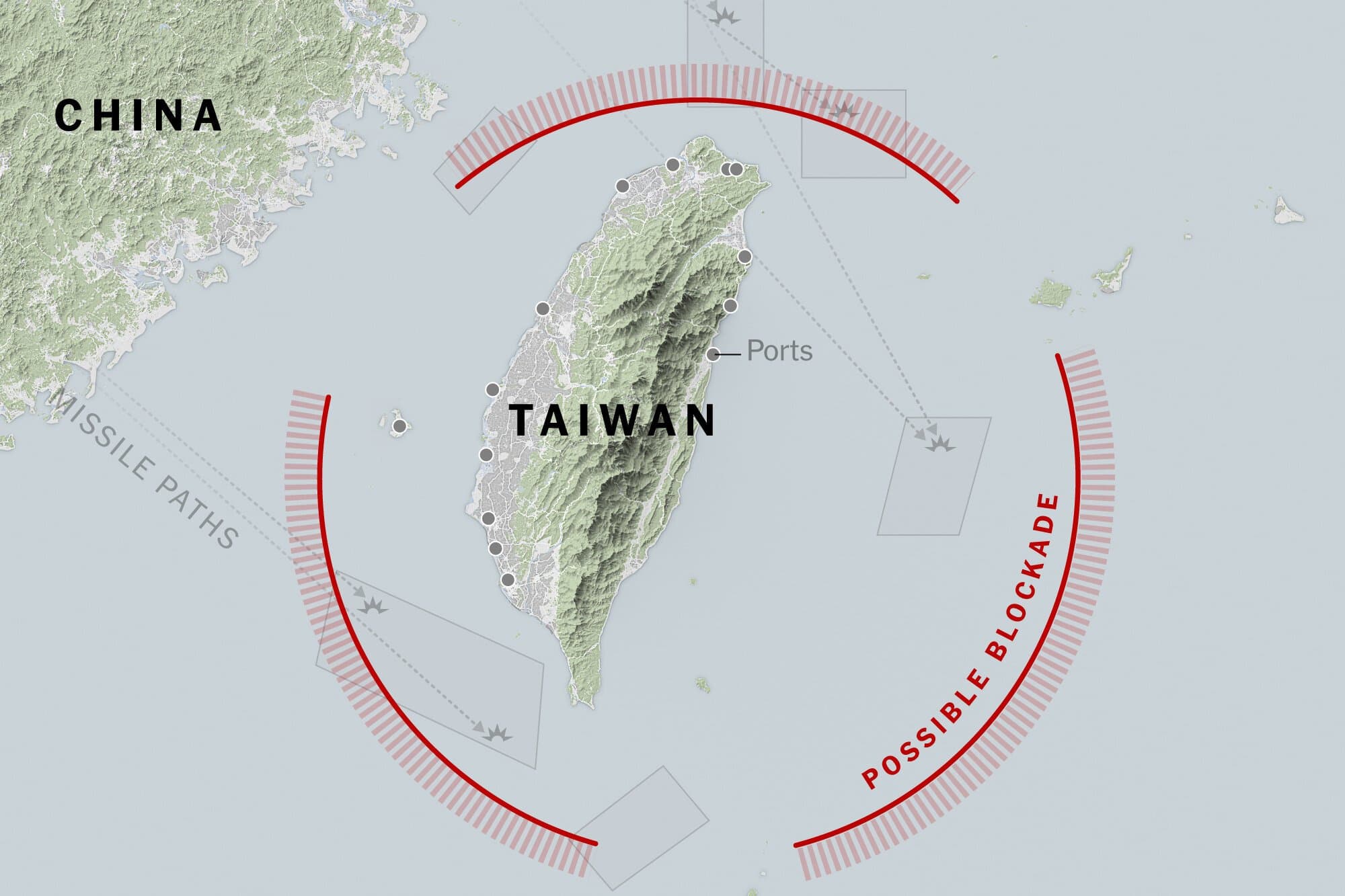
This market will resolve to "Yes" if China (People's Republic of China) announces it has established or otherwise de facto establishes an arial or naval blockade for the territory of Taiwan (Republic of China) by June 30, 2026, 11:59 PM ET. Otherwise, this market will resolve to "No". A qualifying blockade is: - Prevents the normal ingress or egress of foreign commercial traffic to or from Taiwan Island’s main ports or airports by threat or use of force for ≥ 24 hours. - Covers part or whole of
Prediction markets currently give a low probability to China blockading Taiwan by the June 30 deadline. The "No" outcome is trading at about 93%, meaning traders collectively see a roughly 9 in 10 chance that a full blockade does not happen in this timeframe. This shows a high level of confidence that the immediate future will not see this specific, severe military action, though it does not rule out other forms of pressure or escalation.
Traders are likely weighing several factors. First, an announced blockade is an act of war that would trigger a severe global response, including almost certain intervention by the United States and other allies under long-standing policy commitments. The economic fallout would be immediate and catastrophic for all parties, disrupting the world's supply of advanced semiconductors.
Second, China's recent pressure campaigns have followed a different pattern. They have involved increased military patrols, economic coercion, and diplomatic isolation rather than outright blockade. The market may be forecasting a continuation of this "gray zone" strategy, which achieves political goals without crossing the clear threshold of a blockade.
Finally, the specific deadline is relatively soon. Major military actions of this scale typically require longer, visible preparation that intelligence agencies and markets would likely detect in advance. No such build-up is currently evident.
While the deadline is June 30, the market will react to any major event that changes the risk calculus. Key moments to watch include the inauguration of Taiwan's next president in May 2024, and any major US political shifts, such as the outcome of the 2024 presidential election and subsequent policy announcements. A significant visit by a high-level US official to Taiwan, or a major joint military exercise, could increase tensions. Conversely, diplomatic meetings between US and Chinese officials could temporarily lower perceived risks.
Prediction markets have a mixed but generally decent track record on geopolitical events, especially when there is clear, binary resolution and significant trading volume. They often outperform pundit forecasts by aggregating many viewpoints. However, their main limitation here is that they are better at gauging short-term, predictable political logic than at predicting sudden, irrational acts of aggression. The market price reflects the rational cost-benefit analysis most observers see, but it cannot account for unpredictable decision-making in a crisis. The moderate amount of money wagered on this question suggests it is taken seriously, but it is not a massive market, so the signal should be viewed with some caution.
Prediction markets assign a low 7% probability to China blockading Taiwan by June 30, 2026. This price, translating to roughly a 1-in-14 chance, signals that traders view an imminent blockade as a significant tail risk rather than a base case scenario. With $578,000 in volume, the market has attracted moderate liquidity, suggesting serious interest in pricing this geopolitical risk. The current odds imply the consensus expects continued strategic tension short of outright kinetic blockade operations.
Three primary elements suppress the probability. First, the economic cost of a blockade would be severe for China, immediately disrupting critical semiconductor supply chains and triggering global sanctions. Historical precedent shows Beijing prefers gradual coercive measures, like sustained military exercises and economic pressure, over sudden escalations that force a direct US response. Second, the US security commitment, reinforced by repeated presidential statements and congressional arms sales, acts as a substantial deterrent. A 2025 Pentagon report assessed that a full blockade would likely initiate a major power conflict, a risk Chinese leadership has so far been unwilling to take. Third, market timing matters. The June 2026 deadline falls before the 20th Party Congress in 2027, a period where Chinese leadership typically prioritizes internal political stability over external military gambits.
The probability could spike in response to specific triggers. A formal state visit by a US president or speaker of the house to Taipei would be a major escalation, as would a Taiwanese declaration of de jure independence. Military accidents, such as a collision between Chinese and Taiwanese vessels resulting in fatalities, could spark a rapid crisis. Conversely, odds could fall further toward 0% if high-level diplomatic channels reopen, evidenced by a meeting between US and Chinese defense chiefs or a resumption of routine cross-strait dialogue. Markets will closely watch China's major military exercises in the Taiwan Strait; drills that mimic a full blockade without implementing one may cause temporary probability increases, while uneventful periods will reinforce the low-price consensus.
AI-generated analysis based on market data. Not financial advice.
$599.37K
1
1
Educational content is AI-generated and sourced from Wikipedia. It should not be considered financial advice.
No related news found
Add this market to your website
<iframe src="https://predictpedia.com/embed/3hr1_V" width="400" height="160" frameborder="0" style="border-radius: 8px; max-width: 100%;" title="Will China blockade Taiwan by June 30?"></iframe>