$943.54K
1
3

$943.54K
1
3
Trader mode: Actionable analysis for identifying opportunities and edge
If Iran halts or severely restricts international maritime traffic through the Strait of Hormuz by December 31, 2026, 11:59 PM ET, this market will resolve to "Yes". Otherwise, this market will resolve to "No". The primary resolution source for this market will be official governmental information, however a consensus of credible reporting will also be used.
Prediction markets currently give about a 1 in 3 chance that Iran will close or severely restrict the Strait of Hormuz by the end of 2026. This means traders collectively see it as unlikely, but still a significant risk worth pricing in. The market suggests that while a full closure is not the expected outcome, the possibility is real enough to command substantial attention, with nearly a million dollars wagered on the question.
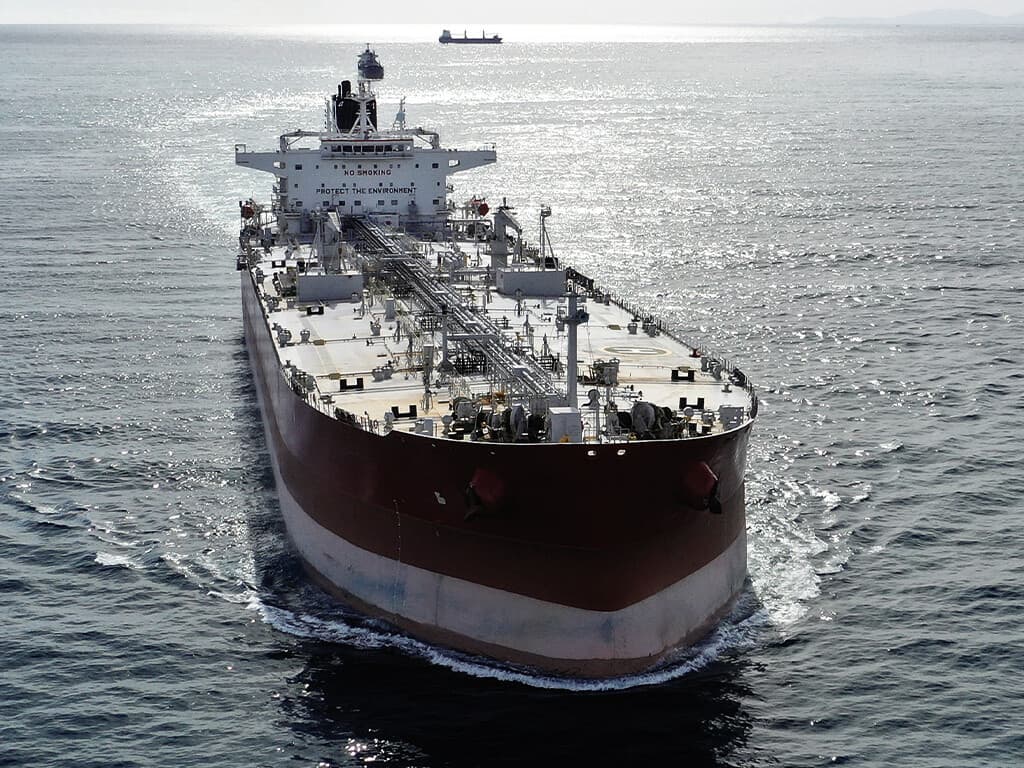
The current odds balance Iran's historical threats against the severe consequences of actually following through. The Strait of Hormuz is the world's most important oil transit chokepoint, with about 20% of global oil consumption passing through it. Iran has repeatedly threatened closure during periods of heightened tension, often as a deterrent against military action or severe economic sanctions.
Two main factors are likely shaping the 33% probability. First, closing the strait would be a massively escalatory act, likely triggering a direct military conflict with the United States and its allies, which Iran has so far avoided. Second, such an action would also cripple Iran's own economy by halting its oil exports and inviting devastating retaliation. The market price reflects that this option is a last resort, not a first move.
There is no single deadline, but the probability may shift around key moments of geopolitical stress. The upcoming U.S. presidential election and transition in January 2025 could influence policy toward Iran. Any major escalation in the region, such as a direct strike on Iranian nuclear facilities or a significant tightening of oil sanctions, could increase the risk. Markets will also watch for incidents involving Iranian oil tankers being seized or attacks on shipping that Iran attributes to adversaries. Progress or collapse in nuclear negotiations would also be a signal.
Prediction markets have a mixed record on low-probability, high-impact geopolitical events like this. They are generally better at aggregating available information than individual pundits, but they can be slow to react to sudden crises. Their strength is in showing the consensus odds based on current public knowledge. A major limitation is that they cannot predict black swan events or secret decisions. For something as dramatic as closing a global chokepoint, the market is likely weighing historical precedent, which shows Iran prefers calibrated brinkmanship over irreversible acts of war.
Prediction markets assign a 33% probability that Iran will close or severely restrict the Strait of Hormuz by the end of 2026. This price indicates traders view a shutdown as a significant but secondary risk. With nearly $1 million in wagers across related markets, the substantial liquidity suggests this is a serious geopolitical hedge for many participants. A one-in-three chance reflects a scenario that is plausible enough to warrant financial coverage, yet unlikely to be the base case.
The 33% price balances Iran's historical threats against the severe consequences of action. Iranian military and political leaders have repeatedly stated that a major attack on their nuclear program or national infrastructure could trigger a closure of the Strait, a chokepoint for about 20% of global oil trade. However, executing a closure would invite direct military conflict with the United States and allied Gulf states, a risk Iran has so far avoided. The current price likely incorporates this deterrent while pricing in elevated regional tensions from the Gaza conflict and stalled nuclear negotiations. Markets are effectively betting that Iran's brinkmanship will remain below the threshold of a full blockade.
Two primary catalysts could shift this probability before the December 2026 deadline. First, a direct military strike by Israel or the U.S. on Iranian nuclear facilities would dramatically increase the odds, potentially pushing them above 70%. Second, a major breakthrough in U.S.-Iran diplomacy, such as a new nuclear deal, could reduce the probability toward 10% by lowering the immediate threat of conflict. Monitoring the status of the Joint Comprehensive Plan of Action (JCPOA) talks and any escalation in covert attacks between Iran and Israel will provide early signals. The market may also react sharply to any incident involving tanker seizures or attacks on shipping lanes that approaches a total blockade.
This contract is trading exclusively on Polymarket, so no direct arbitrage opportunity exists with other platforms like Kalshi. The concentration of liquidity on a single platform suggests this is a niche geopolitical bet favored by crypto-native traders. The absence of a comparable market on traditional prediction platforms may indicate either regulatory constraints or a view that the event horizon is too distant for mainstream markets. The 33% price therefore represents the consensus of a specific, risk-tolerant trading community.
AI-generated analysis based on market data. Not financial advice.
This prediction market addresses whether Iran will close or severely restrict international maritime traffic through the Strait of Hormuz by December 31, 2026. The Strait of Hormuz is a narrow sea passage between the Persian Gulf and the Gulf of Oman, bordered by Iran to the north and Oman to the south. It is the world's most important oil transit chokepoint, with approximately one-fifth of global oil consumption passing through it daily. The market resolves based on official governmental information or a consensus of credible reporting confirming such an action. Iran has repeatedly threatened to close the strait during periods of heightened geopolitical tension, particularly in response to international sanctions or perceived military threats. These threats are a strategic tool in Iran's foreign policy, leveraging its geographic position to exert pressure on global energy markets and Western nations. Recent escalations in the region, including attacks on shipping and ongoing nuclear negotiations, have renewed focus on this possibility. Observers monitor Iranian military exercises, statements from the Islamic Revolutionary Guard Corps (IRGC), and diplomatic developments to assess the risk. The market reflects uncertainty about whether Iran will follow through on its long-standing threats, which would constitute a major escalation with immediate global economic consequences.
Iran's threats to close the Strait of Hormuz date to the 1980s during the Iran-Iraq War, when both sides attacked oil tankers in the 'Tanker War.' The US Navy intervened to protect shipping, reflagging Kuwaiti tankers and engaging Iranian forces in Operation Praying Mantis in 1988, which destroyed Iranian naval assets. In the 1990s and early 2000s, Iran developed asymmetric naval capabilities specifically for the strait, including swarms of small fast-attack boats and extensive coastal anti-ship missile batteries. A major escalation occurred in 2011-2012 when Iran threatened closure in response to US and EU sanctions targeting its oil exports. The Iranian navy conducted the 'Velayat-90' exercises, simulating strait blockades. In 2015, following the Joint Comprehensive Plan of Action (JCPOA) nuclear deal, tensions temporarily eased. However, after the US withdrawal from the JCPOA in 2018 and reimposition of sanctions, Iran resumed threats. In 2019, Iran seized the British-flagged tanker Stena Impero and was accused of attacking other vessels with mines. These historical patterns show Iran uses strait closure threats as a recurring pressure tactic during confrontations with Western adversaries.
A closure of the Strait of Hormuz would trigger an immediate global energy crisis. Oil prices would spike dramatically, potentially exceeding $200 per barrel according to some analysts, causing inflation and economic slowdowns worldwide. Countries dependent on Gulf oil, including China, India, Japan, and South Korea, would face severe supply shortages. Global shipping insurance rates would skyrocket, and alternative routes would be insufficient to compensate for the lost volume. The economic impact would extend beyond oil, as approximately one-quarter of the world's liquefied natural gas (LNG) trade also passes through the strait, affecting energy supplies in Europe and Asia. Politically, a closure would likely provoke a military response from a US-led coalition, risking a major regional war. Such a conflict could draw in other regional powers like Israel and Saudi Arabia, destabilizing the entire Middle East. The action would also violate international law governing freedom of navigation, setting a dangerous precedent for other maritime chokepoints like the Strait of Malacca or the Suez Canal.
As of early 2024, Iran has not closed the Strait of Hormuz, but tensions remain elevated. The IRGC Navy continues regular exercises demonstrating blockade capabilities, including 'Great Prophet' drills featuring missile launches and swarm attacks. In January 2024, Iran seized the oil tanker St. Nikolas in retaliation for US sanctions enforcement, marking the first seizure in a year. The US maintains a carrier strike group in the region and has increased coordination with Gulf allies on maritime security. Diplomatic efforts continue indirectly between Iran and the US regarding nuclear negotiations and regional de-escalation, but no breakthrough has occurred. Oil markets currently price in a moderate risk premium for Hormuz disruption, with analysts estimating a 15-20% probability of significant disruption within the next three years.
Iran possesses the military capability to severely disrupt or temporarily close the strait using a combination of naval mines, anti-ship missiles, and fast-attack craft swarms. However, most analysts believe Iran could not sustain a complete closure against determined US-led military action to reopen it. The more likely scenario is a temporary blockage or harassment campaign rather than a permanent seal.
Oil prices would spike immediately, with estimates ranging from $150 to over $200 per barrel. The initial shock would likely be extreme, potentially doubling current prices within days. The extent and duration of the price increase would depend on how long the closure lasted and how quickly alternative supply routes could be activated.
The US would likely lead an international coalition to reopen the strait using military force. This would probably involve clearing naval mines, suppressing Iranian coastal defenses, and escorting commercial tankers. The US has pre-positioned minesweepers in Bahrain and maintains significant air and naval assets in the region specifically for this contingency.
Limited alternatives exist. Saudi Arabia can use the East-West Petroline pipeline to the Red Sea, but its capacity is 5 million barrels per day compared to 20.5 million through Hormuz. The UAE has a pipeline to the Gulf of Oman bypassing the strait, but it carries only 1.5 million barrels daily. These alternatives would be insufficient to handle total Gulf exports.
Educational content is AI-generated and sourced from Wikipedia. It should not be considered financial advice.
3 markets tracked

No data available
| Market | Platform | Price |
|---|---|---|
![]() | Poly | 33% |
![]() | Poly | 28% |
![]() | Poly | 20% |


No related news found
Add this market to your website
<iframe src="https://predictpedia.com/embed/3l892s" width="400" height="160" frameborder="0" style="border-radius: 8px; max-width: 100%;" title="Will Iran close the Strait of Hormuz by...?"></iframe>