$10.76K
1
1

1 market tracked

No data available
| Market | Platform | Price |
|---|---|---|
![]() | Poly | 14% |
Trader mode: Actionable analysis for identifying opportunities and edge
This market will resolve to "Yes" if the U.S. government formally recognizes Somaliland as an independent state by December 31, 2025, 11:59 PM ET. Otherwise, this market will resolve to "No." An announcement of intentions will not suffice to resolve this market to "Yes." Only the U.S. government's formal recognition of Somaliland as an independent state will count toward a "Yes" resolution for this market. The primary resolution source for this market will be official information from the U.S.
Prediction markets currently assign a low probability to US recognition of Somaliland by the June 30, 2026 deadline. On Polymarket, the "Yes" share trades at approximately 14¢, implying just a 14% chance of formal recognition occurring. This price indicates the market views this geopolitical shift as very unlikely within the given timeframe, though not entirely impossible. Trading volume is thin at around $11,000, suggesting limited speculative interest or consensus-building.
The low probability is anchored by two primary geopolitical realities. First, US foreign policy prioritizes stability in the Horn of Africa and maintains relations with the Federal Government of Somalia in Mogadishu, which vehemently opposes Somaliland's secession. Formal US recognition would severely destabilize this relationship and regional diplomacy. Second, while Somaliland has functioned as a de facto independent state since 1991, international recognition has been withheld globally due to the precedent it would set for other separatist movements and the consistent African Union position supporting Somalia's territorial integrity. The US is unlikely to unilaterally break this decades-long consensus.
A significant shift in odds would require a major change in strategic calculus. A potential catalyst could be if Somaliland finalizes its contentious port deal with Ethiopia, granting Addis Ababa naval access, and the US views bolstering this partnership as a critical counterbalance to Chinese influence in the region. However, this would likely prompt intense opposition from Somalia and other AU members. Another scenario would be a complete collapse of the Somali federal government, creating a vacuum that reframes regional alliances. Barring such a high-stakes realignment, the market's low probability is likely to persist. Monitoring diplomatic statements following the finalization of the Ethiopia-Somaliland memorandum of understanding will be crucial, as it represents the nearest-term potential disruptor to the status quo.
AI-generated analysis based on market data. Not financial advice.
$10.76K
1
1
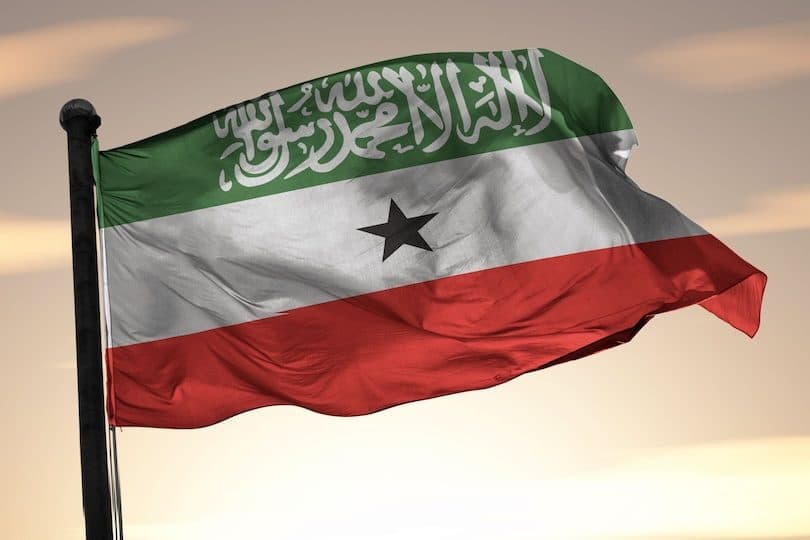
This prediction market focuses on whether the United States government will formally recognize the Republic of Somaliland as an independent sovereign state by December 31, 2025. Somaliland is a self-declared independent region in the Horn of Africa that unilaterally broke away from Somalia in 1991. Despite functioning as a de facto state with its own government, currency, and security forces for over three decades, no United Nations member state has granted it diplomatic recognition. The market resolves based on an official act of recognition by the U.S. government, not mere statements of intent. This topic sits at the intersection of international law, African geopolitics, and U.S. foreign policy in a strategically vital region. Interest stems from Somaliland's persistent lobbying efforts, its relative stability compared to Somalia, and its potential as a partner for counterterrorism and maritime security. Recent diplomatic engagements, including high-level visits and discussions about port access, have intensified speculation about a potential shift in U.S. policy, making the question of formal recognition a live issue in Washington and regional capitals.
Somaliland's claim to statehood is rooted in a distinct colonial history. It was a British protectorate from 1884 until June 26, 1960, when it gained independence. Five days later, it voluntarily united with the former Italian Somaliland to form the Somali Republic. This union deteriorated over decades of political marginalization under the Siad Barre regime, which conducted a brutal military campaign against the Isaaq clan in Somaliland in the 1980s. Following the collapse of Barre's government in 1991, Somaliland declared its independence on May 18, 1991, and has since maintained peace and held multiple democratic elections. The African Union (AU), whose charter emphasizes the inviolability of colonial borders, has been hesitant to endorse secession, fearing a ripple effect across the continent. The United States has consistently supported the territorial integrity and sovereignty of Somalia, as recognized by the UN, while engaging pragmatically with Somaliland authorities on development and security issues. This dual-track approach of engaging without recognizing has been the U.S. and international standard for over 30 years.
U.S. recognition of Somaliland would represent a seismic shift in international law and African politics, challenging the long-held principle of uti possidetis (maintenance of colonial borders) that has guided the continent since decolonization. It could embother secessionist movements elsewhere, from Cameroon to Ethiopia, potentially destabilizing multiple regions. For Somaliland, recognition would unlock access to international financial institutions, bilateral aid, and foreign direct investment, crucial for its 4.5 million people. Conversely, it would severely undermine the Somali Federal Government, a key U.S. partner in fighting al-Shabaab, and could trigger a hostile response from other African nations and the Arab League, which supports Somalia's unity. The decision carries significant weight for maritime security in the Gulf of Aden, a critical global shipping chokepoint, as it would determine which government the U.S. partners with to secure those waters.
As of late 2024, the United States maintains its official policy of supporting Somalia's sovereignty and territorial integrity. However, the geopolitical landscape has been altered by Ethiopia's January 2024 MoU with Somaliland, which included a clause stating Ethiopia would 'make an in-depth assessment towards taking a position regarding the efforts of Somaliland to gain recognition.' This has increased diplomatic pressure on all parties. The U.S. has called for dialogue between Mogadishu and Hargeisa and expressed concern over rising tensions. High-level U.S. officials, including the Special Envoy, continue to engage with both governments, but there has been no public indication of an imminent policy change toward recognition.
Somaliland is not recognized primarily due to the international community's strong adherence to the principle of territorial integrity for existing UN member states, in this case Somalia. The African Union, whose opinion carries great weight, fears that recognizing secession could set a destabilizing precedent across the continent where many borders are colonial constructs.
In January 2024, Ethiopia signed a memorandum of understanding with Somaliland. The deal, not yet a formal treaty, stated that Ethiopia would consider recognizing Somaliland as an independent state in exchange for a 50-year lease of a 20-kilometer stretch of Somaliland's coastline for naval and commercial port access. This agreement triggered a major diplomatic crisis with Somalia.
No, the United States does not have a military base in Somaliland. The U.S. operates a small contingent of troops in Somalia proper in support of the Somali government and African Union forces fighting al-Shabaab. The U.S. military has, however, engaged in limited security cooperation with Somaliland's forces in the past.
Somaliland has its own government, military, police, currency (the Somaliland shilling), and passport system. It has held multiple peaceful transfers of power through elections, unlike much of southern Somalia, which has been plagued by conflict and the insurgency of the al-Shabaab militant group for decades.
U.S. recognition would likely trigger immediate severance of diplomatic relations with Somalia, jeopardize counterterrorism cooperation, and provoke strong condemnation from the African Union and Arab League. It could, however, open the door for other nations to follow suit and allow Somaliland to receive bilateral aid and loans directly from international institutions.
Educational content is AI-generated and sourced from Wikipedia. It should not be considered financial advice.
Share your predictions and analysis with other traders. Coming soon!

No related news found
Add this market to your website
<iframe src="https://predictpedia.com/embed/4wIv1T" width="400" height="160" frameborder="0" style="border-radius: 8px; max-width: 100%;" title="US recognize Somaliland by...?"></iframe>