$10.02K
1
1

1 market tracked

No data available
| Market | Platform | Price |
|---|---|---|
![]() | Poly | 33% |
Trader mode: Actionable analysis for identifying opportunities and edge
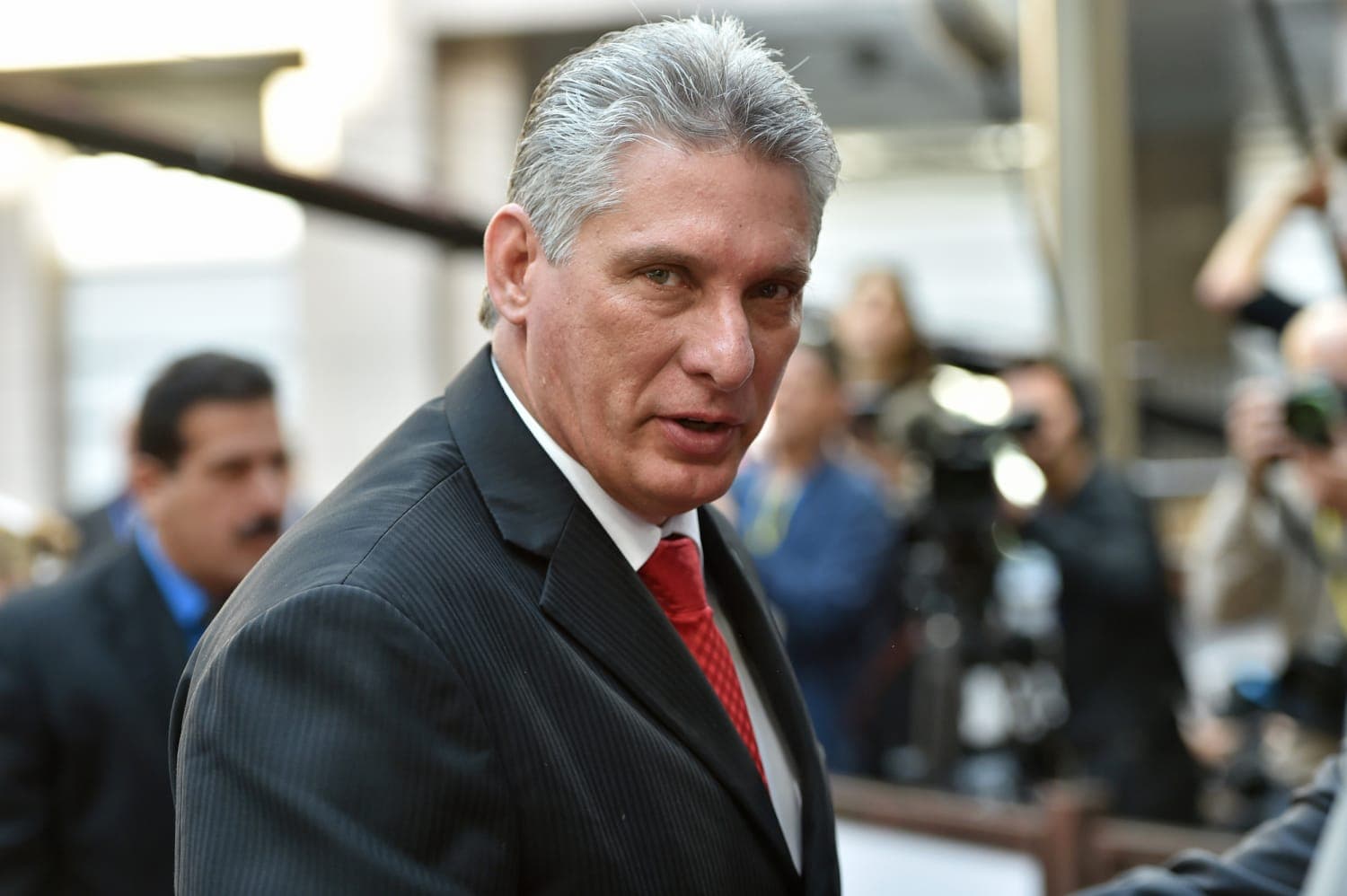
This market will resolve to “Yes” if the United States federal government formally charges or announces a criminal indictment of Cuban President Miguel Diaz-Canel between market creation and June 30, 2026, 11:59 PM ET. Otherwise, this market will resolve to “No”. The primary resolution source for this market will be official information from US governmental sources, however a wide consensus of credible reporting will also be used.
AI-generated analysis based on market data. Not financial advice.
$10.02K
1
1
This prediction market asks whether the United States federal government will formally charge or indict Cuban President Miguel Díaz-Canel by June 30, 2026. The question exists at the intersection of U.S. foreign policy, international law, and the long-standing adversarial relationship between the two nations. For a 'Yes' resolution, the U.S. Department of Justice or another federal agency would need to bring criminal charges against a sitting head of state, an action with significant diplomatic and legal ramifications. The market's timeframe extends through mid-2026, covering the remainder of the current U.S. presidential term and a period of continued tension. Interest in this topic stems from the unprecedented nature of such an action. While the U.S. has sanctioned numerous Cuban officials and entities under programs like the Cuban Assets Control Regulations, it has never criminally indicted a sitting Cuban president. The possibility reflects escalating U.S. policy tools against governments it designates as authoritarian. Recent U.S. actions include redesignating Cuba as a State Sponsor of Terrorism in 2021 and maintaining a comprehensive economic embargo. Analysts watch for legal maneuvers that could expand the use of U.S. courts in foreign policy, such as applying statutes related to drug trafficking, human rights abuses, or supporting terrorism to foreign leaders. The market gauges the probability of a major escalation in bilateral hostilities.
The U.S.-Cuba relationship has been defined by conflict since Fidel Castro's revolution in 1959. The U.S. imposed a comprehensive economic embargo in 1962, and the two nations have had no formal diplomatic ties for most of the period since. The U.S. has a history of using legal actions against Cuban officials, but within limits. In 2003, the U.S. indicted and later convicted Cuban spy Ana Belén Montes, a senior U.S. defense intelligence analyst. More relevantly, the U.S. has indicted foreign heads of state while they were in power, setting potential precedents. In 1989, the U.S. indicted Panamanian leader Manuel Noriega on drug trafficking charges, later invading Panama to capture him. In 2003, a U.S. court indicted Liberian President Charles Taylor for war crimes while he was still in office, though he was not apprehended until after he fled. The legal doctrine of 'head of state immunity' under international law generally protects sitting leaders from prosecution in foreign courts, but the U.S. has at times disregarded this for leaders it does not recognize or for specific crimes. The U.S. has never recognized the immunity of leaders it designates as sponsors of terrorism, a category Cuba re-entered in 2021. This legal history shows that while an indictment is extraordinary, it is not without precedent in U.S. practice when dealing with adversarial regimes.
A U.S. criminal indictment of President Díaz-Canel would represent a dramatic escalation beyond sanctions and diplomatic pressure. It would effectively criminalize the entire Cuban government in the eyes of U.S. law, making any negotiation or dialogue with its leadership legally fraught for American officials. This could permanently close off avenues for diplomatic resolution on issues like migration, drug interdiction cooperation, and claims on nationalized property. For the Cuban diaspora, particularly in South Florida, such an action would be a powerful symbolic gesture of accountability. For the Cuban government, it would be viewed as an act of war under international law, likely triggering a severe crackdown on dissent and further alignment with adversaries like Russia and China. Economically, it could scare away any remaining foreign investors wary of U.S. secondary sanctions, deepening Cuba's crisis. It would also test the limits of universal jurisdiction and the erosion of head of state immunity, potentially encouraging other nations to indict foreign leaders and further politicizing international justice.
As of early 2024, the United States has not announced any criminal investigation or intent to charge President Díaz-Canel. The Biden administration's Cuba policy remains focused on targeted sanctions on individual officials and military entities, increasing support for independent Cuban civil society, and facilitating limited migration pathways. In November 2023, the U.S. Treasury Department sanctioned three Cuban officials for alleged human rights abuses. The State Department's 2023 Country Reports on Human Rights Practices, released in March 2024, accused Cuban authorities of 'significant human rights issues' including arbitrary killings and torture. These reports build a narrative but stop short of alleging criminal activity by the president. No member of the U.S. Congress has publicly introduced legislation mandating the Justice Department to investigate Díaz-Canel, though several have called for his government to be held accountable.
Yes, but rarely. The United States indicted Panamanian dictator Manuel Noriega on drug charges in 1989 and Liberian President Charles Taylor for war crimes in 2003 while they were still in office. These cases are the closest precedents for a potential indictment of the Cuban president.
Potential charges could include crimes against humanity or persecution for the suppression of protests, drug trafficking if linked to Cuban ports, providing material support to terrorism due to Cuba's state sponsor designation, or conspiracy related to human smuggling given the migration crisis. Prosecutors would need to link him directly to the criminal acts of subordinates.
Under customary international law, sitting heads of state generally possess immunity from criminal jurisdiction in foreign national courts. However, the U.S. government has previously argued this immunity does not apply to leaders of states designated as sponsors of terrorism or for certain international crimes like torture.
Cuba would vehemently denounce it as illegal. Practical effects would include making Díaz-Canel unable to travel to any country with a U.S. extradition treaty without risk of arrest, and it would likely terminate any remaining bilateral talks on issues like migration. It would be a major escalation with unpredictable consequences.
Educational content is AI-generated and sourced from Wikipedia. It should not be considered financial advice.

No related news found
Add this market to your website
<iframe src="https://predictpedia.com/embed/4zruVT" width="400" height="160" frameborder="0" style="border-radius: 8px; max-width: 100%;" title="US federally charges Cuba leader Miguel Diaz-Canel?"></iframe>