West Virginia Senate winner?
$44.33K
2
4
West Virginia Senate winner?
$44.33K
2
4
AI Analysis
Trader mode: Actionable analysis for identifying opportunities and edge
About This Event
In 2026 If a representative X party is sworn in as a Senator of West Virginia for the term beginning in 2027, then the market resolves to Yes. This market is eligible for accelerated determination after a consensus of media organizations project the winner. See full rules for details. This market will close early following the swearing in of the Senator for the seat in question.
This saved analysis is awaiting a background update. Its prices and claims may be outdated; compare them with the dated market data above.
Current Market Outlook
Kalshi traders price a Republican win in West Virginia's 2026 Senate race at 95%. That is about as close to a sure thing as prediction markets get this far out. The implied 5% chance for a Democrat reflects the possibility of an unexpected scandal, a retirement, or some other black swan event. It does not suggest any real competitive race.
Key Factors Driving the Odds
West Virginia is the most Republican state in the country by presidential margin. Donald Trump won it by 39 points in 2020 and by 42 points in 2024. No Democrat has won a statewide federal election here since Joe Manchin in 2018. Manchin retired rather than face reelection in 2024, and Republican Jim Justice won that open seat by 20 points.
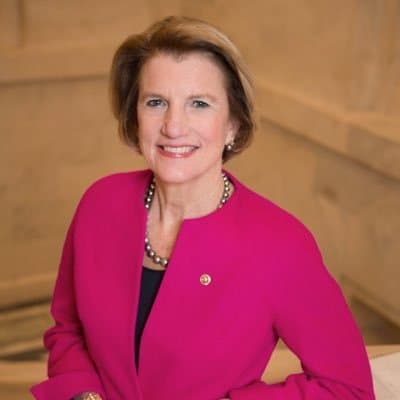
The 2026 race will be for the seat currently held by Republican Shelley Moore Capito, who is up for reelection. Capito has a 60% approval rating in the state and has not faced a serious primary challenge since 2014. No prominent Democrat has signaled any interest in running. The state Democratic Party is essentially a shell organization with no bench of candidates who could compete statewide.
West Virginia's electorate has shifted right faster than any other state over the past two decades. The state legislature is a Republican supermajority. All three House seats are Republican. The governor is Republican. The political infrastructure for a Democratic statewide campaign simply does not exist anymore.
What Could Change These Odds
A Capito retirement would be the only realistic path to a competitive race. She is 71 and has served in the Senate since 2015. If she stepped down, a chaotic Republican primary could produce a damaged nominee. But even then, the general election would still favor the GOP by double digits.
The filing deadline is January 2026. If Capito files for reelection, the 95% probability is actually too low. The market should be closer to 99%. If she retires, expect the Republican probability to drop to 80-85%, still heavily favored but with more uncertainty.
No other scenario moves the odds meaningfully. A national Democratic wave in 2026 would need to be historically large to flip West Virginia. The 2018 blue wave produced zero Democratic gains in the state. The 2022 midterms saw every Republican incumbent win by 30 points or more.
AI-generated analysis based on market data. Not financial advice.
Saved Jul 28, 2026 UTCThis saved content is awaiting a background update. It may contain outdated claims; use the dated market data and provider rules for the latest available information.
Overview
The 2026 West Virginia Senate election will determine who represents the state in the United States Senate for the term beginning in January 2027. West Virginia has a long history as a Democratic stronghold that has shifted sharply to the Republican Party in the past two decades. The current incumbent, Senator Shelley Moore Capito (Republican), was reelected in 2020 and is not up for reelection until 2026. However, the seat in question is the other Senate seat, currently held by Senator Joe Manchin (Democrat), who was first elected in a 2010 special election and won a full term in 2012 and again in 2018. Manchin has been a pivotal figure in the evenly divided Senate, often breaking with his party on key votes. In November 2023, Manchin announced he would not seek reelection in 2024, leaving the seat open for the 2024 election. But the 2026 election is for the other seat, held by Capito. This market specifically refers to the winner of the 2026 election for the West Virginia Senate seat that will be sworn in for the term beginning in 2027. The race is expected to be highly competitive, as West Virginia has become one of the most Republican-leaning states in the country. Former President Donald Trump won the state by 39 points in 2020, and Republicans now hold all three of the state's U.S. House seats and both chambers of the state legislature. The 2026 election will be a test of whether Democrats can hold any statewide office in the state, or if Republicans will complete their dominance of West Virginia politics. The outcome will also have implications for the balance of power in the U.S. Senate, as the 2026 midterm elections will determine control of the chamber for the final two years of the next president's term.
Historical Context
West Virginia's political evolution over the past 50 years is one of the most dramatic shifts in American politics. From 1932 to 2000, West Virginia voted for the Democratic presidential candidate in every election except 1956, 1972, and 1984. The state was a bedrock of the New Deal coalition, with strong labor unions and a populist tradition. In the U.S. Senate, West Virginia was represented by Democrats like Robert C. Byrd, who served from 1959 to 2010, and Jay Rockefeller, who served from 1985 to 2015. Byrd was the longest-serving senator in U.S. history, and his death in 2010 marked the end of an era. The shift began in the 2000s, driven by cultural and economic changes. The decline of the coal industry, which had been the backbone of the state's economy, led to economic hardship and resentment of environmental regulations. The Democratic Party's increasing focus on environmentalism and social issues alienated many West Virginia voters. In 2000, George W. Bush won the state by 6 points, and in 2004 he won by 13 points. In 2008, Barack Obama lost West Virginia by 13 points despite winning the presidency. By 2012, Obama lost the state by 27 points. In 2016, Donald Trump won West Virginia by 42 points, and in 2020 he won by 39 points. The state's congressional delegation has shifted accordingly. In 2010, Republicans won two of the state's three House seats. In 2014, Capito won the Senate seat vacated by Rockefeller. In 2016, Republicans took control of the state legislature for the first time since 1932. The 2024 Senate election, for Manchin's seat, will be a key indicator of whether Democrats can still compete in the state. The 2026 election for Capito's seat will be the next major test.
Why It Matters
The outcome of the 2026 West Virginia Senate election will have direct implications for the balance of power in the U.S. Senate. The 2026 midterms will be held during the second year of the next president's term, and control of the Senate will determine the ability of the president to appoint judges, cabinet members, and other officials. West Virginia's Senate seats are critical because the state has become a Republican stronghold, but the margin of victory could signal the extent of the GOP's dominance. If Republicans win by a large margin, it could indicate that the state is now safely Republican for the foreseeable future. If Democrats are competitive, it could suggest that the state's shift is not yet complete. The election will also affect policy on issues important to West Virginia, such as coal mining, natural gas, and healthcare. The senator elected in 2026 will serve from 2027 to 2033, a period that will include the 2028 presidential election and the 2030 census. The senator's stance on issues like energy policy, infrastructure, and Social Security will directly affect the state's economy. West Virginia has one of the highest poverty rates in the country, with 16.8% of the population living below the poverty line as of 2022. The state also has the highest drug overdose death rate in the nation, with 81.4 deaths per 100,000 people in 2021. The senator's ability to bring federal funding and attention to these issues will be important for the state's future.
AI-written background. References identify the evidence used; Wikipedia links under Learn More are additional reading. Prices and provider rules are dated snapshots. This is not financial advice.
Market Insights
Price gaps of 2 pp+
0
Saved price pairs
2
Largest saved gap: 1.0 percentage points.
Price differences do not establish arbitrage. Check each pair's review, current order prices, fees and settlement rules.