$54.45K
1
1

1 market tracked

No data available
| Market | Platform | Price |
|---|---|---|
![]() | Poly | 22% |
Trader mode: Actionable analysis for identifying opportunities and edge
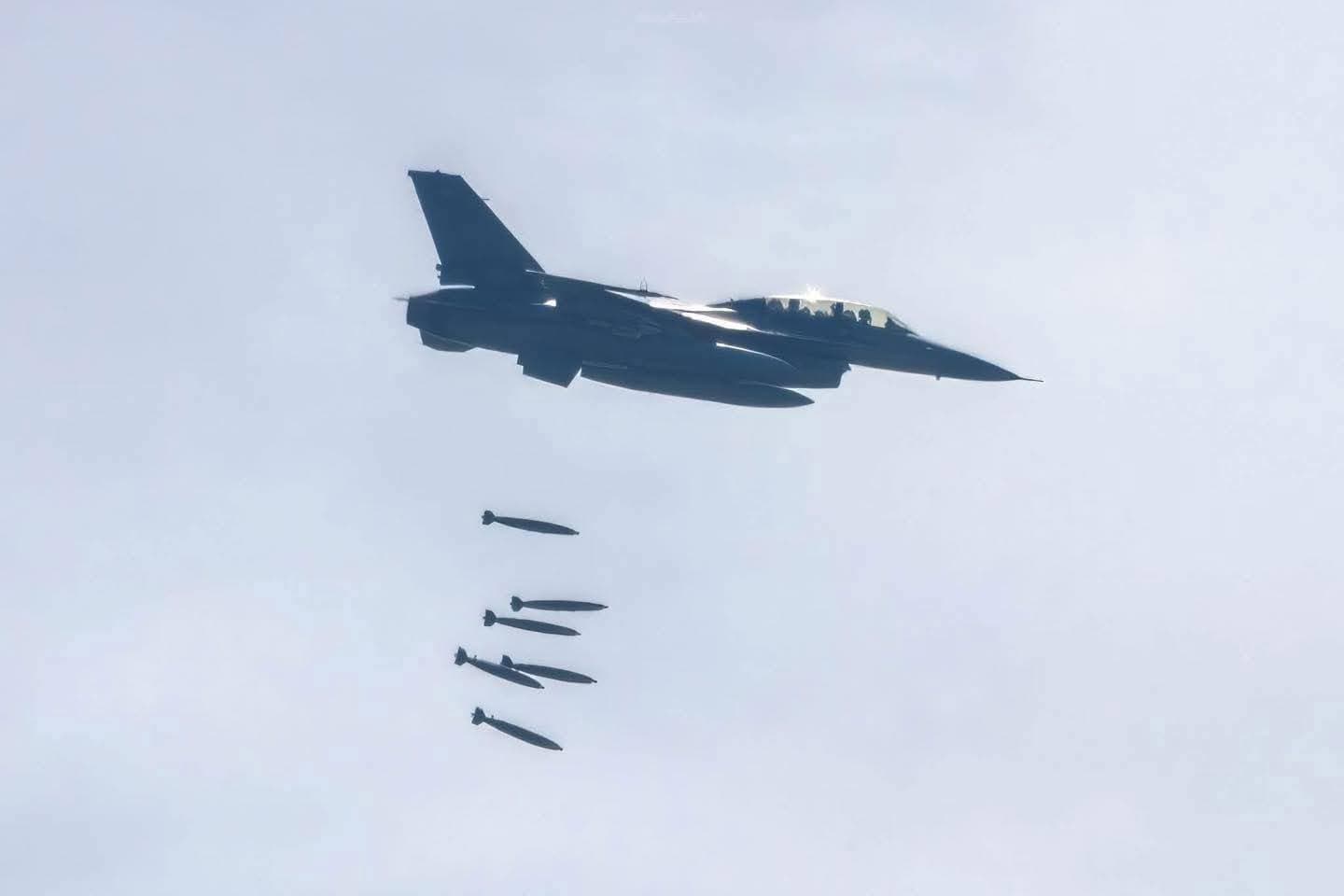
This market will resolve to "Yes" if Thailand initiates a drone, missile, or air strike on Cambodian soil or any Cambodian embassy or consulate by the specified date, 11:59 PM ET. Otherwise, this market will resolve to "No". For the purposes of this market, a qualifying "strike" is defined as the use of aerial bombs, drones or missiles (including cruise or ballistic missiles) launched by Thai military forces that impact Cambodian ground territory or any official Cambodian embassy or consulate (
Prediction markets currently give about a 1 in 5 chance that Thailand will launch a drone, missile, or air strike against Cambodia by June 30, 2026. With the probability sitting at 22%, traders collectively see a military strike as unlikely, but not impossible. This reflects a low-confidence forecast where the expected outcome is continued peace, yet significant risk remains on the table.
The low probability is rooted in the modern history of the border region. While Thailand and Cambodia have a long-standing territorial dispute near the Preah Vihear temple, clashes over the past 15 years have typically involved small arms and artillery fire between ground troops, not cross-border air strikes. An aerial bombardment would mark a severe and unprecedented escalation.
Recent diplomatic efforts also play a role. Both nations are members of ASEAN, which emphasizes conflict resolution through dialogue. In early 2024, military leaders from both sides met to discuss reducing tensions and promoting border trade, signaling a preference for managed disagreement over open warfare. The economic costs of a major conflict would be severe for both countries, making a calculated strike seem irrational to many observers.
There is no single deadline driving this market. Instead, traders are watching for any sudden deterioration in relations. A flare-up of fighting around the disputed border area, especially if it involved casualties, could increase the odds. A major political crisis or change in government in either country that brings a more nationalist or militaristic faction to power could also shift predictions. Statements from either nation’s military command abandoning diplomatic talks would be a clear warning signal.
Prediction markets are generally effective at aggregating geopolitical risk, but they can be less reliable for rare, high-impact events like the outbreak of war between two nations. Markets often underestimate the probability of sudden, dramatic escalations because they are difficult to model. For this specific question, the low trading volume means the price could be more easily swayed by a few large bets rather than a deep consensus. The forecast is a useful snapshot of informed opinion, but the inherent uncertainty of international conflict means the actual odds could be higher or lower than what the market suggests.
The Polymarket contract "Thailand strikes Cambodia by June 30, 2026?" is trading at 22¢, indicating a 22% implied probability. This price suggests the market views a direct military strike as unlikely within the next four months, but not impossible. With only $54,000 in total volume, liquidity is thin. This low volume means price movements could be volatile and may not fully reflect informed consensus, instead capturing more speculative sentiment.
The primary factor suppressing the probability is the absence of active, direct military conflict between Thailand and Cambodia. While historical border disputes, particularly around the Preah Vihear temple, have caused sporadic clashes, the last significant military engagement was over a decade ago. Current bilateral relations are formally correct, focused on economic cooperation within ASEAN frameworks. The 22% price likely reflects a residual risk premium for a black-swan event rather than an expectation of imminent hostilities. It also may price in the potential for a catastrophic miscalculation or accidental engagement, given both nations maintain military presences along their shared border.
A sudden, violent border incident involving casualties could rapidly shift this market. Any official Cambodian accusation of a Thai drone incursion or an unexplained explosion at a border post would likely cause the "Yes" probability to spike. The odds would also increase dramatically if diplomatic communications break down or if either government uses unusually aggressive rhetoric. Conversely, a high-profile joint military exercise or a new bilateral agreement on border management before the June 30 resolution date could push the "Yes" share price toward zero. The market's sensitivity to news will be high due to its low liquidity, meaning even minor reports could cause large price swings.
AI-generated analysis based on market data. Not financial advice.
$54.45K
1
1
This prediction market addresses the possibility of Thailand conducting a military strike against Cambodia using aerial weapons. The specific question is whether Thailand will initiate a drone, missile, or air strike that impacts Cambodian soil or any official Cambodian diplomatic mission abroad by a specified deadline. A qualifying strike involves the use of aerial bombs, drones, or missiles launched by Thai military forces. The market resolves to 'Yes' only if such an event occurs. This topic emerges from a long-standing and occasionally volatile border dispute between the two Southeast Asian nations, primarily centered on the Preah Vihear temple complex and surrounding territory. While open warfare is considered unlikely, periodic military standoffs and skirmishes have occurred, most notably in 2008 and 2011. Interest in this market stems from monitoring whether diplomatic tensions or unresolved territorial claims could escalate into a more direct kinetic conflict, which would have significant regional security implications. The market provides a mechanism to gauge the perceived probability of a specific, high-impact military action within a defined timeframe.
The core of the dispute dates to the early 20th century, stemming from maps drawn by French colonial authorities that placed the Preah Vihear temple complex in Cambodia. In 1962, the International Court of Justice ruled in favor of Cambodia's ownership of the temple, a decision Thailand reluctantly accepted but which left the surrounding 4.6 square kilometers of land in contention. The dispute remained largely dormant until 2008, when Cambodia successfully nominated Preah Vihear as a UNESCO World Heritage Site. This move ignited nationalist sentiments in Thailand and led to a series of military confrontations. The most serious clashes occurred in February and April 2011, involving exchanges of artillery, mortar, and small-arms fire. These clashes resulted in dozens of military and civilian casualties on both sides and caused temporary displacements of thousands of villagers. The 2011 fighting prompted Cambodia to appeal to the UN Security Council and the ICJ, which later that year ordered both nations to withdraw their military forces from a newly defined provisional demilitarized zone. While tensions have since cooled from that peak, the underlying territorial claim remains unresolved, and both militaries maintain a presence in the region, leading to periodic standoffs.
A military strike by Thailand against Cambodia would represent a severe rupture in ASEAN's foundational principle of peaceful dispute resolution and could destabilize the entire Mekong subregion. It would immediately trigger a humanitarian crisis, displacing communities on both sides of the border and likely causing civilian casualties. Economically, it would disrupt cross-border trade, which includes agricultural goods and tourism. The ancient Preah Vihear temple, a UNESCO site, could be damaged or destroyed, resulting in an irreversible cultural loss. Politically, such an event would force other ASEAN members and major powers like China and the United States to take sides, potentially fracturing regional unity. It would also likely lead to a rapid arms build-up in the region and could embolden other territorial claimants in the South China Sea, viewing ASEAN's conflict management mechanisms as ineffective.
As of early 2024, the situation is tense but stable, with no recent reports of significant armed clashes. Both nations maintain military forces in the border region, conducting regular patrols. Diplomatic channels remain open, with both sides periodically reaffirming commitments to peaceful resolution through existing bilateral mechanisms. The primary focus is on joint efforts to demine the border area, a process supported by international partners. However, the fundamental disagreement over the 4.6 square kilometers near Preah Vihear remains unresolved, and nationalist rhetoric can resurface in either country's domestic politics, posing a constant risk of renewed confrontation.
The central dispute concerns the sovereignty of a 4.6 square kilometer area surrounding the ancient Preah Vihear temple. While the International Court of Justice awarded the temple itself to Cambodia in 1962, the adjacent land was not clearly demarcated, leading to competing claims and occasional military clashes.
Thailand and Cambodia have not engaged in a formal, declared war. However, they have experienced several serious armed conflicts, most notably in 2008 and 2011, involving artillery duels and infantry skirmishes that resulted in military and civilian casualties along their shared border.
In 1962, the ICJ ruled that the Preah Vihear temple was situated on territory under the sovereignty of Cambodia. In 2011, responding to renewed clashes, the court issued a provisional order instructing both countries to immediately withdraw their military personnel from a defined provisional demilitarized zone around the temple.
Access to Preah Vihear temple is complex due to its location in a contested border zone. It is generally accessible from the Cambodian side, but access routes and opening times can be restricted due to security conditions. Travel from the Thai side has been heavily restricted since the 2008 tensions.
ASEAN provides a forum for dialogue but operates on a principle of non-interference in members' bilateral disputes. Its role is typically limited to encouraging peaceful dialogue and offering informal mediation, rather than imposing binding arbitration or sanctions.
Educational content is AI-generated and sourced from Wikipedia. It should not be considered financial advice.

No related news found
Add this market to your website
<iframe src="https://predictpedia.com/embed/5D-xRj" width="400" height="160" frameborder="0" style="border-radius: 8px; max-width: 100%;" title="Thailand strikes Cambodia by...?"></iframe>