This event has ended. Showing historical data.
Will Russia capture Toretske by...?
$56.33K
1
1
Will Russia capture Toretske by...?
$56.33K
1
1
AI Analysis
Trader mode: Actionable analysis for identifying opportunities and edge
About This Event
This market will resolve to “Yes” if, according to the ISW map, Russia captures the intersection at 48.494901° N, 37.365342° E in Toretske, Donetsk Oblast, by February 28, 2026, at 11:59 PM ET. The intersection will be considered captured if any part of the intersection is shaded red on the ISW map (https://storymaps.arcgis.com/stories/36a7f6a6f5a9448496de641cf64bd375) by the resolution date. If the area is not shaded red by the specified date, the market will resolve to “No”. For any change o
This saved analysis is awaiting a background update. Its prices and claims may be outdated; compare them with the dated market data above.
Current Market Outlook
Polymarket traders price Russia capturing the key Toretske intersection at just 3% by May 31, 2026. That's a heavy favorite for the "No" side, implying the market sees Russian forces as highly unlikely to push through this specific Donetsk Oblast choke point within the next year. The broader market, "Will Russia capture Toretske by February 28, 2026," trades similarly low, with only $56,000 in combined volume across thin liquidity. A 3% probability isn't just skepticism, it's near-certainty that Ukrainian defensive lines hold this sector.
Key Factors Driving the Odds
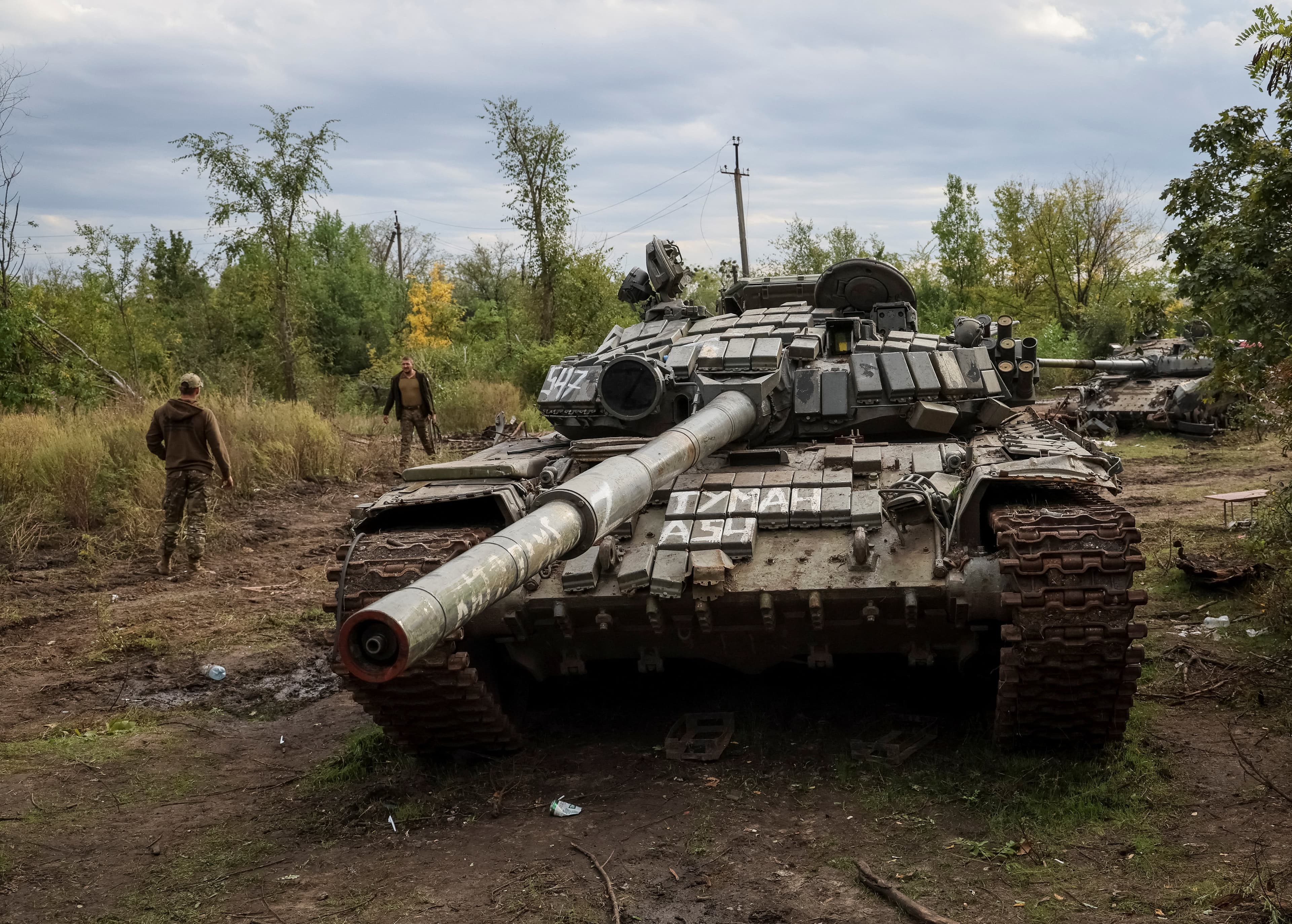
Toretske sits southwest of the strategic city of Chasiv Yar, where Russian forces have ground forward since mid-2024 but at enormous cost. The intersection at 48.494901° N, 37.365342° E anchors a fortified urban zone that Ukraine has held through multiple assault waves. ISW maps have shown Russian control creeping toward the town's outskirts, but not decisively into its core. The market's low price reflects battlefield reality: Russian advances in Donetsk have averaged just a few hundred meters per week in built-up areas, and Toretske's elevation gives Ukrainian defenders artillery observation over approach routes.
Another factor is attrition. Russian units in this sector have absorbed heavy losses, and recent mobilizations have prioritized quantity over quality. Ukrainian brigades, while stretched, have rotated fresh forces into Toretske specifically because its loss would threaten the broader Kramatorsk defense line. The market is pricing that Ukraine's command sees this intersection as worth defending to the last.
What Could Change These Odds
The most obvious catalyst is a Russian breakthrough elsewhere forcing Ukrainian redeployments. If Pokrovsk falls or the Siversk front collapses, Kyiv would need to pull reserves from Toretske, and the odds would jump toward 15-20%. Conversely, a Ukrainian counteroffensive in Zaporizhzhia or sustained Western artillery resupply could push the probability below 1%.
Seasonal weather matters too. The spring rasputitsa typically bogs down armored maneuvers through April, but the summer dry season historically favors Russian attrition tactics. Watch for ISW map updates showing Russian flags approaching the intersection's grid square, which would signal a repricing before the actual capture.
Cross-Platform Analysis
This market trades only on Polymarket, so there's no Kalshi comparison to arbitrage. The thin $56K volume means slippage is a real concern for anyone trying to establish a meaningful position. The resolution mechanism, relying on ISW's shaded red areas, is transparent but slow, ISW maps update daily and sometimes lag real-world control by 48 hours. For a market this one-sided, the real risk isn't the outcome, it's the opportunity cost of capital locked up for a year at 3% odds.
AI-generated analysis based on market data. Not financial advice.
Saved Aug 28, 2026 UTCThis saved content is awaiting a background update. It may contain outdated claims; use the dated market data and provider rules for the latest available information.
Overview
The prediction market question "Will Russia capture Toretske by February 28, 2026?" centers on the town of Toretske (also known as Dzerzhynsk) in Donetsk Oblast, eastern Ukraine. Toretske is a small coal-mining town that has been on the front lines since the Russian invasion began in February 2022. The market's resolution criteria are specific: it will resolve to 'Yes' if, by the end of February 28, 2026 (ET), the Institute for the Study of War (ISW) map shows any part of the intersection at 48.494901° N, 37.365342° E shaded red, indicating Russian control. The intersection is located near the town's administrative center, and its capture would signal that Russian forces have taken a significant portion of the town. Toretske has become a focal point of the ongoing conflict in the Donbas region. Before the war, the town had a population of around 30,000, but by late 2024, it was largely reduced to ruins, with most residents evacuated. The Russian military has been advancing westward in Donetsk Oblast, capturing towns like Avdiivka (February 2024) and Vuhledar (October 2024), and Toretske lies on a key logistical route connecting several other frontline settlements. The town's capture would bring Russian forces closer to the administrative borders of Donetsk and Luhansk oblasts, a stated goal of the Kremlin. Recent developments have been grim for Ukrainian defenders. Since mid-2024, Russian forces have intensified assaults on Toretske, using heavy artillery, glide bombs, and infantry assaults. By late 2024 and into 2025, Russian troops had entered the town's outskirts and were fighting block by block. The ISW, a Washington-based think tank, maps daily changes in control lines based on geolocated footage and satellite imagery, providing a widely cited reference for such assessments. The market's outcome depends on whether the intersection, which is near the town's cultural center, falls under Russian control by the specified date. Interest in this market stems from the broader significance of territorial changes in Ukraine. Military analysts and the public watch such markets as a proxy for the war's trajectory. The capture of Toretske would not only be a tactical gain but also a symbol of Russia's continued offensive capabilities. Conversely, if Ukrainian forces hold the town, it would indicate resilience and potentially shift the momentum. The market offers a way for observers to bet on the war's progress, and its resolution relies on a well-defined, verifiable source (ISW maps), which adds to its appeal.
Historical Context
The town of Toretske has a history dating back to the 19th century, when it was a small village called Shcherbynivka. It grew into a coal-mining center during the Soviet era, and in 1938 it was renamed Dzerzhynsk after Felix Dzerzhinsky, the founder of the Soviet secret police. After Ukraine gained independence in 1991, the town was renamed Toretske in 2016 as part of decommunization laws. Its industrial base has been in decline since the 1990s, and the population has been shrinking, making it a less economically significant but strategically located settlement. During the early stages of the war in 2014, when Russia-backed separatists seized parts of Donbas, Toretske remained under Ukrainian control. The frontline in that earlier conflict was just east of the town, and it experienced occasional shelling. After the full-scale invasion in February 2022, the town became a staging area for Ukrainian forces and a target for Russian attacks. In the summer of 2022, Russia captured nearby towns like Soledar and Bakhmut (May 2023), but Toretske held. The current offensive on Toretske began in earnest in mid-2024, as Russian forces pivoted from the intense battles around Avdiivka to the west, aiming to broaden their control in Donetsk Oblast. The historical pattern of Russian advances in the Donbas has been characterized by slow, attritional warfare. Towns like Bakhmut and Avdiivka were captured after months of fighting and heavy casualties. Toretske is following a similar trajectory: Russian forces have been advancing incrementally, using massed artillery and infantry assaults, while Ukraine has struggled to maintain defensive lines due to ammunition shortages and delays in Western aid. The capture of Toretske would continue this trend, and its timing will depend on the same factors that have shaped previous battles: artillery supply, troop morale, and weather conditions.
Why It Matters
The capture of Toretske would have significant tactical and strategic implications for the war in Ukraine. Tactically, it would open up new routes for Russian forces to advance towards other Ukrainian-held towns like Kostiantynivka and Druzhkivka, which are important logistical hubs. It would also allow Russia to consolidate control over the Donetsk region, moving closer to the administrative borders of the oblast. For Ukraine, losing Toretske would mean the loss of a defensible position and could force a retreat to less favorable terrain, potentially leading to a further collapse of the frontline in that sector. Beyond the immediate military impact, the fate of Toretske holds symbolic and political weight. For Russia, capturing every town in Donbas is part of the narrative of 'liberating' the region, which is used for domestic propaganda. For Ukraine, holding on to every piece of territory demonstrates resilience and helps maintain international support. The outcome of this battle could influence the morale of both sides and the decisions of foreign governments regarding military aid. If Toretske falls, it might spur calls for renewed peace negotiations, but if it holds, it could boost confidence in Ukraine's ability to defend itself. The market's outcome, therefore, is not just a trivia question but a reflection of the war's trajectory.
AI-written background. References identify the evidence used; Wikipedia links under Learn More are additional reading. Prices and provider rules are dated snapshots. This is not financial advice.
Market Insights
Price gaps of 2 pp+
0
Saved price pairs
0
No exact saved pairs with both binary Yes prices are available.
Price differences do not establish arbitrage. Check each pair's review, current order prices, fees and settlement rules.