Events
GroupPOLYMARKET
Event GroupPOLYMARKETPolitics
Khamenei out as Supreme Leader of Iran by June 30?
Total Volume
$7.95M
Events
1
Markets
1
Khamenei out as Supreme Leader of Iran by June 30?
Platform StatsQuick Platform Comparison
Polymarket
1
markets · $7.95M
Kalshi
0
markets · $0.00
Price Spread
0.0%avg
max 0.0%
Arbitrage
0
of 0 cross-platform
Volume DistributionTotal: $7.95M
100%
Polymarket leads
Price ChartMatched Markets Price Graph
1 market tracked
Khamenei out as Supreme Leader of Iran by June 30?
No data available
Single-Platform Markets(1)
| Market | Platform | Price |
|---|---|---|
| Poly | 100% |
AI Analysis
Trader mode: Actionable analysis for identifying opportunities and edge
100%
Top Probability
$7.95M
Volume
1
Markets
1
Platforms
About This Event
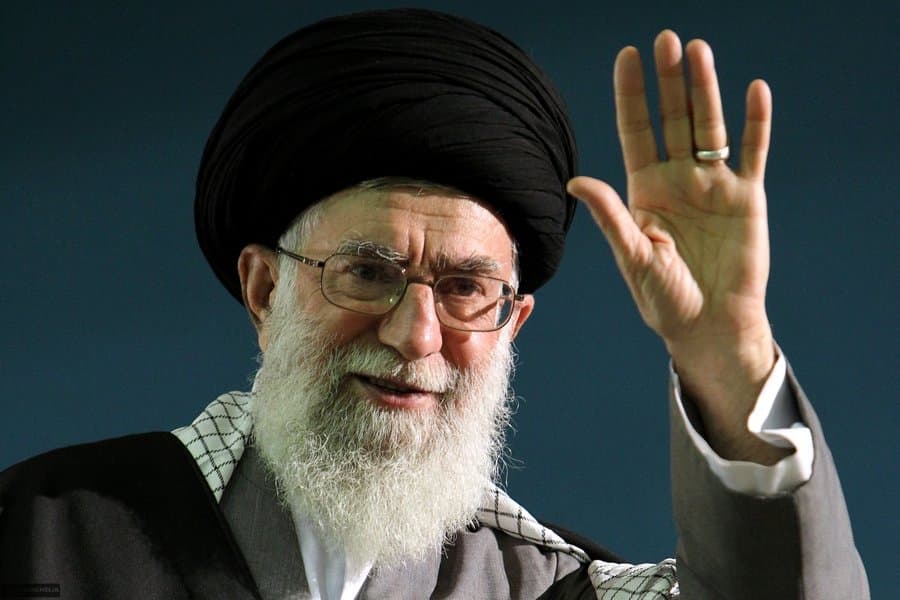
This market will resolve to "Yes" if Iran's Supreme Leader, Ali Khamenei, is removed from power for any length of time by June 30, 2026, 11:59 PM ET. Otherwise, this market will resolve to "No". Khamenei will be considered to be removed from power if he resigns, is detained, or otherwise loses his position or is prevented from fulfilling his duties as Supreme Leader of Iran within this market's timeframe. The primary resolution source for this market will be a consensus of credible reporting.
What Prediction Markets Are Forecasting
Prediction markets currently give about a 73% chance that Iran's Supreme Leader, Ali Khamenei, will be out of power by March 31, 2026. In simpler terms, traders collectively believe there is roughly a 3 in 4 likelihood that he will resign, be detained, or otherwise lose his position within the next two years. This is a high-confidence forecast for a major political change in a country where the Supreme Leader has held ultimate authority for decades.
Why the Market Sees It This Way
The high probability stems from a few concrete factors. First, Khamenei is 85 years old and has faced recurring health issues, including reported prostate cancer surgery over a decade ago. His advanced age makes the question of succession a pressing matter of biology, not just politics.
Second, the Iranian regime faces significant internal pressure. Widespread protests, most notably following the death of Mahsa Amini in 2022, have challenged the government's legitimacy. While these were suppressed, they revealed deep public discontent, particularly among younger Iranians, which complicates a stable transition of power.
Finally, the market may be pricing in the possibility of a forced or contested transition. The role of the Islamic Revolutionary Guard Corps (IRGC) is critical. As the country's most powerful military and economic institution, the IRGC will play a decisive role in selecting the next Supreme Leader. Market odds suggest traders see a meaningful chance that this process could involve removing Khamenei before a natural death to ensure a controlled succession.
Key Dates and Events to Watch
There are no fixed electoral dates for this event, so watchers should monitor for signals of change. Any official reports or visible evidence regarding Khamenei's health are primary catalysts. A hospitalization or a significant decline in his public appearances could shift probabilities quickly.
Also important are meetings of the Assembly of Experts. This body of clerics is formally tasked with appointing and dismissing the Supreme Leader. Their next scheduled annual meeting is expected in late 2024 or early 2025. Any unusual session or public debate about leadership would be a major signal.
Finally, watch for increased political activity around potential successors. Public maneuvering by key figures, such as Khamenei's son Mojtaba or current President Ebrahim Raisi, could indicate preparations for a transition.
How Reliable Are These Predictions?
Prediction markets have a mixed record on specific, high-stakes events like leadership changes in opaque regimes. They are often good at aggregating available information, but they can struggle with "black swan" events that are inherently unpredictable. For context, markets gave similarly high probabilities for Vladimir Putin's removal in early 2022, which did not happen.
The main limitation here is the extreme secrecy of the Iranian power structure. Critical decisions about health and succession happen behind closed doors. The market's 73% chance reflects the known risks of age and instability, but the actual timing remains highly uncertain. These odds are best understood as a measure of collective concern about regime fragility, not a precise calendar.
Current Market Outlook
Prediction markets assign a 73% probability that Ali Khamenei will no longer be Supreme Leader of Iran by March 31, 2026. This price, translating to 73¢ for a "Yes" outcome, indicates a strong consensus that a leadership change is the most likely scenario within the next two years. With $24.7 million in volume, this is a highly liquid and heavily traded contract, suggesting significant capital and analysis backs this position. A 73% chance means the market views his departure as probable, but not a foregone conclusion, leaving substantial room for the status quo to persist.
Key Factors Driving the Odds
Two primary elements are compressing the timeline for succession. First, Khamenei's age and health are the central market drivers. He is 84 years old and has undergone reported prostate cancer surgery. Historical precedent matters; his predecessor, Ruhollah Khomeini, held the position until his death at age 86. The market is effectively pricing in the actuarial reality for an octogenarian with a serious medical history.
Second, markets are anticipating a destabilizing succession crisis. The Iranian regime faces severe internal pressure from public discontent and a struggling economy, compounded by external geopolitical tensions. The market's high probability suggests traders believe these combined stresses could trigger a contested transition or forced removal, not merely a managed succession upon natural death. The price reflects a bet that the system is too fragile to smoothly handle the inevitable transition.
What Could Change These Odds
The odds could fall significantly if Khamenei's public appearances remain steady and no credible reports of a health emergency emerge. A visible, active leader through 2024 would signal stability and likely push prices down. Conversely, the odds could spike toward certainty on any confirmed news of a severe health event or hospitalization. Political developments, such as the clear anointing of a successor like Khamenei's son Mojtaba, might also adjust probabilities by clarifying the transition pathway. The next major inflection point is the Iranian presidential election in June 2025, which will test the regime's cohesion and could serve as a catalyst for broader power struggles.
AI-generated analysis based on market data. Not financial advice.