$1.60K
1
1
1 market tracked

No data available
| Market | Platform | Price |
|---|---|---|
![]() | Poly | 14% |

$1.60K
1
1
Trader mode: Actionable analysis for identifying opportunities and edge
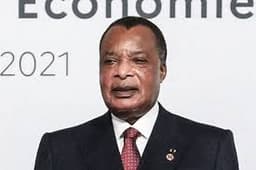
This market will resolve to "Yes" if the Republic of the Congo's president, Denis Sassou Nguesso, is removed from power for any length of time between this market's creation and December 31, 2026, 11:59 PM ET. Otherwise, this market will resolve to "No". President Denis Sassou Nguesso will be considered to be removed from power if he resigns, is detained, or otherwise loses his position (e.g. when he steps down in consequence of a lost election) or is prevented from fulfilling his duties as Pre
Prediction markets currently assign a low 14% probability to President Denis Sassou Nguesso being removed from power in the Republic of the Congo before the end of 2026. This price, trading at 14¢ on Polymarket, indicates the market views a political transition during this period as unlikely. With only $2,000 in total market volume, this remains a thinly traded contract, suggesting limited consensus and higher volatility in the current assessment.
The primary factor suppressing the probability is Nguesso's entrenched political dominance. Having ruled for a cumulative 40 years since 1979, he has systematically consolidated power, controlling key institutions and security forces. The constitutional revision in 2015, which removed age and term limits, legally paved the way for his re-election in 2021 and potential future candidacy. Furthermore, the opposition in the Republic of the Congo remains fragmented and lacks a clear, unified challenge to the ruling Congolese Party of Labour. Historical precedent strongly favors regime stability over sudden, unforeseen removal.
The most immediate catalyst for a significant odds shift would be the announcement of the next presidential election, expected in 2026. If Nguesso, who will be 83 years old at the end of 2026, signals he will not run, the "Yes" probability would likely surge as the market prices in a planned succession. Conversely, a declaration of his candidacy would likely drive the "No" probability higher. Unforeseen events, such as a severe health crisis for the president or a sudden, large-scale popular uprising fueled by economic distress, represent low-probability but high-impact risks that could rapidly reprice the market. The thin liquidity means any major news headline could cause a sharp price movement.
AI-generated analysis based on market data. Not financial advice.
This prediction market addresses whether Denis Sassou Nguesso will remain President of the Republic of the Congo through the end of 2026. Nguesso, one of Africa's longest-serving leaders, has held power for a combined total of nearly 40 years since first taking office in 1979. The market resolves to 'Yes' if he is removed from power for any length of time before December 31, 2026, 11:59 PM ET, through resignation, detention, electoral loss, or being otherwise prevented from fulfilling his duties. The question gains significance as Nguesso, born in 1943, is 81 years old and has faced increasing domestic and international scrutiny over governance, economic management, and succession planning. Recent years have seen periodic protests and opposition challenges, though Nguesso's Congolese Labour Party (PCT) maintains firm control over state institutions. Observers are monitoring his health, potential internal party rivalries, and the country's economic stability, heavily dependent on oil exports, as factors that could influence his tenure. The market reflects broader speculation about political continuity and potential transition in a nation where power has been concentrated in one figure for decades.
Denis Sassou Nguesso first came to power in 1979, leading the single-party Marxist-Leninist state until 1992. In the nation's first multi-party elections that year, he lost to Pascal Lissouba, marking a rare peaceful transfer of power in post-colonial Central Africa. However, Nguesso returned to power in 1997 following a devastating civil war, backed by Angolan military forces, which ousted President Lissouba. This conflict, rooted in political and ethnic rivalries, solidified his control and established a pattern of contested legitimacy. Since his return, Nguesso has won a series of elections in 2002, 2009, 2016, and 2021, all criticized by international observers and opposition groups for irregularities. A pivotal moment was the 2015 constitutional referendum, which passed with over 92% approval amid an opposition boycott and allowed him to run for additional terms by resetting term limits and removing the age ceiling of 70. This move, similar to maneuvers by other long-serving leaders in the region, entrenched his rule but also galvanized protest movements. The historical pattern shows a resilient authoritarian system that has weathered internal conflicts and external pressures, making any potential departure a momentous event.
The question of Nguesso's continued presidency matters profoundly for the Republic of the Congo's 5.8 million citizens and the stability of Central Africa. Economically, the country is heavily reliant on oil, which accounts for roughly 80% of exports and 50% of government revenue. A sudden or contested transition could disrupt the management of this sector, vital for debt repayment and public services, potentially exacerbating economic hardship in a nation where over 40% of the population lives in poverty. Politically, his removal would signal a major shift in a country governed by one party and one dominant figure for generations, potentially opening space for democratic reform or, conversely, triggering instability and a power struggle within the elite. Regionally, it could influence dynamics in neighboring Gabon and the Democratic Republic of the Congo, where questions of presidential tenure also loom large. The outcome will test the resilience of authoritarian systems in Africa and the capacity of both domestic institutions and international actors to manage a post-Nguesso era.
As of late 2024, Denis Sassou Nguesso remains firmly in power. The political landscape is tightly controlled by the PCT, with the opposition fragmented and operating under significant constraints. The government continues to navigate a challenging economic situation, negotiating debt restructurings with creditors like China and the IMF. There have been no major, publicly known health crises for the president recently, nor any overt signs of an imminent resignation or internal coup. However, underlying pressures persist, including sporadic social protests over living costs and occasional murmurs of dissent within political circles. The focus of many observers is on behind-the-scenes maneuvering regarding succession, particularly the role of the president's son, Denis-Christel, and other potential contenders within the ruling party.
Denis Sassou Nguesso has served five terms as president. His first term began in 1979, and after a five-year period out of office, he returned in 1997. He was subsequently re-elected in 2002, 2009, 2016, and most recently in 2021.
In October 2015, a constitutional referendum was held that removed presidential age limits and reset term limits, allowing Nguesso to run again. It passed with over 92% approval but was boycotted by the opposition and marred by protests and allegations of fraud.
The opposition is fragmented. Historically, figures like Guy Brice Parfait Kolélas and Mathias Dzon have been prominent. Currently, no single opposition leader or party holds widespread recognized authority, with dissent channeled through various small parties and civil society groups.
The economy is heavily dependent on oil exports and burdened by high public debt, exceeding 110% of GDP. Despite resource wealth, poverty remains widespread, and the country relies on international financial institutions like the IMF for support and debt restructuring.
While not at a sustained crisis level, there have been periodic protests, particularly around elections and economic issues like fuel subsidies. Security forces typically respond firmly, and the government maintains a tight grip on public dissent and media.
There is no official successor. Speculation often focuses on his son, Denis-Christel Sassou Nguesso, or other senior figures within the ruling Congolese Labour Party (PCT) like Prime Minister Anatole Collinet Makosso. Any succession would likely be determined within the party's inner circle.
Educational content is AI-generated and sourced from Wikipedia. It should not be considered financial advice.
Share your predictions and analysis with other traders. Coming soon!

No related news found
Add this market to your website
<iframe src="https://predictpedia.com/embed/7a9pxi" width="400" height="160" frameborder="0" style="border-radius: 8px; max-width: 100%;" title="Nguesso out as President of the Republic of the Congo by end of 2026?"></iframe>