$77.90K
1
1

1 market tracked

No data available
| Market | Platform | Price |
|---|---|---|
![]() | Poly | 38% |
$77.90K
1
1
Trader mode: Actionable analysis for identifying opportunities and edge
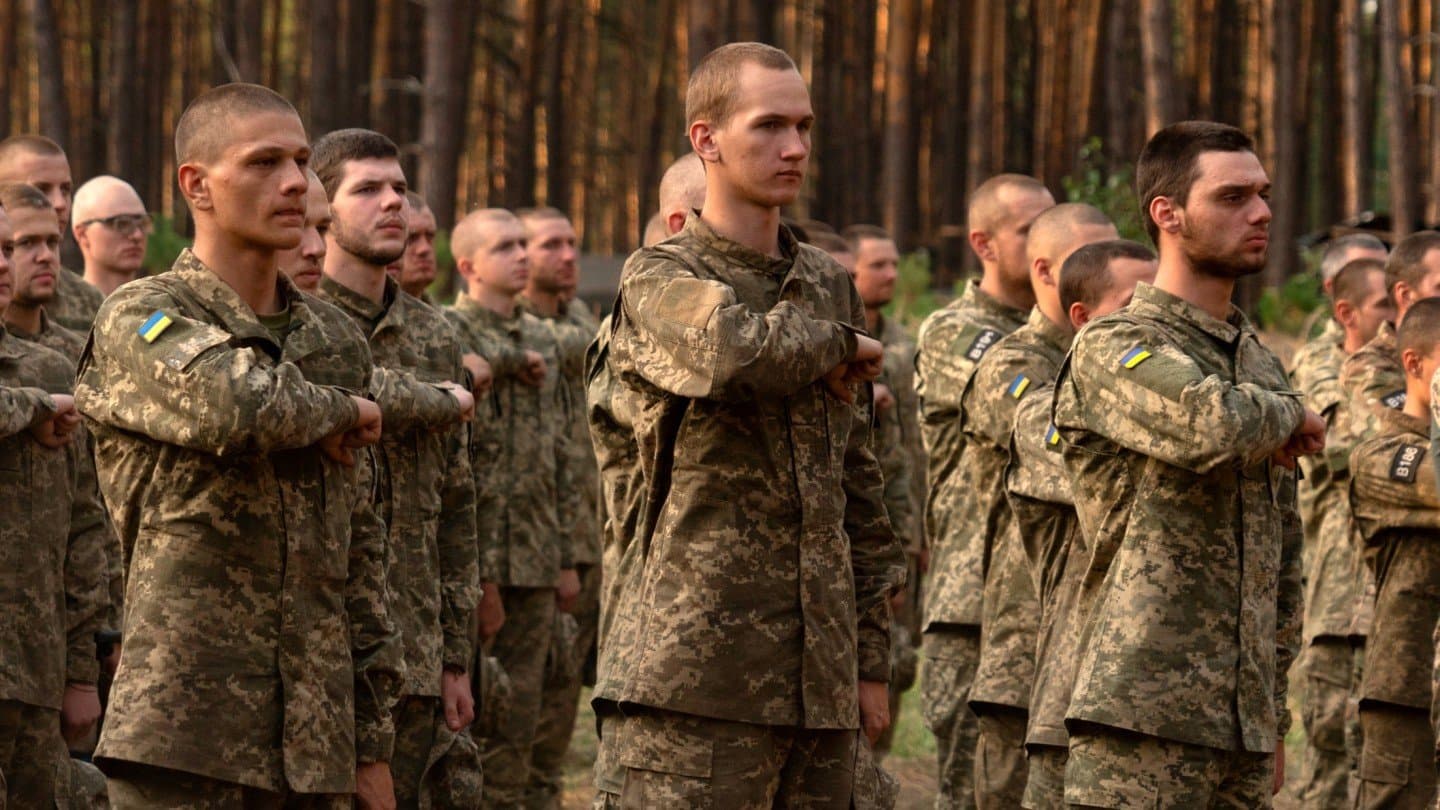
This market will resolve to "Yes" if Ukraine publicly agrees to limit the number of personnel in its armed forces by December 31, 2026, 11:59 PM ET. Otherwise, this market will resolve to “No”. An official pledge by Ukraine to limit the number of personnel in its armed forces will qualify for a “Yes” resolution whether as a unilateral announcement or part of an agreement with the Russian Federation. A qualifying agreement must include a commitment by Ukraine to limit the total number of person
Prediction markets currently give this outcome about a 38% chance, which means traders see it as somewhat unlikely. You could think of this as roughly a 1 in 3 chance that Ukraine will publicly agree to cap the size of its military before the end of 2026. This shows a significant degree of skepticism, but not a complete dismissal of the possibility.
The low probability reflects the current political and military reality. First, any formal limit on Ukraine's armed forces would be viewed as a major concession, likely tied to a potential ceasefire or peace settlement. Ukraine's official position has been to restore its territorial integrity, not to accept conditions that would permanently weaken its defensive capacity.
Second, such a limit would be historically contentious. After Russia's 2014 annexation of Crimea, Ukraine abandoned its previous non-aligned status and began rebuilding its military. Agreeing to a cap could be seen as reversing a decade of effort to create a stronger, NATO-standard army. Public and political resistance inside Ukraine would likely be intense.
Finally, the market odds suggest traders doubt Russia could secure this concession. For Ukraine to agree, it would probably require security guarantees or other major compromises from Russia that currently seem out of reach.
There is no single deadline, but the market resolves at the end of 2026. Watch for any shifts in diplomatic negotiations. If formal peace talks resume between Ukraine and Russia, the topic of military limits will almost certainly be on the table. Statements from Ukrainian leadership firmly rejecting or unexpectedly opening the door to the idea will move prices. Major changes on the battlefield that alter leverage could also shift predictions.
Prediction markets on geopolitical deals have a mixed record. They often effectively aggregate expert views on political constraints, as seen here with the low probability. However, they can be slow to react to sudden diplomatic breakthroughs. These markets are best read as a snapshot of informed skepticism, not a prophecy. The 38% chance acknowledges the remote possibility of a dramatic political shift, while betting that Ukraine's current resolve will hold.
The Polymarket contract "Ukraine agrees to limit size of armed forces before 2027?" is trading at 38¢, indicating a 38% probability. This price signals the market views a formal Ukrainian commitment to cap its military personnel by the end of 2026 as unlikely, but not impossible. With only $78,000 in total volume, liquidity is thin, meaning the current price is more susceptible to sharp moves on new information than a heavily traded market.
The primary factor suppressing the probability is Ukraine's consistent political and military stance. Since the full-scale invasion began, Ukrainian leadership has framed any discussion of force limitations or neutral status as a non-starter, equivalent to capitulation. President Zelenskyy's 10-point peace plan, which demands a full Russian withdrawal, does not accommodate Ukrainian concessions on sovereign defense capabilities. Historically, armed forces limits have been imposed on defeated nations, not those receiving billions in military aid to sustain a defense.
A secondary factor is the current battlefield and diplomatic reality. Western support, while sometimes delayed, continues to focus on building Ukrainian capacity, not restricting it. Negotiations have stalled, with no framework for talks that would include such a Ukrainian concession. The 38% price likely reflects a small chance of a drastic, unforeseen shift in the war's momentum that could force Kyiv into a negotiated settlement containing such terms before the deadline.
The odds would increase significantly only under a specific, high-stakes scenario: the initiation of formal peace talks where territorial concessions are exchanged for security guarantees. If major Western partners were to pressure Ukraine into negotiations and a draft agreement included force limits, the market would reprice rapidly. The key date to watch is the U.S. presidential inauguration in January 2025. A change in U.S. administration could alter the diplomatic and material support for Ukraine, potentially creating conditions where such a concession becomes part of a negotiated endgame. Conversely, a major Ukrainian battlefield success that strengthens its hand would likely drive the probability lower, as it would reduce any perceived need to accept Russian demands.
AI-generated analysis based on market data. Not financial advice.
This prediction market topic concerns whether Ukraine will publicly agree to limit the total number of personnel in its armed forces by December 31, 2026. The resolution condition is an official pledge from Ukraine, which could be a unilateral announcement or part of a formal agreement with Russia. The topic exists within the context of ongoing peace negotiations and security discussions following Russia's full-scale invasion in February 2022. Historically, limitations on military forces have been components of ceasefire and peace agreements, such as the Minsk agreements, which included provisions for the withdrawal of heavy weapons. The question of force size is central to Ukrainian sovereignty and national defense strategy, making any agreement to limit personnel a significant concession. Recent diplomatic efforts, including talks in Saudi Arabia and Switzerland, have explored potential security guarantees and post-war arrangements, but have not publicly included specific troop ceilings. Interest in this market stems from its function as a proxy for measuring the likelihood of a major Ukrainian concession in potential peace talks, which would signal a substantial shift in the war's trajectory.
The concept of limiting Ukraine's armed forces has precedents in post-Soviet security arrangements. The 1994 Budapest Memorandum, in which Ukraine gave up its nuclear weapons in exchange for security assurances from Russia, the U.S., and the UK, is a foundational document. It did not limit conventional forces but established a pattern of security trade-offs. The Minsk II agreements of 2015, aimed at ending fighting in Donbas, included provisions for the withdrawal of heavy weapons but did not impose personnel caps on the Ukrainian military. Following the 2014 annexation of Crimea, Ukraine began a significant military modernization and expansion, increasing its active personnel from around 160,000 in 2013 to approximately 209,000 by 2021. Russia has a history of demanding limits on neighboring states' militaries. The 1990 Treaty on Conventional Armed Forces in Europe (CFE) placed caps on equipment, not personnel, for signatories including Russia and Ukraine. The current discussion occurs within a longer history of Russia seeking to prevent what it perceives as NATO expansion and a militarily powerful Ukraine.
An agreement to limit the size of Ukraine's armed forces would represent a major strategic concession with long-term implications for European security. It would directly affect Ukraine's ability to defend itself against future aggression and could influence the security calculations of other Eastern European nations. For Ukraine, accepting a cap could be framed as a necessary compromise for peace or as an unacceptable erosion of sovereignty, deeply impacting domestic politics and national identity. The outcome has economic significance, as military spending and the size of the armed forces are linked to national budgets, reconstruction costs, and the potential for a large-scale demobilization. It would also set a precedent for how conflicts involving major powers are resolved, potentially influencing future disputes in regions like the South China Sea or the Taiwan Strait. The decision affects millions of Ukrainians, from soldiers and their families to citizens whose security would be defined by the terms of any peace settlement.
As of mid-2024, Ukraine has not publicly agreed to any limit on its armed forces size. President Zelenskyy's 10-point peace plan, first outlined in late 2022, calls for the restoration of Ukraine's territorial integrity and security guarantees, but does not mention force limitations. Diplomatic discussions, including a meeting of national security advisors in Davos in January 2024, have focused on broader principles. Ukraine continues to mobilize and train new forces for defensive operations. The Ukrainian parliament passed a new mobilization law in April 2024 to maintain troop levels, signaling a commitment to sustaining a large military for the foreseeable future. Any negotiation on force limits would likely occur only within the framework of a comprehensive peace agreement, which currently appears distant given ongoing hostilities.
A limit would be a legally binding commitment, likely in a treaty, to not exceed a specified number of military personnel. This could include soldiers, sailors, airmen, and possibly paramilitary forces. It would restrict Ukraine's ability to expand its military in response to future threats.
Ukraine has not previously agreed to personnel caps on its armed forces in peacetime. It did participate in the Treaty on Conventional Armed Forces in Europe, which limited tanks, artillery, and other equipment, but that treaty was suspended by Russia in 2007 and effectively collapsed after 2014.
Ukraine might consider such an agreement only as part of a broader peace deal that includes enforceable security guarantees from Western nations, the withdrawal of Russian forces, and potentially a path to EU or NATO membership. It would be a major concession traded for other security objectives.
Enforcement would depend on the agreement's structure. It could involve verification by an international body like the OSCE, or be based on mutual commitments with Russia. Without robust verification, such a limit would be difficult to monitor and enforce.
Educational content is AI-generated and sourced from Wikipedia. It should not be considered financial advice.

No related news found
Add this market to your website
<iframe src="https://predictpedia.com/embed/7tTfFU" width="400" height="160" frameborder="0" style="border-radius: 8px; max-width: 100%;" title="Ukraine agrees to limit size of armed forces before 2027?"></iframe>