$396.07K
1
1

1 market tracked
No data available
| Market | Platform | Price |
|---|---|---|
Will the U.S. test a nuclear weapon by March 31 2026? | Poly | 6% |
Trader mode: Actionable analysis for identifying opportunities and edge
This market will resolve to "Yes" if the US conducts a nuclear test by the listed date (ET). Otherwise, this market will resolve to "No". A nuclear test is defined as the intentional non-combat detonation of a device by the US that produces a nuclear chain reaction (fission or fusion), regardless of yield. Accidents, radiological dispersal devices (bombs that spread radioactive material using conventional explosives such as "dirty bombs"), or actions by third parties will not count toward this
Prediction markets currently give about a 4% chance that the United States will conduct a nuclear test by March 31, 2026. In simpler terms, traders collectively see this as very unlikely, estimating roughly a 1 in 25 possibility. This reflects a strong consensus that the U.S. will continue its voluntary moratorium on explosive nuclear testing, which it has upheld for over three decades.
Two primary factors explain the low probability. First, the U.S. has not performed a full-scale nuclear test since 1992. It observes a unilateral moratorium and is a signatory to the Comprehensive Nuclear-Test-Ban Treaty, though the Senate has not ratified it. The political and diplomatic cost of breaking this long-standing norm would be enormous.
Second, advanced technical methods like subcritical experiments and supercomputer simulations allow scientists to verify the reliability and safety of the nuclear stockpile without underground explosions. The Department of Energy’s Stockpile Stewardship Program is designed for this purpose. A return to testing would signal a failure of these methods or a major geopolitical shift that hasn't materialized.
While no single date is decisive, markets will watch for shifts in official policy statements. Statements from the White House, the Department of Defense, or the National Nuclear Security Administration regarding the Stockpile Stewardship Program or treaty commitments could move the odds. A significant deterioration in relations with a major nuclear-armed adversary, leading to explicit threats or tests by other countries, could also increase speculative betting on a U.S. response. The March 31, 2026, deadline itself is somewhat arbitrary, but as it approaches, any change in probability would likely be tied to real-world events.
Prediction markets are generally reliable for forecasting events with clear, verifiable outcomes, especially when they attract informed traders. For low-probability, high-impact events like this, the market is good at aggregating known policy positions and technical realities. However, a major limitation is that these odds can change rapidly with unexpected news. The 4% chance isn't zero, acknowledging the unpredictable nature of international security. Markets have a mixed record on rare "black swan" events, sometimes underestimating the possibility of sudden policy reversals during crises.
The Polymarket contract "Will the U.S. test a nuclear weapon by March 31, 2026?" is priced at 4¢, indicating a 4% implied probability. This price reflects an overwhelming market consensus that a U.S. nuclear test is extremely unlikely within the next two years. For context, a 4% chance is the statistical equivalent of an event expected to happen roughly once every 25 times under similar conditions. The market has attracted significant attention with nearly $400,000 in volume, showing strong trader interest in betting against this low-probability, high-impact event.
Two primary factors anchor the market's low probability. First is the U.S. commitment to the 1996 Comprehensive Nuclear-Test-Ban Treaty (CTBT). Although the Senate has not ratified it, the U.S. has observed a unilateral moratorium on explosive testing since 1992. Breaking this 32-year precedent would constitute a severe geopolitical shock, likely reserved for a scenario where the reliability of the entire nuclear arsenal was in grave, verifiable doubt. Second, the U.S. relies on the Stockpile Stewardship Program, a multi-billion-dollar scientific enterprise using supercomputers and subcritical experiments to certify warheads without full-yield detonations. A 2023 Department of Energy report affirmed the program's ability to maintain the arsenal, removing a proximate technical rationale for testing.
The 4% probability is not zero, pricing in tail-risk scenarios. The most plausible catalyst would be a dramatic escalation in strategic competition with China or Russia, particularly if either adversary resumed testing first. A confirmed, high-yield nuclear test by Russia at its Novaya Zemlya site could pressure the U.S. to demonstrate technical parity or resolve, potentially shifting market odds. Domestically, a future administration could frame testing as necessary to modernize the arsenal for new warhead types, though this would face immense political and diplomatic hurdles. Market movements would likely precede any test, reacting to hawkish legislative rhetoric, shifts in Pentagon posture, or the collapse of arms control dialogues. The two-year timeframe allows for gradual sentiment shifts, but any sustained price rise above 10-15% would signal a major deterioration in the global non-proliferation regime.
AI-generated analysis based on market data. Not financial advice.
$396.07K
1
1
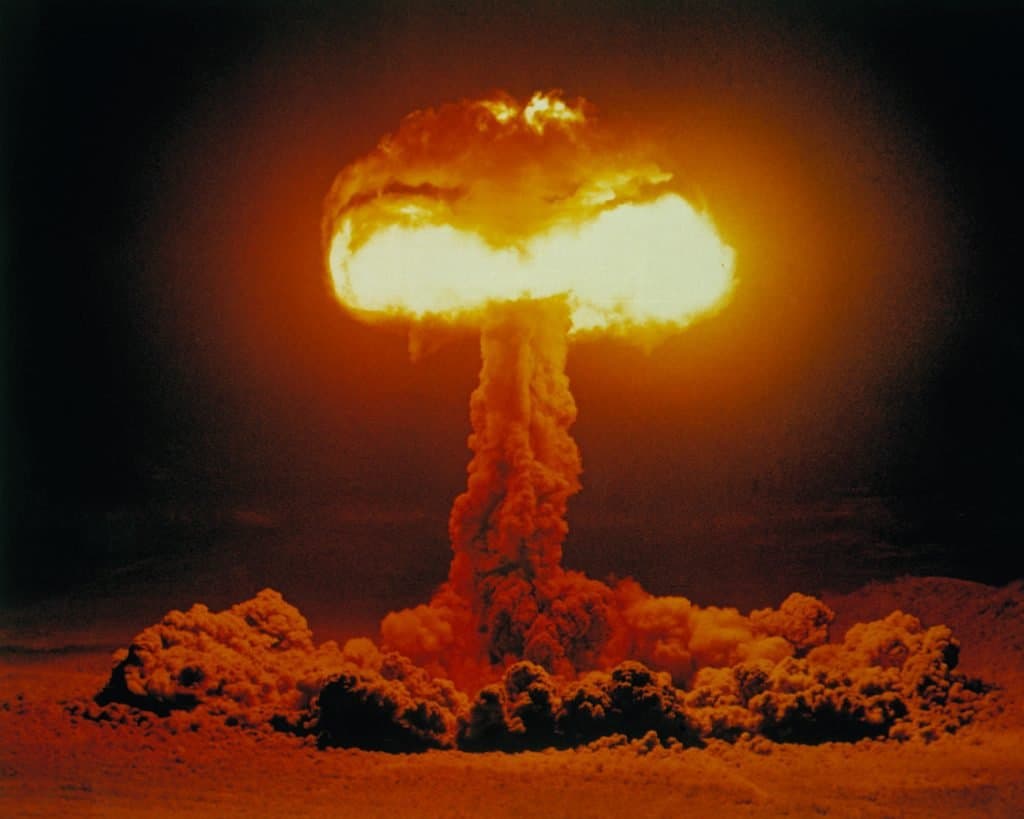
This prediction market asks whether the United States will conduct a nuclear test by a specified date. A nuclear test is defined as the intentional, non-combat detonation of a device that produces a nuclear chain reaction, either fission or fusion. The outcome excludes accidents, radiological dispersal devices like 'dirty bombs,' or actions by third parties. The question emerges within a complex geopolitical environment marked by renewed great power competition and evolving nuclear weapons policy. The United States has observed a self-imposed moratorium on explosive nuclear testing since 1992, a policy maintained by both Democratic and Republican administrations. However, discussions about the potential need for new tests have resurfaced in recent years, primarily driven by concerns about the reliability of the aging U.S. nuclear stockpile and the perceived testing activities of strategic rivals like Russia and China. These concerns are amplified by the collapse of arms control agreements and technological advancements in warhead design. People are interested in this topic because it represents a potential major shift in U.S. national security posture. A decision to resume testing would break a decades-long norm, likely trigger international condemnation, and could instigate a new global arms race. The market gauges the probability of a high-stakes political and military decision with profound global implications.
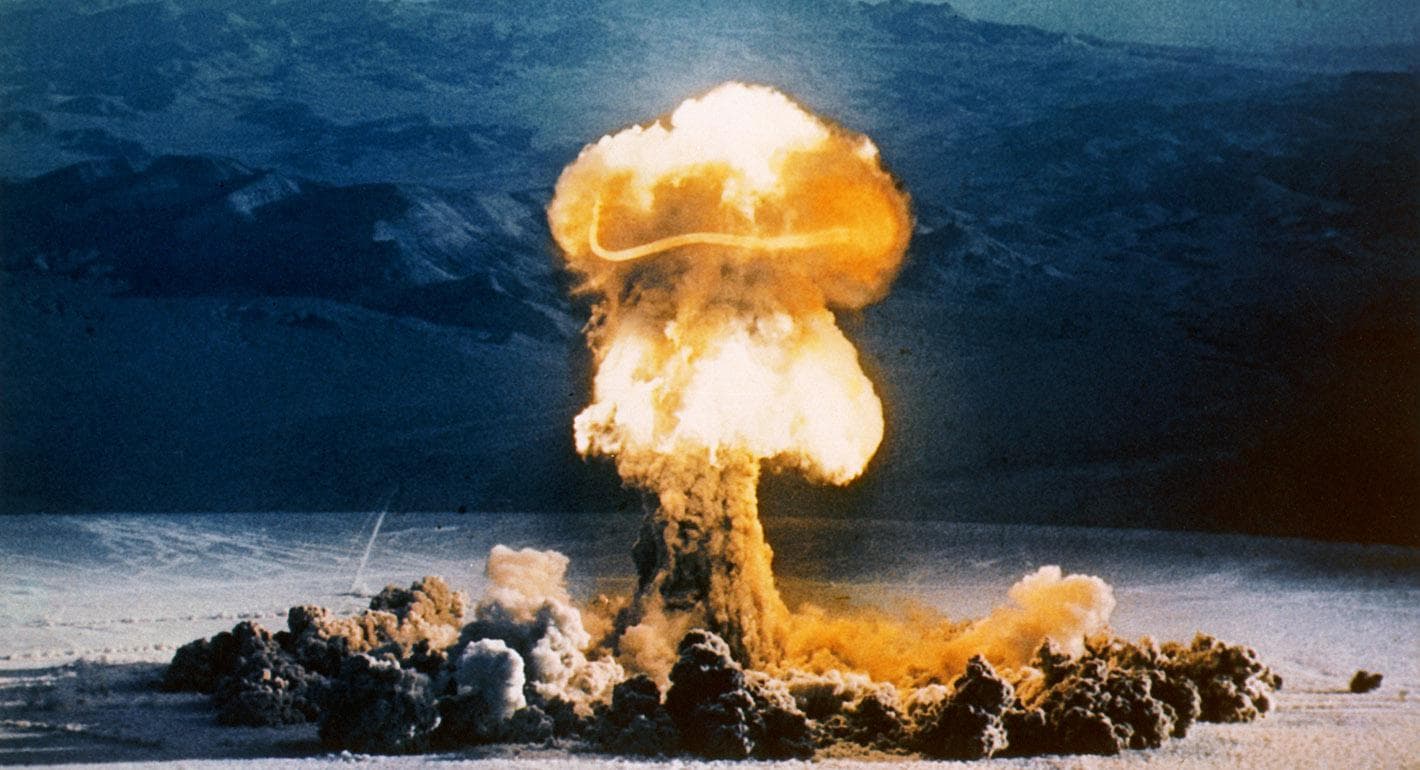
The United States conducted 1,030 nuclear tests between 1945 and 1992, more than all other nations combined. The first test, codenamed Trinity, occurred on July 16, 1945, in New Mexico. Atmospheric and underground testing continued for decades, primarily at the Nevada Test Site. Growing environmental and health concerns, along with diplomatic efforts, led to the 1963 Limited Test Ban Treaty, which prohibited tests in the atmosphere, underwater, and in outer space. Testing moved exclusively underground. In 1992, Congress passed legislation imposing a moratorium on U.S. nuclear testing, and President George H.W. Bush signed it into law. This moratorium became a de facto national policy. President Bill Clinton signed the Comprehensive Nuclear-Test-Ban Treaty (CTBT) in 1996, but the Senate rejected its ratification in 1999. Despite not ratifying the CTBT, every subsequent U.S. administration has upheld the testing moratorium, relying instead on the Stockpile Stewardship Program, established in the 1990s, to maintain confidence in the nuclear arsenal through computer simulations and subcritical experiments. The last U.S. explosive nuclear test, codenamed Divider, was conducted on September 23, 1992. The current debate is framed by this 30-year period of abstinence and whether modern threats or technical challenges justify breaking this long-standing precedent.
A U.S. decision to conduct a nuclear test would have immediate and severe geopolitical consequences. It would almost certainly be interpreted as a major escalation by rivals like Russia and China, who would likely use it as justification for their own testing programs, ending the global moratorium observed by the major nuclear powers. This could trigger a new qualitative arms race, with nations developing and proof-testing new, more advanced warhead designs. Domestically, testing is politically divisive. It would face strong opposition from arms control advocates, environmental groups, and many allied governments, while receiving support from factions arguing for maximum military readiness. The economic costs are substantial, involving billions of dollars for test site preparation, environmental remediation, and potential compensation claims, diverting funds from other modernization priorities. For global security, the collapse of the test ban norm would represent a significant setback for non-proliferation, making it harder to discourage other countries from pursuing nuclear weapons and testing them. The ripple effects would impact diplomatic relations, strategic stability, and long-term efforts to reduce nuclear dangers worldwide.
The U.S. government maintains its moratorium on explosive nuclear testing. However, policy discussions and infrastructure preparations have intensified. In 2020, the Trump administration reportedly discussed conducting a test as a demonstration for Russia and China, though no test was ordered. The Biden administration has reaffirmed the moratorium but has also requested and received congressional funding to 'reduce the time required to execute a nuclear test if necessary.' The NNSA's fiscal year 2025 budget request includes continued funding for infrastructure upgrades at the Nevada National Security Site. Simultaneously, U.S. intelligence assessments continue to allege that China and Russia have conducted very low-yield nuclear tests, charges both countries deny. This creates a persistent pressure point for advocates who argue the U.S. is at a disadvantage.
Historically, the primary site was the Nevada Test Site, now called the Nevada National Security Site (NNSS), located about 65 miles northwest of Las Vegas. Over 900 tests were conducted there. The U.S. also conducted tests in the Pacific Ocean and in other states like New Mexico and Colorado during the early years of the program.
A subcritical experiment uses chemical explosives and nuclear materials like plutonium but is carefully designed so that no self-sustaining nuclear chain reaction occurs. These tests, conducted underground at the NNSS, study the behavior of weapons-grade materials under extreme pressure and temperature without a nuclear explosion, providing data for stockpile stewardship.
Yes, the United States signed the CTBT in 1996 under President Clinton. However, the U.S. Senate has never ratified the treaty, meaning it is not legally binding on the United States. The U.S. observes a unilateral moratorium instead of a treaty obligation.
Established in the 1990s after the testing moratorium, the SSP is a multi-billion dollar annual effort to maintain the reliability and safety of the U.S. nuclear arsenal without explosive testing. It uses advanced supercomputers for simulations, experimental facilities like the National Ignition Facility, and subcritical tests to model warhead performance.
A single contained underground test would likely have minimal off-site radioactive release if conducted properly. The larger environmental impact stems from the legacy of past testing, which contaminated soil and groundwater at the Nevada site. New testing would require extensive excavation and create new waste, reviving long-standing local and tribal community concerns.
Educational content is AI-generated and sourced from Wikipedia. It should not be considered financial advice.
No related news found
Add this market to your website
<iframe src="https://predictpedia.com/embed/8xURU1" width="400" height="160" frameborder="0" style="border-radius: 8px; max-width: 100%;" title="U.S. nuclear test by...?"></iframe>