$36.17K
1
1

1 market tracked

No data available
| Market | Platform | Price |
|---|---|---|
![]() | Poly | 2% |
Trader mode: Actionable analysis for identifying opportunities and edge
Container shipping through the Suez Canal has been severely impacted since late 2023 due to security concerns in the Red Sea related to Houthi attacks, with major carriers rerouting around the Cape of Good Hope. Prior to these concerns, the Suez Canal Authority (SCA) reported 5,847 container ship transits of the canal for the full year of 2023, for an average of about 1,461 container ship transits per quarter. Following the Houthi attacks, the number of container ships transiting the canal has d
AI-generated analysis based on market data. Not financial advice.
$36.17K
1
1
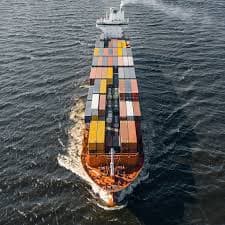
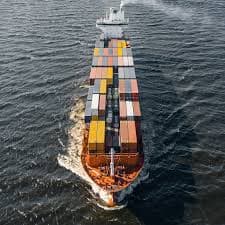
This prediction market topic asks whether the Suez Canal will see more than 1,000 container ship transits during the first quarter of 2026. The question focuses on a critical artery of global trade that has faced significant disruption since late 2023. The Suez Canal connects the Mediterranean Sea to the Red Sea, providing the shortest maritime route between Europe and Asia. Its operation is vital for the movement of goods, particularly containerized cargo, which includes consumer electronics, clothing, and manufactured parts. The benchmark for normal operations comes from 2023, when the Suez Canal Authority reported 5,847 container ship transits for the entire year, averaging about 1,461 per quarter. The current interest stems from a severe reduction in traffic following Houthi militant attacks on commercial shipping in the Red Sea and Gulf of Aden, which began in November 2023. In response, major container shipping lines like Maersk and MSC initiated long-term diversions around the Cape of Good Hope, adding roughly 10-14 days to voyage times and increasing fuel costs. The market essentially bets on whether, by early 2026, security conditions will have improved enough for container shipping to return to near its pre-crisis transit levels, or if the rerouting will persist. The outcome depends on geopolitical developments in Yemen, the effectiveness of international naval patrols, and decisions by shipping companies regarding risk and cost.
The Suez Canal's modern significance as a choke point was established after its 1869 opening. Its closure has historically caused major global disruption. The most notable precedent is the eight-year closure from 1967 to 1975 following the Six-Day War, when the canal was blocked by sunken ships and remained a frontline. That closure forced the development of supertankers and reshaped oil shipping routes. More recently, the canal was blocked for six days in March 2021 when the container ship Ever Given ran aground. That single incident caused an estimated $9.6 billion per day in global trade disruption, according to Lloyd's List, demonstrating the canal's acute vulnerability. The current crisis differs because it stems from an active, persistent military threat rather than a physical blockage or political closure. The Houthis began launching maritime attacks in 2015 during Yemen's civil war, but the campaign intensified dramatically in November 2023. Prior to this, the canal had enjoyed steady growth, with the Suez Canal Authority reporting record annual revenue of $9.4 billion in the 2022/2023 fiscal year. The authority had also invested in a major expansion project, the New Suez Canal, completed in 2015, to allow for two-way traffic and increase daily transit capacity.
The number of container ships using the Suez Canal directly impacts global trade costs, inflation, and supply chain reliability. Prolonged rerouting around Africa increases shipping times by 30-40% on key Asia-Europe routes. This absorbs vessel capacity, effectively reducing global shipping supply, which can lead to higher freight rates. Those increased costs are often passed on to consumers, contributing to inflationary pressures on goods ranging from furniture to electronics. For Egypt, canal transit fees are a critical source of foreign currency, contributing over $8 billion annually to state revenue before the crisis. A sustained drop threatens the country's economic stability. Environmentally, the longer Cape route increases fuel consumption and greenhouse gas emissions per voyage by an estimated 30-40%, setting back the shipping industry's decarbonization goals. The crisis also has strategic military implications, stretching naval resources and testing international cooperation on freedom of navigation.
As of late 2024, the security situation in the Red Sea remains volatile. While the U.S.-led naval coalition has intercepted numerous drones and missiles, Houthi attacks continue intermittently. Most major container shipping lines are still routing the majority of their Asia-Europe and Asia-Mediterranean services around the Cape of Good Hope, treating it as a long-term operational adjustment. Some limited Suez transits occur, often for vessels with specific security arrangements or lower perceived risk profiles. Diplomatic efforts to secure a lasting ceasefire in Yemen's civil war, which could reduce Houthi capabilities, have seen limited progress. Shipping companies are making fleet deployment decisions for 2025 and 2026 based on the assumption of continued risk.
In 2023, before the Red Sea crisis, a total of 23,851 vessels of all types transited the Suez Canal. This included 5,847 container ships, which are the focus of this prediction. The average was about 487 total vessel transits per week.
Sailing from Asia to Europe via the Cape of Good Hope adds approximately 3,500 nautical miles and 10 to 14 days of travel time compared to the Suez route. For example, a voyage from Shanghai to Rotterdam takes about 26 days via Suez but 36-40 days via the Cape.
The Houthi movement, which controls much of western Yemen, states its attacks are in solidarity with Palestinians and targets vessels linked to Israel, the U.S., and the U.K. The group says it will continue until Israel ends its military operations in Gaza.
Longer shipping routes reduce available vessel capacity and increase fuel and labor costs. These higher freight rates can be passed through supply chains, leading to increased prices for imported goods in stores, contributing to inflation.
In March 2021, the 20,000 TEU container ship Ever Given ran aground and blocked the canal for six days. This single accident halted all traffic, stranding hundreds of ships and causing an estimated $54-60 billion in delayed trade, highlighting the canal's fragility.
Educational content is AI-generated and sourced from Wikipedia. It should not be considered financial advice.

No related news found
Add this market to your website
<iframe src="https://predictpedia.com/embed/9eFO1W" width="400" height="160" frameborder="0" style="border-radius: 8px; max-width: 100%;" title="1k+ container ship transits of Suez Canal in Q1 2026?"></iframe>