$118.09K
1
4

$118.09K
1
4
Trader mode: Actionable analysis for identifying opportunities and edge
This market will resolve to "Yes" if Donald Trump officially invokes the Insurrection Act of 1807 by the listed date, 11:59 PM ET. Otherwise, it will resolve to "No". For the purposes of this market, "invoke" means that the President formally announces the use of the Insurrection Act as legal authority for deploying active-duty U.S. military forces or federalizing the National Guard in response to civil disorder, insurrection, or rebellion. The resolution source will be a consensus of credible
Prediction markets currently price a 48% probability that Donald Trump will invoke the Insurrection Act by December 31, 2026. This near-even split indicates the market views the event as a true coin flip, reflecting profound uncertainty about domestic stability and executive authority during a potential second Trump term. With only $88,000 in total volume across related markets, liquidity is thin, suggesting this is a speculative, sentiment-driven contract rather than one with a strong consensus.
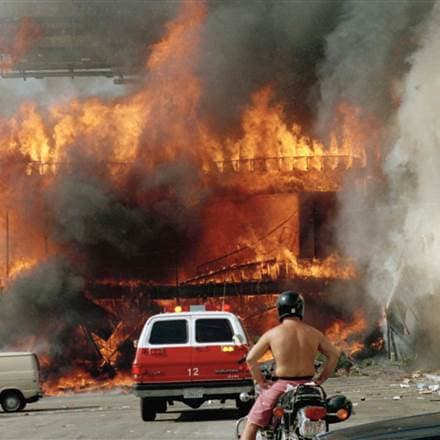
The primary factor elevating the probability is Donald Trump's own rhetoric and policy agenda. During his 2024 campaign, he has repeatedly emphasized "law and order," and his Project 2025 agenda outlines plans to aggressively assert presidential control over federal agencies, including the Department of Justice. Historically, Trump has suggested using the military for domestic law enforcement, notably during the 2020 George Floyd protests. Analysts interpret this as a signal that invoking the Insurrection Act, a tool last used in 1992 during the Los Angeles riots, is a credible policy option for him.
Conversely, the significant "No" probability is anchored in institutional and legal barriers. Invoking the Act for widespread domestic deployment would face immediate legal challenges, likely from states asserting control over their National Guard, and could trigger significant political backlash from Congress and military leadership. The high threshold of declaring a state of "insurrection" makes it a tool of last resort, tempering market confidence in its use.
The odds are highly sensitive to the domestic political climate through 2026. A major catalyst would be a large-scale episode of civil unrest following the 2024 election or early in a potential new administration. Such an event could see the "Yes" probability spike rapidly. Conversely, a stable domestic environment or clear signaling from senior military officials opposing the use of the Act for political purposes would drive the "No" probability higher. The market will also react to any direct statements from Trump himself, either affirming or disavowing plans to use the military domestically. Key dates to watch are the 2024 election and the subsequent Inauguration Day on January 20, 2025, which will set the immediate political context for this contract's multi-year resolution period.

AI-generated analysis based on market data. Not financial advice.
This prediction market focuses on whether former President Donald Trump will invoke the Insurrection Act of 1807 if he returns to the White House. The Insurrection Act is a federal law that allows the President to deploy active-duty U.S. military troops or federalize state National Guard units within the United States to suppress civil disorder, insurrection, or rebellion. The market resolves to 'Yes' if Trump formally announces the use of this authority by the specified deadline, based on a consensus of credible reporting. The topic has gained significant attention due to Trump's public statements and policy proposals regarding law and order, immigration enforcement, and his response to the January 6, 2021, Capitol riot. Analysts and legal scholars are debating the likelihood and constitutional implications of such an action, particularly in the context of potential civil unrest or protests. Interest in this market stems from its profound implications for civil-military relations, domestic use of the armed forces, and the boundaries of presidential power during a period of intense political polarization.
The Insurrection Act of 1807 is one of the oldest statutes in U.S. federal law, originally enacted to empower the President to use the militia and later the military to enforce federal authority. Its use has been rare and controversial. A key precedent was its invocation by President Dwight D. Eisenhower in 1957 to enforce desegregation in Little Rock, Arkansas, when he federalized the Arkansas National Guard and sent in the 101st Airborne Division. President George H.W. Bush invoked the Act in 1992 during the Los Angeles riots, deploying Marines and Army troops to assist in restoring order. These instances involved state consent or a clear breakdown of local law enforcement. The Act was significantly amended by the Posse Comitatus Act of 1878, which generally prohibited the use of the Army for domestic law enforcement but explicitly carved out an exception for actions taken under the Insurrection Act. This created the legal framework that exists today, where the Insurrection Act is the primary statutory authority for domestic military deployment. The modern debate was reignited in 2020 when President Trump reportedly considered invoking the Act during protests following the death of George Floyd, but was dissuaded by military advisors, including Defense Secretary Mark Esper.
The potential invocation of the Insurrection Act represents a critical test of American democratic norms and the principle of civilian control of the military. It directly impacts the relationship between the armed forces and the civilian population, potentially eroding public trust in the military as a non-political institution. A decision to deploy troops domestically for law enforcement could have severe social consequences, chilling First Amendment rights to protest and assembly, and escalating tensions in already volatile situations. Politically, such an action would likely trigger immediate legal challenges, congressional investigations, and intense partisan conflict, further destabilizing governance. The economic implications are also significant, as domestic unrest or the perception of martial law can disrupt commerce, depress investment, and create market uncertainty. The long-term ramifications could include lasting changes to the scope of presidential power and the role of the U.S. military in society, setting a precedent for future administrations.
As of late 2024, Donald Trump is the Republican nominee for president. He and his advisors have included the potential use of the Insurrection Act as part of their policy planning for a possible second term, specifically mentioning its application for border security and quelling urban unrest. The Department of Defense, under the Biden administration, has not publicly altered its standing procedures regarding the Act. Legal scholars and watchdog organizations continue to publish analyses warning of the constitutional dangers and legal ambiguities surrounding the statute. No formal steps to invoke the Act have been taken, as the authority rests solely with the sitting President.
The Insurrection Act is a federal law that allows the President to deploy the U.S. military or federalize state National Guard units within the United States to suppress insurrection, domestic violence, or conspiracy that hinders the execution of state or federal law. It is a major exception to the Posse Comitatus Act, which generally restricts the military from acting in a law enforcement capacity.
Yes. While one section of the Act requires a state legislature or governor to request federal help, other sections allow the President to act unilaterally if he determines that unlawful obstructions or rebellion make it impracticable to enforce federal law through ordinary judicial proceedings. This unilateral power is the subject of significant legal debate.
The Insurrection Act is a specific statutory authority for deploying troops. Martial law is a broader, ill-defined concept where military authority temporarily replaces civilian government. Invoking the Insurrection Act does not automatically declare martial law, but it is a step that could lead in that direction depending on the scope of the military's role.
Yes. During his 2024 campaign, Trump has stated he would use the military on 'day one' to address crime in major cities and secure the border. His former advisor, Stephen Miller, has explicitly stated a second Trump administration would use the Insurrection Act for these purposes.
Legal checks are limited. The Act gives the President broad discretion. Congress has the power to amend or repeal the Act, and it could potentially use its funding powers as a check. The judiciary could hear challenges to specific deployments, but courts are often reluctant to second-guess a President's judgment on national security matters.
Educational content is AI-generated and sourced from Wikipedia. It should not be considered financial advice.
Share your predictions and analysis with other traders. Coming soon!
4 markets tracked

No data available
| Market | Platform | Price |
|---|---|---|
![]() | Poly | 57% |
![]() | Poly | 56% |
![]() | Poly | 39% |
![]() | Poly | 21% |


No related news found
Add this market to your website
<iframe src="https://predictpedia.com/embed/A8w5UX" width="400" height="160" frameborder="0" style="border-radius: 8px; max-width: 100%;" title="Insurrection Act invoked by...?"></iframe>