$32.59K
1
23

$32.59K
1
23
Trader mode: Actionable analysis for identifying opportunities and edge
This market will resolve to "Yes" if the listed U.S. senator votes "Yea" on passage of the Department of Homeland Security Appropriations Act, 2026, during the first roll-call vote on passage in the U.S. Senate. Otherwise, this market will resolve to "No". This market will resolve to "No" if no vote on passage of the Department of Homeland Security Appropriations Act, 2026, occurs by March 31, 2026, 11:59 PM ET. The listed senator's vote during the first qualifying roll-call vote on passage of
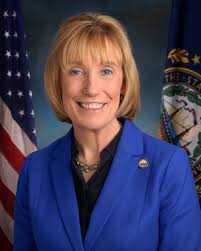
Prediction markets currently give Senator Jeanne Shaheen (D-NH) roughly a 7 in 10 chance of voting "Yea" on the Department of Homeland Security (DHS) funding bill for 2026. This means traders collectively believe she is significantly more likely to support the bill than oppose it when it comes to a Senate vote, which must happen by March 31. The market reflects a cautious but clear expectation of her support.
Two main factors explain these odds. First, Senator Shaheen has a consistent record of voting for final passage of annual government funding bills, including DHS appropriations. In recent years, she voted for the final DHS funding packages that were part of larger bipartisan deals. Traders are betting her past behavior is a reliable guide.
Second, the political context matters. By late March, a DHS funding bill reaching the Senate floor likely indicates a negotiated compromise between congressional leaders and the White House. Shaheen, as a senior member of the Senate Appropriations Committee, often works within her party to support such negotiated agreements, especially when they avoid extreme policy riders. The market odds suggest traders believe the final bill will be moderate enough for her support.
The absolute deadline is March 31, when the current funding authority expires. Watch for two signals before that. The first is the release of the final bill text, expected in early to mid-March. If the legislation includes contentious immigration or border security provisions opposed by most Senate Democrats, Shaheen's position could become less certain. The second is statements from Shaheen or her office once the text is public. Her explicit support or concerns would likely move the market probability.
For votes on must-pass government funding bills, prediction markets have a mixed but decent track record. They are generally better at forecasting the behavior of individual senators on these high-stakes, procedural votes than on more partisan political nominations. A key limitation here is the all-or-nothing deadline. If congressional negotiations collapse and no vote occurs by March 31, the market resolves to "No" for every senator. This injects uncertainty not about Shaheen's intent, but about whether the vote happens at all.
Prediction markets currently assign a 71% probability that Senator Jeanne Shaheen will vote "Yea" on the Department of Homeland Security (DHS) Appropriations Act for fiscal year 2026. This price, translating to a 71-in-100 chance, indicates the market views her support as the expected outcome, but with significant uncertainty remaining. The $33,000 in total volume across all 23 senator-specific markets is low, suggesting this is a speculative, low-liquidity contract where prices may be more volatile to new information.
Shaheen is a Democratic senator from New Hampshire with a record of supporting bipartisan government funding bills. Her 71% "Yea" price is anchored by her history of voting for final appropriations packages, even when they contain provisions she may criticize. The market is likely pricing in the basic expectation that a senior senator from the governing party will ultimately support a must-pass funding bill to avoid a department shutdown. However, the probability is not higher because DHS funding is consistently one of the most contentious annual appropriations bills, often entangled with debates over border security and immigration policy. Shaheen could potentially vote "No" as a protest against specific border-related provisions, even if she supports the bulk of the bill's funding for other DHS components like FEMA and the Coast Guard.
The primary catalyst will be the release of the final bill text, expected in the days before the March 31 deadline. If the legislation includes extreme immigration measures seen as unacceptable to moderate Democrats, Shaheen's "Yea" probability could drop sharply. Conversely, a clean funding bill or one with bipartisan border compromises would likely push her odds above 80%. Watch for statements from Shaheen or the Senate Democratic caucus once the text is public. The market will also react to any procedural moves, such as a failed cloture vote, that signal broad Democratic opposition. Given the thin liquidity, a single large trade based on insider political analysis could move the price 10-15 cents quickly.
AI-generated analysis based on market data. Not financial advice.
This prediction market focuses on whether specific U.S. senators will vote in favor of the Department of Homeland Security Appropriations Act for fiscal year 2026. The market resolves based on the first roll-call vote on passage in the Senate, which must occur by March 31, 2026. The Department of Homeland Security (DHS) is a cabinet agency with a broad mandate covering border security, immigration enforcement, cybersecurity, disaster response, and counterterrorism. Its annual funding bill is one of the twelve regular appropriations bills Congress must pass each year to fund the federal government. The fiscal year 2026 appropriations cycle will begin with the White House submitting a budget request in early 2025, followed by congressional hearings, committee markups, and floor votes. Interest in this market stems from the consistently contentious nature of DHS funding. Debates often center on border security funding levels, immigration detention capacity, the budget for agencies like Customs and Border Protection (CBP) and Immigration and Customs Enforcement (ICE), and cybersecurity grants. These issues frequently create partisan divides and can lead to legislative standoffs, making individual senator votes difficult to predict and valuable for forecasting. The March 31 deadline is significant because it falls before the start of the new fiscal year on October 1, 2025, reflecting an attempt to complete the appropriations process on time, though Congress often fails to meet this goal and resorts to continuing resolutions.
The Department of Homeland Security was created in 2002 in response to the September 11, 2001, terrorist attacks, consolidating 22 different federal agencies. Its appropriations process has been a source of political conflict for nearly two decades. A major precedent was the 2013 government shutdown, partially triggered by disputes over DHS funding and the Affordable Care Act. More recently, DHS appropriations have been entangled with debates over border wall funding during the Trump administration. In February 2019, a disagreement over wall funding led to a 35-day partial government shutdown, the longest in U.S. history, which ended when Congress passed a DHS appropriations bill without the requested wall money. Since then, Congress has frequently failed to pass DHS appropriations on time. For fiscal years 2020 through 2024, DHS operations were typically funded by a series of short-term continuing resolutions (CRs), which maintain funding at previous levels and prevent new initiatives. This pattern underscores the difficulty of reaching bipartisan agreement on the department's budget. The political sensitivity of immigration policy ensures that the DHS bill is often among the last of the twelve annual bills to be finalized, making it a frequent candidate for inclusion in large, last-minute omnibus spending packages.
The outcome of the DHS appropriations vote directly affects national security operations, border management, and disaster preparedness. A failure to pass a full-year bill can force the department to operate under a continuing resolution, which freezes funding and prevents the launch of new programs or the hiring of additional personnel. This can hamper responses to emerging threats, such as new patterns of illegal border crossings or evolving cybersecurity risks. For states and municipalities, the bill funds critical grant programs like the Homeland Security Grant Program and the Urban Area Security Initiative, which local first responders rely on for equipment and training. Politically, a senator's vote on DHS funding is often framed as a test of their commitment to border security or immigration enforcement, making it a potent campaign issue. A 'Nay' vote from a senator in a border state, for example, could be attacked as being soft on security, while a 'Yea' vote could be criticized by immigration advocacy groups. The vote also has implications for congressional power dynamics, as successful passage of appropriations bills is a basic measure of legislative functionality.
As of late 2024, the appropriations process for fiscal year 2026 has not yet begun. The Biden Administration is preparing its budget request, which will be submitted to Congress in February or March 2025. The Senate Homeland Security Appropriations Subcommittee will likely hold hearings with DHS officials in the spring of 2025. The political composition of the Senate following the November 2024 elections will be a primary factor influencing the bill's content and the dynamics of the eventual vote. The outcome of the 2024 presidential election will also set the tone for border security and immigration policy debates that will shape the DHS funding discussion.
An authorization bill establishes or continues a federal agency or program and sets its policy guidelines, but it does not provide funding. An appropriations bill, like the DHS Appropriations Act, actually provides the legal authority for the government to spend money from the Treasury to fund those authorized programs and agencies for a specific fiscal year.
According to the prediction market's rules, if no passage vote occurs by 11:59 PM ET on March 31, 2026, the market resolves to 'No' for all senators. In reality, Congress would likely pass a continuing resolution to fund DHS at existing levels temporarily, avoiding a partial shutdown of the department.
While party affiliation is a strong indicator, it is not absolute. Some Republicans may vote against a bill they feel does not fund border security sufficiently, while some Democrats may oppose bills with stringent immigration enforcement provisions. Senators from border states or those up for re-election may break from party lines.
A roll-call vote is a vote in which each senator's position is recorded individually. The Senate clerk calls each senator's name, and the senator answers 'Yea,' 'Nay,' or 'Present.' This is distinct from a voice vote or a unanimous consent agreement, where individual votes are not recorded.
Funding for physical border barriers has been a contentious part of recent DHS bills. Whether it is included in the FY2026 bill will depend on the policy priorities of the President and the majority in Congress at the time of negotiation. The bill's text, which will be public before the vote, will specify any such allocations.
Educational content is AI-generated and sourced from Wikipedia. It should not be considered financial advice.
23 markets tracked

No data available
| Market | Platform | Price |
|---|---|---|
![]() | Poly | 66% |
![]() | Poly | 56% |
![]() | Poly | 51% |
![]() | Poly | 50% |
![]() | Poly | 45% |
![]() | Poly | 43% |
![]() | Poly | 39% |
![]() | Poly | 38% |
![]() | Poly | 37% |
![]() | Poly | 36% |
![]() | Poly | 18% |
![]() | Poly | 14% |
![]() | Poly | 9% |
![]() | Poly | 7% |


No related news found
Add this market to your website
<iframe src="https://predictpedia.com/embed/AFg3dR" width="400" height="160" frameborder="0" style="border-radius: 8px; max-width: 100%;" title="Who will vote "Yea" on the DHS Appropriations Act, 2026 by March 31?"></iframe>