This event has ended. Showing historical data.

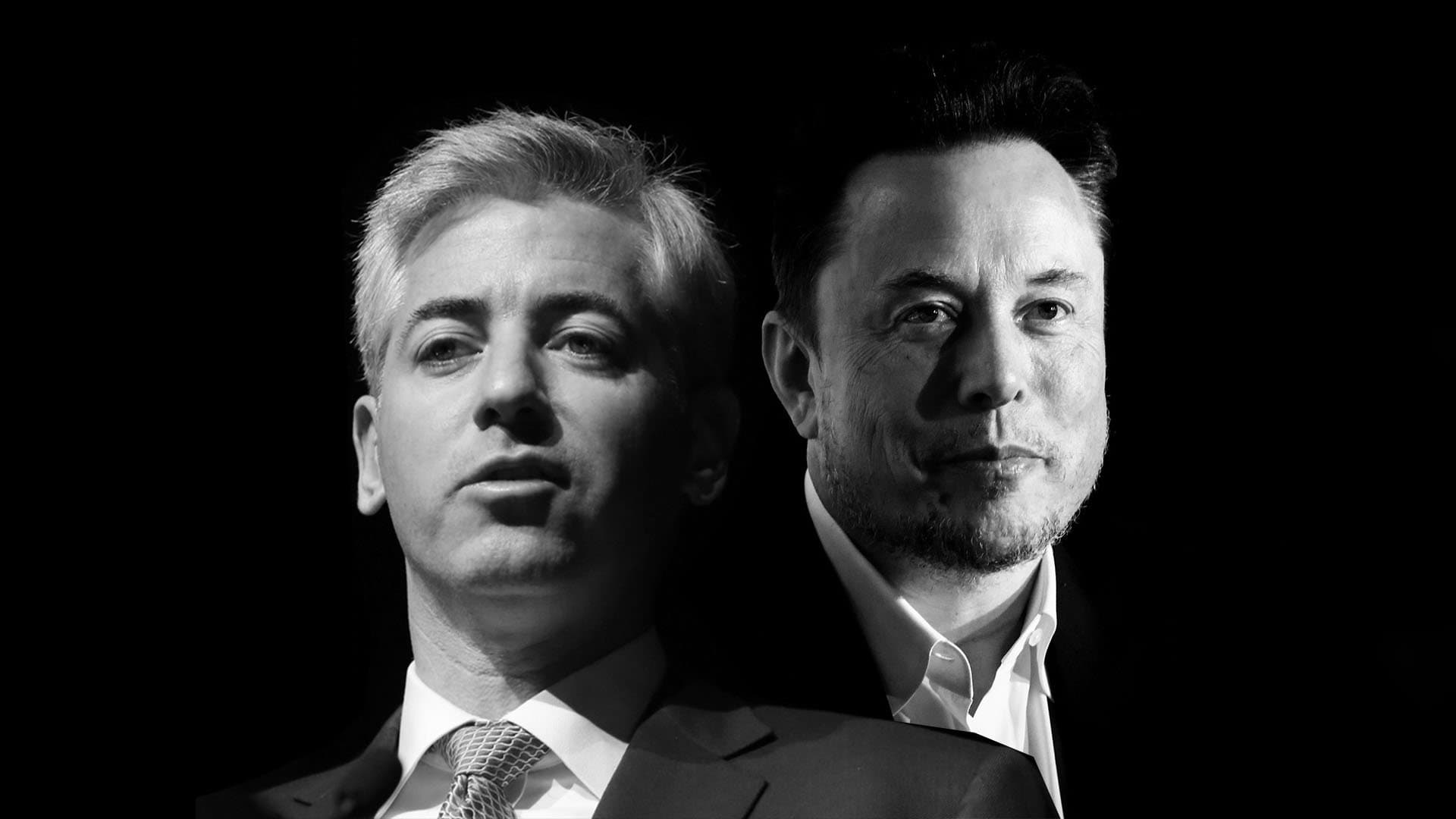
SpaceX goes public through Bill Ackman "SPAR" company?
PM $3.1K
1
1
SpaceX goes public through Bill Ackman "SPAR" company?
PM $3.1K
1
1
AI Analysis
Trader mode: Market mechanics, assumptions and risks
PM $3.1K
Reported volume · provider units
1
Saved contracts
0
Reviewed equivalent pairs
Source snapshot: May 2, 2026, 6:02 AM UTC
About This Event
Investor Bill Ackman proposed on X that Elon Musk take SpaceX public through a merger with Pershing Square SPARC Holdings Ltd., a company founded and run by Ackman to innovatively transact public offerings through the use of Special Purpose Acquisition Rights or “SPARs” (see: https://x.com/BillAckman/status/2002484983123136990). This market will resolve to “Yes” if either of the following conditions are met: - An agreed merger or business combination deal between SpaceX and Pershing Square SPA
This saved analysis is awaiting a background update. Its prices and claims may be outdated; compare them with the dated market data above.
Current Market Outlook
Polymarket traders give this a 2% probability, meaning the market sees a SpaceX-Bill Ackman SPAR merger as a long shot. The implied odds are low enough to suggest near-total skepticism. With only $3,000 in total volume, this is a thin market where a single $500 bet could shift the price noticeably. The market resolves December 31, 2026, so there is time, but not much.
Key Factors Driving the Odds
Bill Ackman floated the idea on X, but Elon Musk has shown zero public interest in taking SpaceX public at all. Musk has repeatedly stated SpaceX will remain private until its Mars transport system is operational, which is years away. SpaceX is also in a strong financial position. The company raised $750 million in late 2024 at a $210 billion valuation, and its Starlink division generates growing revenue with positive cash flow. There is no pressure to go public for capital.
Ackman's SPAR structure is unproven. Unlike a traditional SPAC, a SPAR gives investors rights to participate later rather than upfront capital. No company has ever used this vehicle for a major IPO. The SEC has not approved a SPAR transaction of this size, and regulatory uncertainty adds friction. Even if Musk considered going public, a SPAR would be the most experimental route available.
What Could Change These Odds
A direct signal from Musk would move the market. If he tweets positively about the idea or meets with Ackman publicly, the odds could jump to 20-30% overnight. A SpaceX investor filing with the SEC for a confidential IPO would also spike the price, though that would not guarantee a SPAR deal specifically.
The biggest risk to the current 2% price is that it might be too low if Musk already plans to go public by 2026 and simply has not announced it. SpaceX's employee stock sales and secondary offerings have created a shareholder base that eventually demands liquidity. But the SPAR angle is the least likely path, and the market reflects that correctly.
AI-generated analysis based on market data. Not financial advice.
Saved Jul 12, 2026 UTCThis saved content is awaiting a background update. It may contain outdated claims; use the dated market data and provider rules for the latest available information.
Overview
This prediction market centers on the possibility that SpaceX, Elon Musk's private space exploration company, will go public through a merger with Pershing Square SPARC Holdings Ltd., a special purpose acquisition rights (SPAR) company founded by billionaire investor Bill Ackman. The proposal was first floated publicly by Ackman on X (formerly Twitter) in early 2025, when he suggested that a SPAR structure could allow SpaceX to access public markets without the traditional IPO process. Under a SPAR, investors would receive rights to purchase shares in a future acquisition target, rather than buying into a blind pool of capital as with a standard SPAC. Ackman's pitch argued that this model would give SpaceX more flexibility and lower dilution than a conventional IPO, while still providing liquidity for early investors and employees. The market resolves to 'Yes' if a definitive merger or business combination agreement is signed between SpaceX and Pershing Square SPARC Holdings Ltd. before the market's expiration date. The topic has generated intense debate among investors, space industry analysts, and Musk watchers, given SpaceX's status as the world's most valuable private company and Musk's well-known skepticism of public markets. At its core, the question is whether Ackman can persuade Musk to take the leap into public ownership, and whether the SPAR structure offers a compelling enough alternative to overcome Musk's past criticisms of quarterly earnings pressure and short-term thinking on Wall Street.
Historical Context
The concept of taking SpaceX public has been discussed for over a decade. In 2013, Musk said an IPO was possible within a few years, but he later reversed course, citing the burdens of quarterly reporting. By 2019, SpaceX had raised over $3 billion in private funding, and its valuation grew from $36 billion in 2020 to $180 billion by late 2024. The company has consistently raised capital through private rounds, including a $750 million round in May 2023 that valued it at $150 billion. Musk's 2022 acquisition of Twitter (now X) demonstrated his willingness to take a company private when he felt public markets were mispricing it, but also exposed him to the challenges of managing a public company's debt load. Bill Ackman's SPAR structure emerged from the SPAC boom and bust of 2020-2022. Traditional SPACs raised over $80 billion in 2021 alone, but many failed to find quality targets, leading to investor losses and regulatory scrutiny. Ackman's Pershing Square Tontine Holdings, a SPAC he launched in 2020, was liquidated in 2022 after failing to find a target. The SPAR model was designed to address these failures by not requiring a blind pool of capital upfront. Instead, investors commit to buying shares only after a target is identified and approved. The SEC approved the SPAR structure in 2022, but Pershing Square SPARC Holdings has not yet completed a transaction. Ackman's public proposal to Musk in February 2025 marked the first serious attempt to use the SPAR for a major company.
Why It Matters
A SpaceX IPO, whether through a SPAR or traditional means, would be one of the most anticipated public offerings in history. SpaceX's Starlink satellite internet business alone is projected to generate $10 billion in revenue by 2025, and the company's launch services dominate the global market. Going public would allow retail investors to own a piece of the company for the first time, potentially creating hundreds of billions in new market capitalization. It would also provide a liquidity event for early employees and investors, many of whom have held shares for over a decade. The broader implications extend beyond finance. A public SpaceX would face quarterly earnings pressure, which could alter its risk tolerance for ambitious projects like Starship and Mars colonization. Musk has warned that public markets might force the company to prioritize profits over long-term innovation. On the other hand, a successful SPAR deal could validate Ackman's model and reshape how private companies approach public listings, offering an alternative to both traditional IPOs and SPACs. Regulators would also take notice: the SEC has been scrutinizing SPACs for investor protections, and a SpaceX-SPAR merger would test the boundaries of these new structures. For space industry stakeholders, a public SpaceX would increase transparency around the company's financials, potentially revealing the true profitability of Starlink and launch services.
Frequently Asked Questions
What is a SPAR and how is it different from a SPAC?
A SPAR (Special Purpose Acquisition Rights) is a variation of a SPAC that does not raise a trust fund of cash upfront. Instead, investors receive rights to purchase shares in a future acquisition target. This avoids the problem of idle capital and dilution that has plagued traditional SPACs. The SEC approved the SPAR structure in 2022.
Why would Elon Musk want to take SpaceX public?
Musk has historically opposed taking SpaceX public, citing quarterly earnings pressure and short-term thinking. However, going public could provide liquidity for employees and early investors, and raise capital for Starship and Mars colonization. A SPAR might appeal to Musk because it avoids the traditional IPO process and gives him more control over timing.
How much would SpaceX be worth if it goes public?
SpaceX's private valuation was $180 billion in late 2024. Analysts estimate a public market valuation could range from $200 billion to $300 billion, depending on Starlink's growth trajectory and Starship's progress. Some optimistic projections exceed $400 billion if Starlink achieves its full revenue potential.
Has Bill Ackman successfully completed a SPAC merger before?
Ackman's previous SPAC, Pershing Square Tontine Holdings, was the largest SPAC ever at $4 billion but was liquidated in 2022 after failing to find a suitable target. The SPAR structure was designed to avoid the problems that led to that failure. Ackman has not yet completed a SPAC or SPAR merger.
AI-written background. References identify the evidence used; Wikipedia links under Learn More are additional reading. Prices and provider rules are dated snapshots. This is not financial advice.
Market Insights
Price gaps of 2 pp+
0
Reviewed equivalent pairs
0
No currently reviewed equivalent pairs with both binary Yes prices are available.
Price differences do not establish arbitrage. Check each pair's review, current order prices, fees and settlement rules.