China x India military clash by...?
$332.88K
1
1
China x India military clash by...?
$332.88K
1
1
AI Analysis
Trader mode: Actionable analysis for identifying opportunities and edge
About This Event
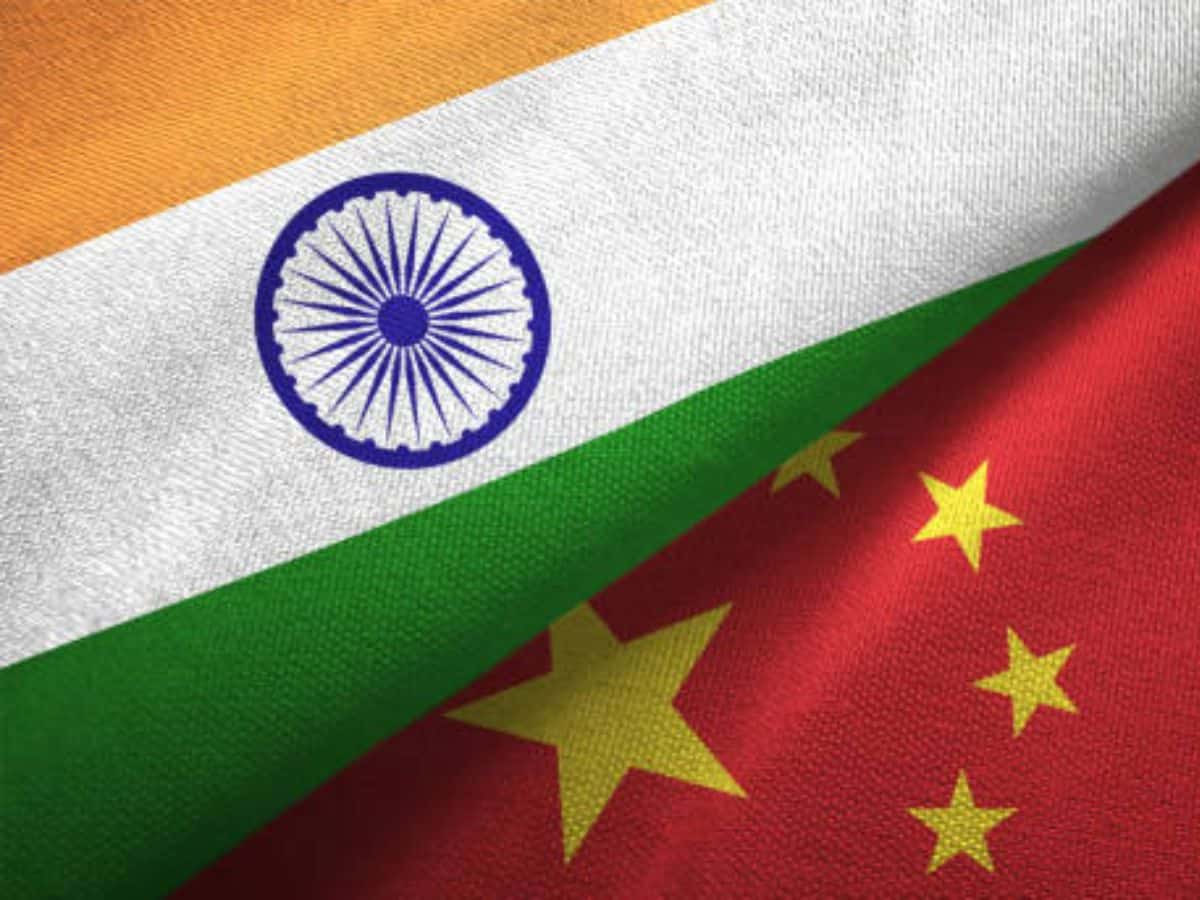
This is a market on the likelihood of a military clash between China and India occurring by December 31.
This saved analysis is awaiting a background update. Its prices and claims may be outdated; compare them with the dated market data above.
Current Market Outlook
Polymarket traders give an 8% probability to a military clash between China and India by December 31, 2026. That means the market sees this as a low-probability event, but not zero. At 8 cents per share, the implied odds suggest a serious incident is unlikely but remains a real tail risk that investors and analysts cannot ignore.
The market has attracted $303K in volume, moderate for a geopolitical niche market. This isn't a fringe bet. Real money is on the line from informed participants tracking border tensions.
Key Factors Driving the Odds
The 8% price reflects the current relative calm along the Line of Actual Control (LAC). Since the 2020 Galwan Valley clashes that killed 20 Indian and 4 Chinese soldiers, both sides have pulled back troops from several friction points like Pangong Tso and Gogra. Disengagement agreements in 2021 and 2024 reduced direct face-offs.
But the underlying dispute is unresolved. China still claims nearly 90,000 square kilometers of Indian territory in Arunachal Pradesh. India controls it. Neither side concedes. Military infrastructure on both sides has expanded since 2020, with new roads, airstrips, and troop deployments. The risk of accidental escalation during patrols remains.
Historical patterns matter. Major clashes occurred in 1962, 1967, and 2020, roughly every 25-30 years. That pattern alone would put the next major incident in the 2045-2050 range, not 2026. But smaller skirmishes happen more frequently, and the 2020 clash showed how quickly a border patrol dispute can turn deadly.
What Could Change These Odds
The biggest upward catalyst would be a confirmed border incursion or patrol confrontation that results in casualties. If either side reports soldiers killed or captured, expect the price to jump to 25-30% within hours.
Diplomatic summits are the downward risk. If Modi and Xi hold a bilateral meeting with a new border agreement, the price could drop to 3-4%. The next BRICS summit in 2025 is a potential venue.
Winter is a natural de-escalator. High-altitude border posts become nearly impassable from November to April. Clashes are far more likely during summer patrol seasons (May-October). The market will likely drift lower through winter 2025-2026 unless something breaks.
The 8% price is rational. Not high enough to panic, not low enough to dismiss. It reflects a tense status quo where both sides have strong incentives to avoid war but weak incentives to resolve the border dispute permanently.
AI-generated analysis based on market data. Not financial advice.
Saved Jul 10, 2026 UTCThis saved content is awaiting a background update. It may contain outdated claims; use the dated market data and provider rules for the latest available information.
Overview
This prediction market asks whether a military clash between China and India will occur by December 31 of a given year. A military clash is generally defined as a direct exchange of fire or armed engagement between the regular armed forces of both nations, excluding minor border skirmishes involving only patrols or unarmed personnel. The question reflects ongoing tensions along the Line of Actual Control (LAC), the de facto border separating Chinese-controlled and Indian-controlled territory in the Himalayan region. The China-India border dispute spans roughly 3,488 kilometers and includes three main sectors: the western sector (Aksai Chin and Ladakh), the middle sector (Uttarakhand and Himachal Pradesh), and the eastern sector (Arunachal Pradesh). Both countries claim overlapping territories, with China asserting control over Aksai Chin and India claiming the region as part of Ladakh. In the east, India administers Arunachal Pradesh, which China claims as part of Tibet. These territorial disputes have led to several confrontations since the 1962 Sino-Indian War, the most significant being the 2020 Galwan Valley clash. Recent developments include a series of military standoffs starting in May 2020, when Chinese and Indian troops engaged in fistfights and stone-throwing in the Pangong Tso area. The situation escalated on June 15, 2020, when a violent confrontation in the Galwan Valley left 20 Indian soldiers and an unknown number of Chinese soldiers dead. Since then, both sides have deployed additional troops, artillery, and air defense systems along the LAC. Diplomatic and military talks have produced disengagement agreements in some friction points, such as the Pangong Tso area in February 2021, but tensions remain high in other sectors like Depsang and Demchok. People are interested in this prediction market because a military clash between two nuclear-armed states with over 2.8 billion combined population carries enormous consequences for regional stability, global trade, and security alliances. The outcome affects supply chains, energy markets, and the balance of power in Asia. Investors, policymakers, and analysts watch these tensions closely, as any escalation could shift alignments involving the United States, Russia, and other major powers.
Historical Context
The China-India border dispute dates back to the early 20th century, with roots in British colonial maps and the McMahon Line, a boundary drawn in 1914 between British India and Tibet at the Simla Convention. China never accepted the McMahon Line, claiming Tibet was not a sovereign entity at the time. After the 1949 Chinese Revolution and India's independence in 1947, both countries inherited these territorial claims. Tensions escalated in the 1950s as China built the Xinjiang-Tibet Highway through Aksai Chin, which India claimed. Diplomatic attempts failed, leading to the 1962 Sino-Indian War. The 1962 war lasted from October 20 to November 21, 1962, and resulted in a decisive Chinese victory. Chinese forces advanced into Indian territory in both the western and eastern sectors before unilaterally withdrawing to positions held before the war. India suffered approximately 1,383 killed and 1,696 wounded, while Chinese casualties are estimated at 722 killed and 1,697 wounded. The war ended with China holding Aksai Chin and India retaining control of Arunachal Pradesh. The Line of Actual Control emerged from this conflict, though it was never formally demarcated. Since 1962, there have been several military standoffs, including the 1987 Sumdorong Chu incident, where both sides massed troops near the Bhutan border. The 2013 Depsang standoff saw Chinese troops establish a camp 19 kilometers inside Indian-claimed territory. In 2017, a 73-day standoff occurred at Doklam, a tri-junction area near Bhutan, where Chinese and Indian troops confronted each other over Chinese road construction. Each incident was resolved through diplomatic and military channels without escalating to large-scale conflict. However, the 2020 Galwan Valley clash was the first time in 45 years that soldiers died from direct combat, marking a significant escalation.
Why It Matters
A military clash between China and India would have immediate economic consequences. Both countries are major trading partners, with bilateral trade reaching $136 billion in 2022. A conflict could disrupt supply chains in electronics, pharmaceuticals, and textiles, as India is a major producer of generic drugs and China supplies key raw materials. Global energy markets would also be affected, as both nations are large oil importers. The Indian Ocean sea lanes, through which 80% of global oil trade passes, could see increased naval patrols and potential disruptions. Beyond economics, a clash would reshape regional alliances. India is a member of the Quad (with the US, Japan, and Australia) and has deepened defense ties with the US through agreements like the Logistics Exchange Memorandum of Agreement (LEMOA). China would likely view any US support to India as a challenge to its regional dominance. The conflict could also affect other border disputes, such as China's claims in the South China Sea and India's tensions with Pakistan. For the global order, a war between two nuclear powers would test crisis management mechanisms and could lead to arms races in Asia.
AI-written background. References identify the evidence used; Wikipedia links under Learn More are additional reading. Prices and provider rules are dated snapshots. This is not financial advice.