$33.76K
1
4

$33.76K
1
4
Trader mode: Actionable analysis for identifying opportunities and edge
Primary elections in Texas are scheduled to be held on March 3, 2026, with a runoff on May 26 if no candidate receives a majority. This market will resolve according to the candidate Donald Trump first announces that he endorses for the Texas Republican Senate Primary election by March 2, 2026, 11:59 PM ET. If Donald Trump endorses someone not listed in this market or does not announce an endorsement by March 2, 2026, 11:59 PM ET, this market will resolve to "No endorsement / Other". The reso
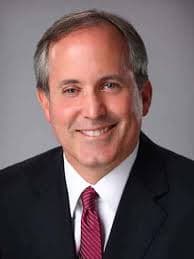
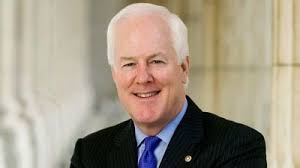
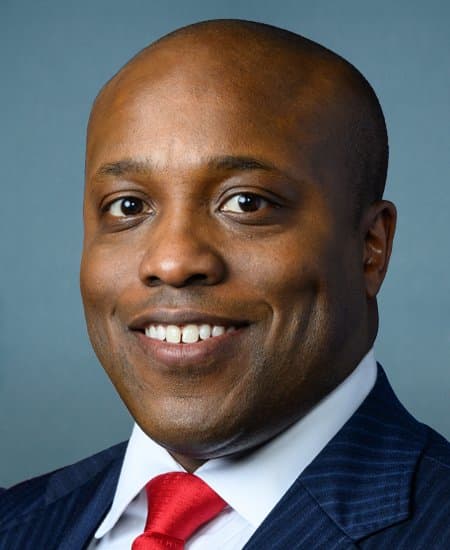
Prediction markets currently show a roughly 2 in 5 chance that Donald Trump will not endorse any of the three named candidates—Ken Paxton, John Cornyn, or Wesley Hunt—for the Texas Republican Senate primary. This means traders see it as nearly a coin flip whether he picks someone else or stays out of the race entirely. The market assigns the highest individual probability, about 1 in 3, to an endorsement of Texas Attorney General Ken Paxton. The collective view suggests significant uncertainty about Trump's choice with the deadline just one day away.
The odds reflect the complex political relationships at play. Ken Paxton is seen as the most likely pick because he is a longtime Trump ally who has faced legal battles that Trump has framed as political persecution. This shared narrative makes Paxton a natural endorser for Trump. Conversely, Senator John Cornyn has a more complicated history with Trump, sometimes supporting his agenda but also occasionally criticizing him, which may make an endorsement less likely. Wesley Hunt, a Congressman, is a rising star in the party but has less national recognition.
The high probability of "no endorsement or other" comes from two factors. First, Trump may calculate that endorsing in a crowded primary could create unnecessary division if his preferred candidate loses. Second, he might wait to see if a clearer frontrunner emerges after the primary, saving his political capital for the general election.
The only concrete event left is the deadline itself: March 2, 2026, at 11:59 PM ET. Any public statement from Trump or his team before that time will decide the market. A last-minute post on his Truth Social platform or an announcement at a rally would be the likely channels. Because the Texas primary is on March 3, this endorsement timing is typical for trying to sway voters at the last moment.
Prediction markets have a mixed but generally decent record on political endorsements, especially when they involve a figure like Trump whose decisions are often telegraphed in advance through media leaks and ally statements. However, this is a niche market with only moderate trading volume, which can sometimes make prices more volatile and less reliable than high-profile election markets. The biggest limitation is that Trump's decision is ultimately a personal one, which can be unpredictable despite the political logic traders are weighing.
Prediction markets currently assign a 42% probability that Donald Trump will either make no endorsement or back a candidate not listed in the Texas GOP Senate primary. This price, trading at 42¢ on Polymarket, indicates the market views a non-endorsement or surprise pick as a significant possibility, nearly as likely as a named candidate winning his support. The three named candidates—Ken Paxton, John Cornyn, and Wesley Hunt—collectively hold 58% of the probability share. Trading volume is thin at $31,000, suggesting low trader conviction and high sensitivity to new information.
The 42% probability for "no endorsement/other" reflects strategic uncertainty. Trump’s endorsement calculus balances loyalty against electoral pragmatism. Ken Paxton, the impeached but acquitted Texas Attorney General, is a strong MAGA ally, but his legal controversies could make him a general election liability. Incumbent Senator John Cornyn has a fraught history with Trump, criticizing him after January 6th, which makes a reconciliation endorsement seem improbable. Congressman Wesley Hunt is a rising star and Trump ally, but lacks statewide electoral experience. Trump may delay or withhold an endorsement to maintain leverage over all candidates, a tactic he has used in other primaries. The market is pricing in this potential for strategic silence.
The primary is not until March 2026, so the current odds are highly speculative. The most immediate catalyst will be candidate announcements and early polling throughout 2024 and 2025. A clear frontrunner emerging in internal GOP polls could push Trump toward an early endorsement, collapsing the "no endorsement" probability. Conversely, a crowded, contentious field might increase the value of that contract as Trump waits longer. A decisive move by one candidate to fully align with Trump’s 2024 campaign rhetoric or to secure key institutional support could shift odds rapidly. The market has almost no liquidity, so any credible rumor or news headline will likely cause large price swings.
AI-generated analysis based on market data. Not financial advice.
This prediction market focuses on whether former President Donald Trump will endorse a candidate in the 2026 Texas Republican Senate primary, and if so, which candidate he will choose. The market resolves based on the first public endorsement Trump makes for this specific race by March 2, 2026. The seat in question is currently held by Senator John Cornyn, who has announced he will not seek re-election, creating an open contest for a powerful position in the U.S. Senate. Texas is a reliably Republican state in federal elections, making the GOP primary the decisive contest for the seat. Trump's endorsement has become a critical factor in Republican primaries since he left office, often determining the viability of candidates. His backing can unlock significant fundraising, sway a large portion of the Republican base, and deter potential challengers. The 2026 primary will test Trump's continued influence within the party and his specific strategy for shaping the Senate Republican conference. Political observers are watching to see if he will back an established figure, a political outsider, or someone closely aligned with his 'America First' agenda. The timing and target of his endorsement will signal his priorities for the Senate and his relationship with the Texas Republican establishment.
Donald Trump's influence in Republican primaries solidified after his 2016 presidential victory. In the 2018 midterms, his endorsed candidates had mixed success. The 2022 midterm cycle demonstrated the peak of his primary power, where his endorsements were decisive in ousting several Republicans he deemed disloyal, such as Representative Liz Cheney. However, several of his endorsed candidates in competitive general elections, like Dr. Mehmet Oz in Pennsylvania and Herschel Walker in Georgia, lost, leading to post-election criticism from some party figures. In Texas specifically, Trump's endorsement history is impactful. He endorsed Ted Cruz in his 2018 general election, a race Cruz narrowly won. In the 2022 Texas Attorney General primary, Trump endorsed incumbent Ken Paxton against challenger George P. Bush. Paxton won the primary runoff with 67.8% of the vote, a clear demonstration of Trump's pull with Republican primary voters in the state. The upcoming 2026 primary follows this pattern of Trump using endorsements to reward allies and shape the party. The open Senate seat, a rare occurrence in Texas, presents a high-stakes opportunity for him to install a loyalist in the upper chamber of Congress.
The outcome of this endorsement and the subsequent primary will shape the ideological composition of the U.S. Senate for years. A Trump-endorsed victor is likely to vote in line with his policy preferences on issues like immigration, government spending, and foreign policy, potentially making the Senate Republican conference more uniformly populist. For the Republican Party, it is another test of whether Trump's brand of politics is a guaranteed path to primary victory or if it carries general election risks in a state where Democrats have made recent gains in urban areas. For Texas politics, the endorsement could accelerate an ongoing shift. The state's Republican party has been moving from a business-oriented conservatism toward a more populist, movement-oriented conservatism. A Trump endorsement for a hardline candidate would cement that transition. The result also affects fundraising networks and political careers for a generation, determining who holds one of the most powerful elected offices from the second-largest state.
As of late 2024, the field of declared candidates for the 2026 Republican primary is not yet formalized. Potential candidates like Attorney General Ken Paxton and Representative Dan Crenshaw are widely discussed but have not officially launched campaigns. The political focus remains on the 2024 presidential and congressional elections. Donald Trump has made no public statements regarding a preference in the Texas Senate race. Operatives expect candidate filings and serious campaigning to begin in earnest after the 2024 general election concludes. Behind the scenes, potential candidates are likely courting Trump's advisors and building fundraising networks in anticipation of a competitive primary.
The Texas primary election is scheduled for March 3, 2026. If no candidate receives more than 50% of the vote, a runoff election between the top two finishers will be held on May 26, 2026.
The senior senator is John Cornyn, first elected in 2002. The junior senator is Ted Cruz, elected in 2012. The 2026 election is for the seat currently held by Senator Cornyn, who is retiring.
Recent history shows it is extremely important. In the 2022 election cycle, every candidate Trump endorsed in a Texas Republican primary won their nomination, often by large margins, demonstrating his strong influence with the party's base voters.
According to the prediction market rules, if Donald Trump does not announce an endorsement for this specific primary by 11:59 PM ET on March 2, 2026, the market resolves to 'No endorsement / Other.'
Yes. In the 2018 general election, Trump endorsed incumbent Senator Ted Cruz, who was in a competitive race against Democrat Beto O'Rourke. Cruz ultimately won re-election by a narrow margin of 2.6 percentage points.
Educational content is AI-generated and sourced from Wikipedia. It should not be considered financial advice.
4 markets tracked

No data available
| Market | Platform | Price |
|---|---|---|
![]() | Poly | 76% |
![]() | Poly | 14% |
![]() | Poly | 3% |
![]() | Poly | 1% |


No related news found
Add this market to your website
<iframe src="https://predictpedia.com/embed/CLXCQF" width="400" height="160" frameborder="0" style="border-radius: 8px; max-width: 100%;" title="Trump Endorsement in Texas GOP Senate Primary"></iframe>