$26.84K
1
1

1 market tracked

No data available
| Market | Platform | Price |
|---|---|---|
![]() | Poly | 8% |
Trader mode: Actionable analysis for identifying opportunities and edge
If Donald J. Trump visits North Korea by April 30, 2026, 11:59 PM ET, this market will resolve to "Yes". Otherwise, this market will resolve to "No". For the purpose of this market, a "visit" is defined as Trump physically entering the terrestrial or maritime territory of North Korea. Whether or not Trump enters North Korean airspace during the timeframe of this market will have no bearing on this market's resolution. The primary resolution source for this information will be official informat
Prediction markets currently give Donald Trump about an 8% chance of visiting North Korea by April 30, 2026. In simpler terms, traders see this as a very unlikely event, with roughly a 1 in 12 chance of happening. This shows a strong consensus that such a high-profile diplomatic trip is not expected in the near future.
The low probability is based on several factors. First, while Trump did become the first sitting U.S. president to meet a North Korean leader when he crossed into North Korea in 2019, that was a brief, symbolic moment at the DMZ. A full visit into North Korean territory would be a much more significant and risky undertaking.
Second, the current geopolitical situation is tense. North Korea has continued its weapons testing, and diplomatic talks have been stalled for years. A visit by a major political figure like Trump would require careful preparation and a clear diplomatic goal, which does not seem to be in place.
Finally, Trump's own schedule and political priorities as a presidential candidate are focused on the 2024 election and its aftermath. A sudden, unplanned trip to Pyongyang would be a major surprise that conflicts with his current domestic focus.
The deadline for this market is April 30, 2026, which is over a year and a half away. The most relevant shorter-term event is the U.S. presidential election in November 2024. The outcome could change the diplomatic landscape. If Trump is not elected, his ability and incentive to make such a visit as a private citizen might change. If he is elected, his policy toward North Korea in a potential second term would become the primary factor. Watch for any unexpected diplomatic communications or meetings announced between U.S. and North Korean officials, as those could be a precursor.
Prediction markets are generally useful for aggregating collective judgment on geopolitical events, but they can be less reliable for very rare, headline-driven occurrences. This specific question is what traders call a "longshot" or low-probability, high-impact event. Markets are often good at assessing the low base rate for such unusual diplomatic moves. However, if a sudden breakthrough in negotiations were to occur, the price could shift very quickly. The main limitation here is the long time horizon and the unpredictable nature of personal diplomacy involving figures like Trump and Kim Jong Un.
Prediction markets assign a low probability to a visit. On Polymarket, shares for "Yes" trade at 8¢, indicating an 8% chance Donald Trump visits North Korea by April 30, 2026. This price suggests the event is considered highly unlikely, though not impossible. Trading volume is thin at approximately $27,000, meaning a single large bet could shift the odds significantly.
The low probability reflects significant geopolitical and logistical barriers. First, Trump's diplomatic engagements with North Korea during his presidency, including summits in Singapore and Vietnam, did not result in a visit to Pyongyang. Historical precedent shows such a trip is an extreme escalation. Second, the current state of U.S.-North Korea relations is dormant. No high-level talks have occurred recently, and North Korea has accelerated its weapons testing. A surprise visit without substantial preparatory diplomacy would be unprecedented. Third, Trump's status as a former president complicates travel. Any such trip would require navigating the Logan Act, which restricts private citizens from negotiating with foreign governments, and would likely face intense opposition from the current U.S. administration.
The odds could rise only with a clear, public signal of intent from either Trump or North Korean leader Kim Jong Un. A announced meeting in a neutral country, like the 2019 DMZ encounter, would be a prerequisite that could move the market. However, the 2024 U.S. election is a more immediate catalyst. A Trump victory in November could reset foreign policy and make a 2025-2026 diplomatic outreach conceivable, though a visit to North Korea itself would remain a long shot. Conversely, the odds could fall further toward 0% if Trump explicitly rules out such a visit or if North Korea conducts a major provocative act, like a nuclear test, that would freeze any potential dialogue.
This contract is trading exclusively on Polymarket. The lack of a comparable market on platforms like Kalshi or Manifold highlights its niche nature. The thin liquidity on Polymarket means the current 8% price is a weak signal. It likely represents speculative interest rather than a deep analysis of diplomatic channels. A trader should view this market as highly sensitive to headlines, where a single rumor could cause a sharp, but possibly temporary, price swing.
AI-generated analysis based on market data. Not financial advice.
$26.84K
1
1
This prediction market asks whether former U.S. President Donald Trump will physically visit North Korea by April 30, 2026. The question stems from Trump's unprecedented diplomatic engagement with North Korean leader Kim Jong Un during his presidency, which included three face-to-face meetings but never a trip to North Korean territory. The market specifically defines a 'visit' as Trump entering the terrestrial or maritime territory of North Korea, excluding mere passage through airspace. Interest in this topic is driven by Trump's history of unconventional foreign policy moves, his potential return to political power, and the ongoing geopolitical tensions surrounding North Korea's nuclear weapons program. Observers are watching whether Trump would attempt a dramatic diplomatic gesture, similar to his 2019 meeting with Kim at the Demilitarized Zone, which briefly crossed into North Korean territory. The resolution will rely on official information confirming any such travel.
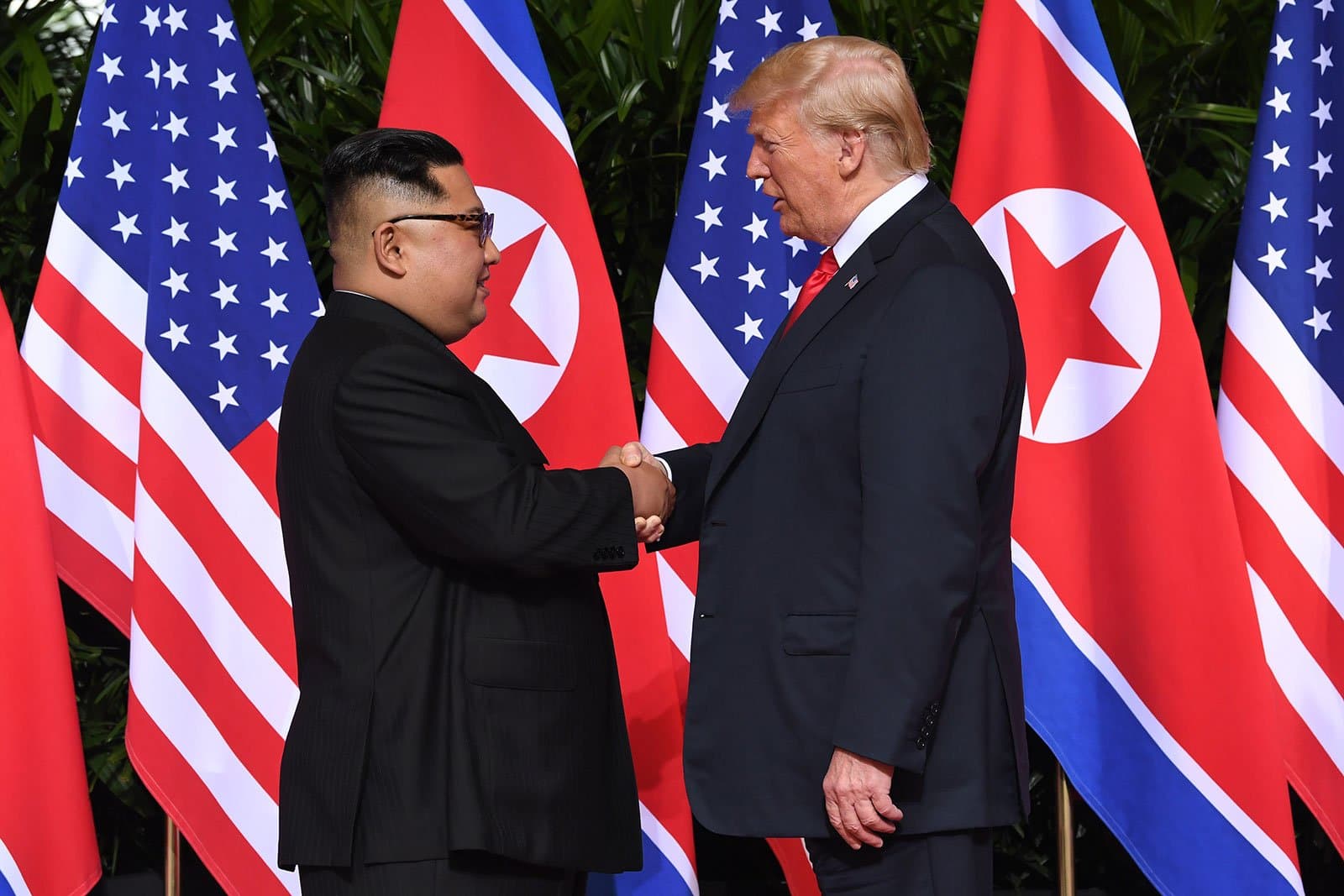
U.S.-North Korea relations have been hostile since the 1950-1953 Korean War, which ended in an armistice, not a peace treaty. No sitting U.S. president visited North Korea until Donald Trump's symbolic step across the Military Demarcation Line at the DMZ on June 30, 2019. That moment, which lasted a few minutes, was the first time a U.S. president set foot in North Korea. The meeting was arranged with less than 48 hours' public notice, following a Twitter invitation from Trump to Kim. This built upon two earlier formal summits: the Singapore Summit on June 12, 2018, which produced a vague denuclearization pledge, and the Hanoi Summit on February 27-28, 2019, which collapsed over sanctions relief. Diplomatic contact stalled afterward, and North Korea resumed missile testing. The historical precedent is limited to that brief border crossing, not an official visit to Pyongyang or other North Korean locations. Former President Jimmy Carter visited North Korea in 1994 as a private citizen to help defuse a nuclear crisis, demonstrating a precedent for ex-presidents undertaking diplomatic missions there.
A Trump visit to North Korea would have immediate geopolitical consequences. It could reshape the diplomatic landscape on the Korean Peninsula, potentially sidelining traditional allies like South Korea and Japan if not coordinated with them. Such a trip could be interpreted as a de facto recognition of North Korea's status and could undermine international sanctions regimes aimed at curbing its nuclear program. Domestically in the U.S., a visit would trigger intense political debate over the propriety of a former or potentially future president conducting personal diplomacy with an adversarial regime accused of severe human rights abuses. It would test the limits of the Logan Act, which restricts private citizens from negotiating with foreign governments, though enforcement is rare. For the global non-proliferation regime, a high-profile visit that does not yield concrete disarmament steps could normalize North Korea's nuclear arsenal and encourage other nations to pursue similar weapons programs.
As of late 2024, Donald Trump is the Republican nominee for the November presidential election. North Korea has continued advancing its weapons programs, testing solid-fuel intercontinental ballistic missiles and declaring itself an irreversible nuclear power. Official diplomatic talks between the U.S. and North Korea have been dormant since the 2019 Hanoi summit collapse. The Biden administration has focused on deterrence and trilateral cooperation with South Korea and Japan, offering talks without preconditions but not pursuing high-level summitry. Kim Jong Un has strengthened ties with Russia, receiving potential technological support in exchange for munitions. The political timeline is critical: if Trump wins the November 2024 election, he would not be inaugurated until January 20, 2025, leaving a 15-month window before the prediction market's April 2026 deadline for a potential visit as president-elect or president.
Only once, briefly. On June 30, 2019, President Donald Trump stepped approximately 20 feet into North Korean territory at the Panmunjom border village in the DMZ for a handshake and photo opportunity with Kim Jong Un. No U.S. president has made an official state visit to Pyongyang or other North Korean cities.
As a former president, Trump receives Secret Service protection. The agency would need to plan an exceptionally high-risk protective mission in a hostile country. The State Department would likely be involved due to travel restrictions, and Trump might need a passport validation for travel to a country under comprehensive U.S. sanctions.
Yes, as president-elect between November 2024 and January 2025, Trump could theoretically travel, though it would be highly unconventional. Such a trip would lack the formal authority of the presidency and could conflict with the Logan Act, which prohibits unauthorized citizens from negotiating with foreign powers.
The summit produced a four-point joint statement where North Korea committed to 'work toward complete denuclearization of the Korean Peninsula' and the U.S. offered security guarantees. However, the statement lacked specific definitions, timelines, or verification measures, and no substantive dismantlement of North Korea's nuclear program followed.
The summit collapsed because the U.S. demanded North Korea surrender key nuclear facilities in exchange for partial sanctions relief, while North Korea demanded all major economic sanctions be lifted first for only partial denuclearization steps. The two sides could not bridge this gap, leading Trump to walk away from the negotiations.
Educational content is AI-generated and sourced from Wikipedia. It should not be considered financial advice.

No related news found
Add this market to your website
<iframe src="https://predictpedia.com/embed/CdAd_q" width="400" height="160" frameborder="0" style="border-radius: 8px; max-width: 100%;" title="Will Trump visit North Korea by April 30?"></iframe>