$41.26K
1
1

1 market tracked

No data available
| Market | Platform | Price |
|---|---|---|
![]() | Poly | 15% |
Trader mode: Actionable analysis for identifying opportunities and edge
This market will resolve to "Yes" if the Panama Canal comes under US control by December 31, 2026, 11:59 PM ET. Otherwise this market will resolve to "No". For the purposes of this market, US control means the United States assumes primary operational authority over the canal, either via diplomatic agreement, military action, or any other means. An official announcement made by the United States and Panama that the Panama Canal will come under US control will qualify, even if the actual transf
Prediction markets currently give roughly a 1 in 7 chance that the United States will retake control of the Panama Canal before the end of 2026. This means traders collectively see such an event as very unlikely. The low probability suggests the market views a change in control as a remote possibility, not an expected outcome.
The low probability is rooted in history and current relations. The United States built and operated the canal for most of the 20th century, but full control was peacefully transferred to Panama in 1999 under treaties signed by President Jimmy Carter. Reversing this decades-old diplomatic achievement would be a profound and hostile act.
Today, the canal is a sovereign Panamanian asset critical to global shipping. While the canal faces operational challenges like water shortages, these are managed through cooperation with international users, not threats of seizure. A US takeover would severely damage America's diplomatic relationships across Latin America and the world, likely triggering widespread condemnation and economic retaliation. The market odds reflect a judgment that the immense diplomatic and strategic costs far outweigh any potential benefits for the US.
There is no specific scheduled event for a handover. Instead, watch for unexpected political statements. A serious policy proposal from a major US presidential candidate advocating for renewed control could shift the odds, though likely only slightly. More broadly, any severe escalation of geopolitical tension that disrupts global trade routes might lead some traders to re-evaluate extreme scenarios. The market will resolve automatically on December 31, 2026.
Prediction markets are generally reliable at aggregating crowd wisdom on topics with clear, verifiable outcomes. For an event this specific and dramatic, the market effectively pools expert and public sentiment on geopolitical norms and international law. However, the very low trading volume on this question means it represents a narrow slice of opinion rather than a deep, liquid market. Its primary value is in quantifying just how far outside mainstream expectation this event currently lies. Markets can miss true "black swan" events, but the stability of these odds indicates strong consensus around the status quo.
The prediction market assigns a 14% probability that the United States will retake control of the Panama Canal before the end of 2026. This price indicates the market views the event as highly unlikely. With only $41,000 in total volume, liquidity is thin, meaning the current odds are more susceptible to sentiment shifts than a heavily traded market. A 14% chance suggests traders see a plausible but remote scenario, not a base case.
The low probability directly reflects the legal and diplomatic history of the canal. The United States transferred full ownership and operational control to Panama on December 31, 1999, under the Torrijos-Carter Treaties. This completed a process that began in 1977. Reversing this settled international treaty through "diplomatic agreement" would require Panama's consent, which is politically unthinkable for any Panamanian administration. The 14% price likely captures tail-risk speculation on extreme scenarios, such as a catastrophic breakdown of canal operations due to climate-induced drought or a geopolitical crisis that prompts unprecedented U.S. intervention. Recent operational challenges from low water levels have not shifted the fundamental sovereignty issue.
The odds could increase only with concrete steps toward a radical change in the treaty status. A formal joint announcement from the U.S. and Panamanian governments to renegotiate operational control would cause a major price spike, but no such dialogue exists. Conversely, the "No" position could solidify further, pushing prices below 10%, with strong public reaffirmations from both governments of the existing treaty framework. The market will remain sensitive to any rhetoric from U.S. political figures about the canal's strategic importance, especially during the 2024 election cycle. However, absent a severe and sustained closure of the canal that threatens global trade, the current low probability is expected to hold.
AI-generated analysis based on market data. Not financial advice.
$41.26K
1
1
This prediction market asks whether the United States will regain primary operational control of the Panama Canal by December 31, 2026. The market resolves to 'Yes' if the U.S. assumes authority through any means, including diplomatic agreement, military action, or other mechanisms, with an official joint announcement from both nations being sufficient to trigger resolution. The topic intersects geopolitics, international law, and global trade, reviving a historical question about U.S. strategic interests in a critical maritime chokepoint. Recent operational challenges at the canal, including severe drought conditions that reduced transit capacity by up to 36% in 2023, have renewed discussions about its management and security. Speculation about U.S. re-engagement is fueled by China's growing commercial influence in Panama and broader strategic competition, though no formal proposals for a transfer of control are currently on the table. The market essentially gauges the probability of a radical shift in the 1999 Torrijos-Carter Treaties, which transferred full control to Panama.
The United States constructed the Panama Canal between 1904 and 1914, following U.S. support for Panama's independence from Colombia. The 1903 Hay-Bunau-Varilla Treaty granted the U.S. control in perpetuity over the Canal Zone, a 10-mile-wide strip of territory. For most of the 20th century, the canal was administered by the U.S. government, first by the War Department and later by the Panama Canal Commission. This arrangement was a persistent source of tension with Panama. In 1977, U.S. President Jimmy Carter and Panamanian leader Omar Torrijos signed the Torrijos-Carter Treaties. These treaties set a definitive timeline for the transfer of the canal. The Panama Canal Commission, a U.S. agency, managed the waterway until December 31, 1999. On that date, full control was handed over to the Panama Canal Authority (ACP), a Panamanian state-owned entity. The transfer was completed peacefully and is considered a settled issue in international relations. The 1977 treaties do not contain provisions for the U.S. to retake control, making any such action a fundamental break from this historical precedent.
The Panama Canal is a linchpin of global maritime trade, handling about 3% of world trade volume and 46% of container traffic moving from Northeast Asia to the U.S. East Coast. A change in control would immediately affect shipping costs, insurance rates, and supply chain timelines for thousands of companies. It would also reshape geopolitical alliances in Latin America, potentially alienating other nations and undermining the principle of national sovereignty. For Panama, the canal is an economic cornerstone, contributing approximately 6% of its GDP and 20% of total government revenues. A U.S. takeover would trigger a profound national crisis, likely involving mass protests and a complete breakdown in bilateral relations. Internationally, it would be viewed as a dramatic assertion of U.S. hemispheric power, possibly encouraging similar actions by other great powers at strategic chokepoints, and could destabilize the global norms governing international waterways.
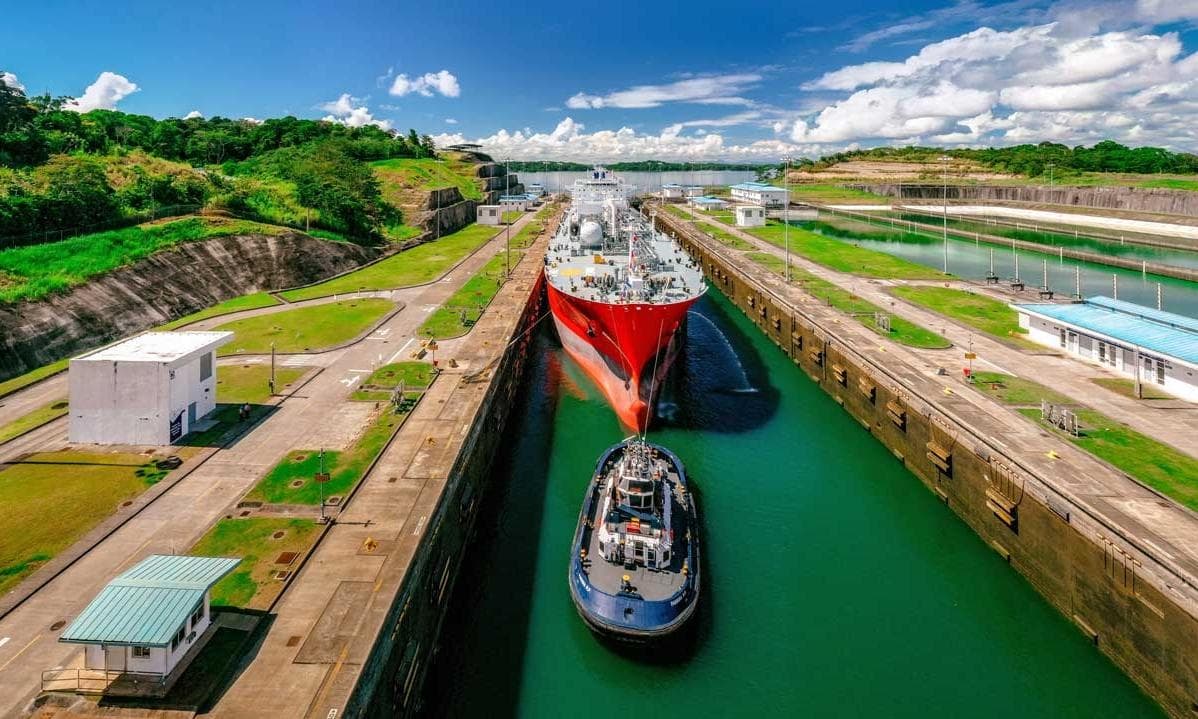
As of early 2024, the Panama Canal remains under the full sovereign control of Panama, operated by the Panama Canal Authority (ACP). The immediate focus is on managing a severe drought that began in 2023. The ACP has gradually increased daily transit slots from a low of 22 in late 2023 to 27 by March 2024, but this remains below the normal capacity of 36-38 transits. The authority is pursuing new water management projects, including a potential new reservoir. There are no active diplomatic negotiations or public legislative efforts in the U.S. Congress to regain operational control. U.S. policy statements continue to recognize Panamanian sovereignty while expressing interest in the canal's security and reliability.
Under the 1977 Torrijos-Carter Treaties, the transfer of control to Panama was permanent and irrevocable. There is no legal provision for the U.S. to unilaterally reclaim the canal. Any attempt would require either a new treaty ratified by both nations or an act of force, which would violate international law.
The U.S. transferred control to fulfill the terms of the 1977 treaties, which were intended to resolve long-standing diplomatic tensions and recognize Panamanian sovereignty. The decision was driven by a desire to improve relations with Latin America and was seen as a corrective to a colonial-style arrangement.
Tolls vary significantly by ship size and type. For a standard Neopanamax container ship, the toll can exceed $500,000 per transit. In times of congestion, additional auction fees for booking slots have exceeded $4 million, making transit a major cost for shipping lines.
Chinese state-linked companies have significant commercial roles. The Landbridge Group holds a concession to operate the canal's port terminals at both ends. Chinese shipping lines are also major users. However, China does not have any operational control over the canal itself, which remains with Panama.
A complete closure is extremely unlikely, but reduced water levels force draught restrictions, limiting the size and number of ships. This causes delays, higher shipping costs, and rerouting of cargo around South America's Cape Horn, adding weeks to voyage times and increasing fuel consumption.
Educational content is AI-generated and sourced from Wikipedia. It should not be considered financial advice.

No related news found
Add this market to your website
<iframe src="https://predictpedia.com/embed/Cdi39I" width="400" height="160" frameborder="0" style="border-radius: 8px; max-width: 100%;" title="US takes Panama Canal before 2027?"></iframe>