$22.69M
2
21

$22.69M
2
21
Trader mode: Actionable analysis for identifying opportunities and edge
In The next presidential election If X has won the 2026 Brazilian presidential election, then the market resolves to Yes. Early close condition: This market will close and expire after a winner is announced. This market will close and expire after a winner is announced.
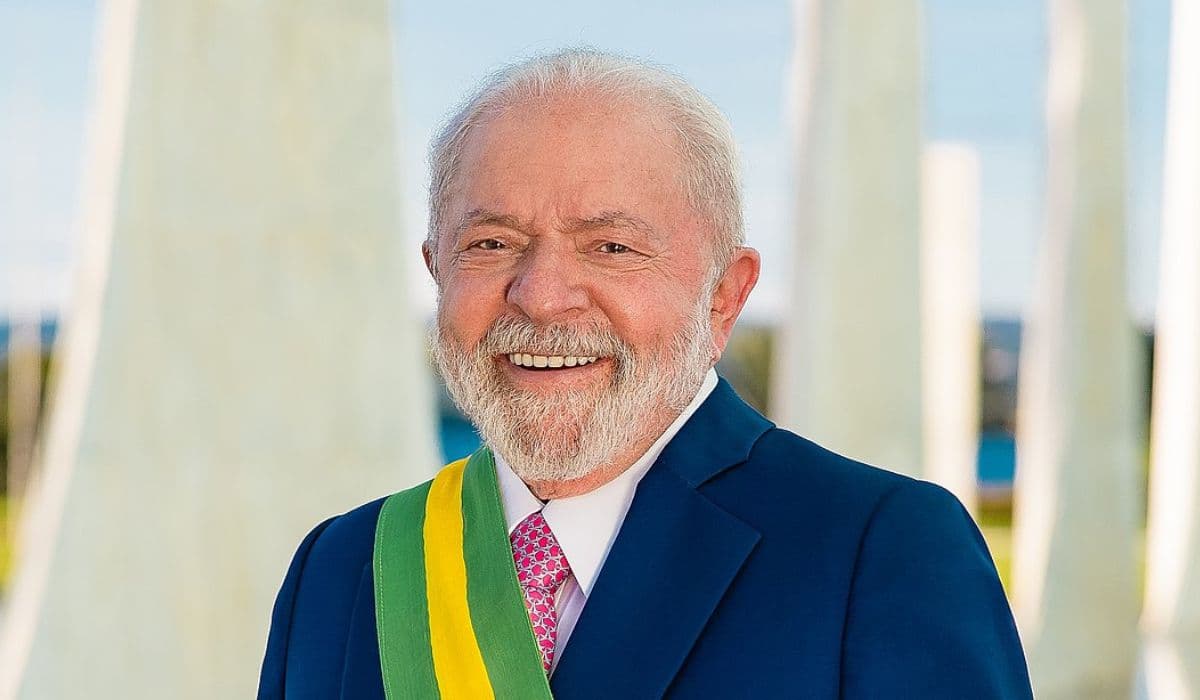
Thousands of traders collectively see the 2026 Brazilian presidential election as a toss-up. The leading market asks if Luiz Inácio Lula da Silva will win re-election. Currently, the price implies a 53% chance, meaning traders give Lula a very slight edge, roughly a 1 in 2 chance. This is essentially a coin flip, showing deep uncertainty about the outcome. Over $22 million has been wagered on various questions related to this race, indicating exceptionally high public and financial interest in Brazil's political future.
The even odds reflect a country with a deeply divided electorate and an unpredictable political climate. Lula, the incumbent president and former two-term leader, retains a strong base of support, particularly in the northeast. His administration has focused on social programs and rebuilding environmental protections, which maintains his core popularity.
However, his lead is narrow because of significant economic challenges, including slow growth and high inflation, which frustrate many voters. The opposition, likely to again feature the right-wing former President Jair Bolsonaro or a successor, commands a powerful and loyal bloc. The 2022 election was one of the closest in Brazil's modern history, and current polls suggest a similar tight race is forming. Traders are weighing Lula's incumbency advantage against persistent economic headwinds and a mobilized opposition.
The first round of voting is scheduled for October 6, 2026. A runoff, if no candidate wins over 50%, would be held on October 27. Market probabilities will likely shift most around official candidate registration deadlines in mid-2026 and the start of the formal campaign period in August. Key signals to watch include major economic reports on inflation and employment, any significant corruption or scandal headlines, and the health of both Lula, who is 78, and Bolsonaro, who is 69. The chosen candidates and their running mates will also cause market movement.
Prediction markets have a mixed but generally useful record on elections. They often aggregate information more effectively than single polls, especially in volatile environments. For the 2022 Brazilian election, major markets correctly forecast Lula's narrow victory, though the odds fluctuated significantly. The main limitation here is the long time horizon. Over 200 days out, these prices reflect current sentiment, which can and will change with new events. Markets are better at capturing the direction of sentiment than providing a fixed, long-term forecast this far in advance.
Prediction markets currently price a 53% probability that Luiz Inácio Lula da Silva wins the 2026 Brazilian presidential election. This price, found on Polymarket, indicates the market views a Lula victory as marginally more likely than not, but essentially a coin flip. The competing "No" share trades at 47%. Kalshi shows a slightly lower price near 51% for Lula, creating a narrow 2.1% spread. With over $22 million in total volume across platforms, this is a highly liquid political market, reflecting significant trader engagement and confidence in the pricing signal.
The near-even odds stem from two primary forces. First, President Lula's political resilience and the structural advantage of incumbency provide a solid base. His administration's social spending programs maintain core support. Second, and counterbalancing this, is the formidable opposition led by former President Jair Bolsonaro. Despite legal challenges, Bolsonaro retains a mobilized base exceeding 49 million voters from the 2022 runoff. The market is pricing in a highly polarized electorate where a few percentage points will decide the outcome. Recent municipal elections in 2024, which showed mixed results for both major coalitions, confirmed this competitive deadlock.
The odds will shift with changes in Brazil's economic performance over the next 18 months. Persistent inflation or a recession would severely damage Lula's reelection bid, likely pushing his probability below 40%. Conversely, sustained economic growth and falling unemployment would boost his chances above 60%. A major legal decision against Bolsonaro that bars him from running would cause a dramatic repricing, as the opposition would need to consolidate behind a new, untested candidate. Key opinion polls beginning in early 2025 will act as direct catalysts, moving market prices as they clarify the public mood.
Polymarket consistently prices the "Yes" outcome 2 percentage points higher than Kalshi. This persistent spread, despite high liquidity, is likely due to platform-specific user demographics and slight differences in market mechanics or settlement rules. It presents a minimal arbitrage opportunity, but the narrow gap suggests both markets are efficiently incorporating the same fundamental information about the race. The convergence around the low-50s for Lula across both major platforms reinforces that the 2026 election is currently seen as a toss-up.
AI-generated analysis based on market data. Not financial advice.
This prediction market addresses the outcome of Brazil's 2026 presidential election, specifically whether a designated candidate, referred to as 'X,' will win the presidency. The market will resolve to 'Yes' if X is declared the winner and will close early once an official result is announced. The 2026 election is the next scheduled presidential contest in Brazil, following the 2022 election where Luiz Inácio Lula da Silva narrowly defeated incumbent Jair Bolsonaro. Interest in this market stems from Brazil's status as Latin America's largest democracy and economy, where presidential elections have significant regional and global consequences. The political environment remains highly polarized between the left-wing coalition led by Lula's Workers' Party (PT) and the right-wing bloc aligned with Bolsonaro's political movement. Early speculation focuses on whether Lula, who will be 80 years old in 2026, will seek re-election, the potential for Bolsonaro to run again despite legal challenges, and the emergence of new political figures. The election will test the durability of Brazil's democratic institutions after the intense conflicts of the 2022 election cycle.
Brazil's modern presidential elections have been defined by the rivalry between the Workers' Party (PT) and the Brazilian right, a dynamic solidified in the 21st century. Lula first won the presidency in 2002 and was re-elected in 2006. His chosen successor, Dilma Rousseff, won in 2010 and 2014 but was impeached in 2016. The 2018 election occurred amid economic recession and corruption scandals, leading to the victory of political outsider Jair Bolsonaro. The 2022 election was one of the most polarized in Brazilian history. Lula, who had been imprisoned on corruption charges that were later annulled, returned to defeat Bolsonaro by a margin of just 2.1 million votes, or 1.8 percentage points. The election was followed by protests by Bolsonaro supporters who refused to accept the result, culminating in the invasion of Brazil's congress, supreme court, and presidential palace on January 8, 2023. This event underscored deep institutional tensions that will frame the 2026 contest. Historically, no Brazilian president elected directly since 1994 has failed to win a second term when seeking one, a pattern Lula will aim to continue and Bolsonaro aimed to break.
The outcome of Brazil's 2026 presidential election will determine the direction of the world's twelfth-largest economy and a major global supplier of agricultural commodities, minerals, and energy. Policy shifts on Amazon deforestation, international climate commitments, and regional diplomacy in Latin America hinge on the result. Domestically, the election is a stress test for Brazilian democracy. A peaceful, accepted transfer of power would help consolidate institutions after the unrest of 2023. A disputed result could trigger further political instability. The election also has direct consequences for millions of Brazilians. Different administrations pursue vastly different social policies regarding poverty alleviation programs, minimum wage adjustments, gun control laws, and indigenous land rights. Investors monitor the election for signals about fiscal discipline, state intervention in the economy, and privatization plans, which affect the Brazilian real, sovereign debt, and the São Paulo stock exchange.
As of late 2024, the field for the 2026 election is undeclared but taking shape. President Lula has not formally announced whether he will seek a third non-consecutive term, though he has hinted he may be a candidate. Within his coalition, there is discussion of potential alternate candidates, including Finance Minister Fernando Haddad. On the right, Jair Bolsonaro remains politically active but his candidacy depends on the final judicial outcome of his electoral ban. Governor Tarcísio de Freitas is actively building a national profile and is considered the frontrunner for the right-wing nomination if Bolsonaro is barred. The centrist and center-right parties, such as the MDB and the newly formed 'Brazil of Hope' party, are watching for an opening should polarization fatigue set in among voters. The Superior Electoral Court has begun preparations for the 2026 electoral cycle, which will include nationwide municipal elections in 2024 that will serve as a key indicator of party strength.
Yes, Brazilian law limits presidents to two consecutive terms. Since Lula's previous terms (2003-2010) were not consecutive with his current one (2023-2026), he is eligible to run for re-election in 2026 for what would be his third non-consecutive term.
Currently, he is not. In 2023, Brazil's Superior Electoral Court declared him ineligible to hold public office until 2030. He has appealed this decision to the Supreme Court. His candidacy depends on the Supreme Court overturning the lower court's ruling.
The first round is scheduled for October 4, 2026. If no candidate receives over 50% of the vote, a runoff election between the top two candidates will be held on October 25, 2026.
The Superior Electoral Court (TSE) administers all elections in Brazil. It certifies candidates, oversees campaign finance, operates the electronic voting system, and officially proclaims the winners. Its decisions on eligibility and rules are final.
On the left, Finance Minister Fernando Haddad (PT) is a likely successor to Lula. On the right, São Paulo Governor Tarcísio de Freitas is the leading figure. Centrist options include Planning Minister Simone Tebet (MDB).
Educational content is AI-generated and sourced from Wikipedia. It should not be considered financial advice.
13 markets tracked

No data available
| Market | Polymarket | Kalshi | Diff |
|---|---|---|---|
![]() | 50% | 53% | 3% |
![]() | 34% | 37% | 3% |
![]() | 5% | 4% | 2% |
![]() | 3% | 3% | 1% |
![]() | 2% | 3% | 0% |
![]() | 1% | 1% | 0% |
![]() | 0% | 1% | 0% |
![]() | 0% | 1% | 0% |
Different
Similar

In The next presidential election If X has won the 2026 Brazilian presidential election, then the market resolves to Yes. Early close condition: This market will close and expire after a winner is announced. This market will close and expire after a winner is announced.

A presidential election is scheduled to take place in Brazil on October 4, 2026. This market will resolve according to the listed candidate that wins this election. This market includes any potential second round. If the result of this election isn't known by June 30, 2027, 11:59 PM ET, the market will resolve to "Other". This market will resolve based on the result of the election as indicated by a consensus of credible reporting. If there is ambiguity, this market will resolve based solely


A presidential election is scheduled to take place in Brazil on October 4, 2026. This market will resolve according to the listed candidate that wins this election. This market includes any potential second round. If the result of this election isn't known by June 30, 2027, 11:59 PM ET, the market

If Luiz Inácio Lula da Silva has won the 2026 Brazilian presidential election, then the market resolves to Yes. Early close condition: This market will close and expire after a winner is announced.


A presidential election is scheduled to take place in Brazil on October 4, 2026. This market will resolve according to the listed candidate that wins this election. This market includes any potential second round. If the result of this election isn't known by June 30, 2027, 11:59 PM ET, the market

If Flávio Bolsonaro has won the 2026 Brazilian presidential election, then the market resolves to Yes. Early close condition: This market will close and expire after a winner is announced.


A presidential election is scheduled to take place in Brazil on October 4, 2026. This market will resolve according to the listed candidate that wins this election. This market includes any potential second round. If the result of this election isn't known by June 30, 2027, 11:59 PM ET, the market

If Renan Santos has won the 2026 Brazilian presidential election, then the market resolves to Yes. Early close condition: This market will close and expire after a winner is announced.

No related news found
Polymarket
$22.11M
Kalshi
$576.81K
Add this market to your website
<iframe src="https://predictpedia.com/embed/CoEWQg" width="400" height="160" frameborder="0" style="border-radius: 8px; max-width: 100%;" title="Brazil Presidential election winner?"></iframe>