$42.60K
1
10

$42.60K
1
10
Trader mode: Actionable analysis for identifying opportunities and edge
This market will resolve according to the name ranked #2 on the Bloomberg Billionaires Index on March 31, 2026, 5:30 PM ET. The primary resolution source for this market will be the Bloomberg Billionaires Index (https://www.bloomberg.com/billionaires/). If the data for the specified date is not released by March 31, 2026, 11:59 PM ET, the Forbes Real-Time Billionaires List will be used (https://www.forbes.com/real-time-billionaires/#6aa3f0213d78). If neither source provides the specified date's
Prediction markets currently give Larry Page, the co-founder of Google, a 77% chance of being the world's second-richest person on March 31, 2026. This means traders see it as roughly a 3 in 4 probability. The market considers this outcome significantly more likely than any other, including the other current top contenders like Elon Musk, Jeff Bezos, or Bernard Arnault. This forecast is based on the collective bets of thousands of traders who are weighing future stock prices, company performance, and global economic trends.
The high probability for Larry Page stems from a few key factors. First, his wealth is heavily tied to Alphabet's (Google's parent company) stock, which has shown strong, steady growth driven by its dominance in search, cloud computing, and artificial intelligence. Markets may be betting that this stability outperforms the more volatile holdings of rivals like Elon Musk, whose fortune is closely linked to Tesla's stock price.
Second, there is a specific gap to close. As of early 2026, Bernard Arnault of LVMH often holds the top spot, with a rotating cast for second place between Musk, Bezos, and Page. Traders might be anticipating a period where Alphabet's stock gains outpace Amazon's or Tesla's, allowing Page to pull ahead of Bezos and Musk for the number two rank on the specific snapshot date.
Finally, Page's wealth is less dependent on day-to-day company leadership than some others. He has a vast, passive stake in a cash-generating giant, which can be seen as a reliable engine for wealth accumulation compared to more operationally involved billionaires.
The ranking on March 31 is a single-day snapshot, so the weeks leading up to it are critical. Major events that could shift stock prices and change the order include quarterly earnings reports from Alphabet, Amazon, and Tesla in late January and April. Significant announcements related to AI, electric vehicle sales, or consumer luxury spending could move the relevant stocks. Broader economic news, like interest rate decisions or geopolitical events affecting tech stocks, could also cause last-minute swings in the fortunes of these individuals.
Prediction markets have a mixed but interesting track record on long-term financial questions like this. They are good at aggregating diverse opinions about future corporate and economic trends. However, forecasting the exact rank of billionaires on a specific future date over a year away is exceptionally difficult. It depends on unpredictable stock market movements and news events. While the 77% probability shows strong collective conviction, it should be viewed as an informed snapshot of current expectations, not a sure bet. The relatively small amount of money wagered on this niche question also suggests limited market depth, which can make prices more sensitive to new information.
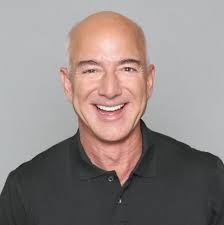
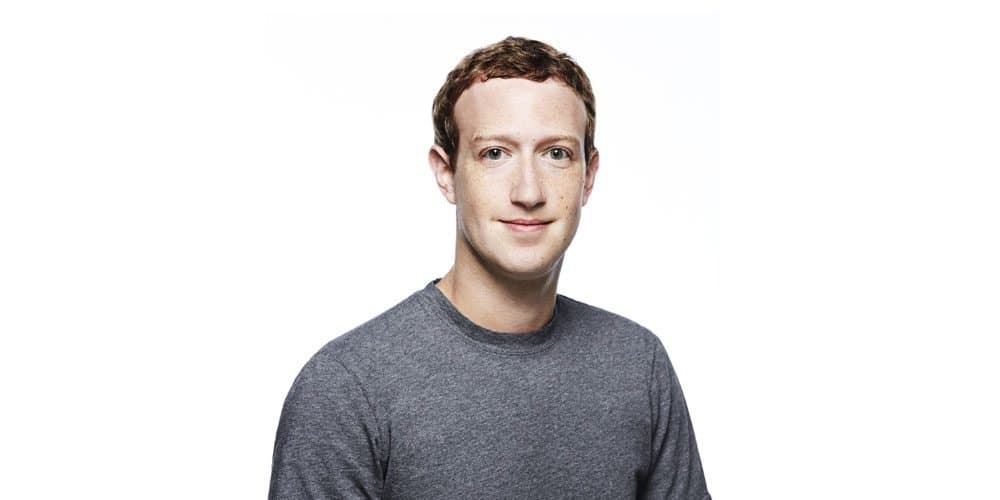
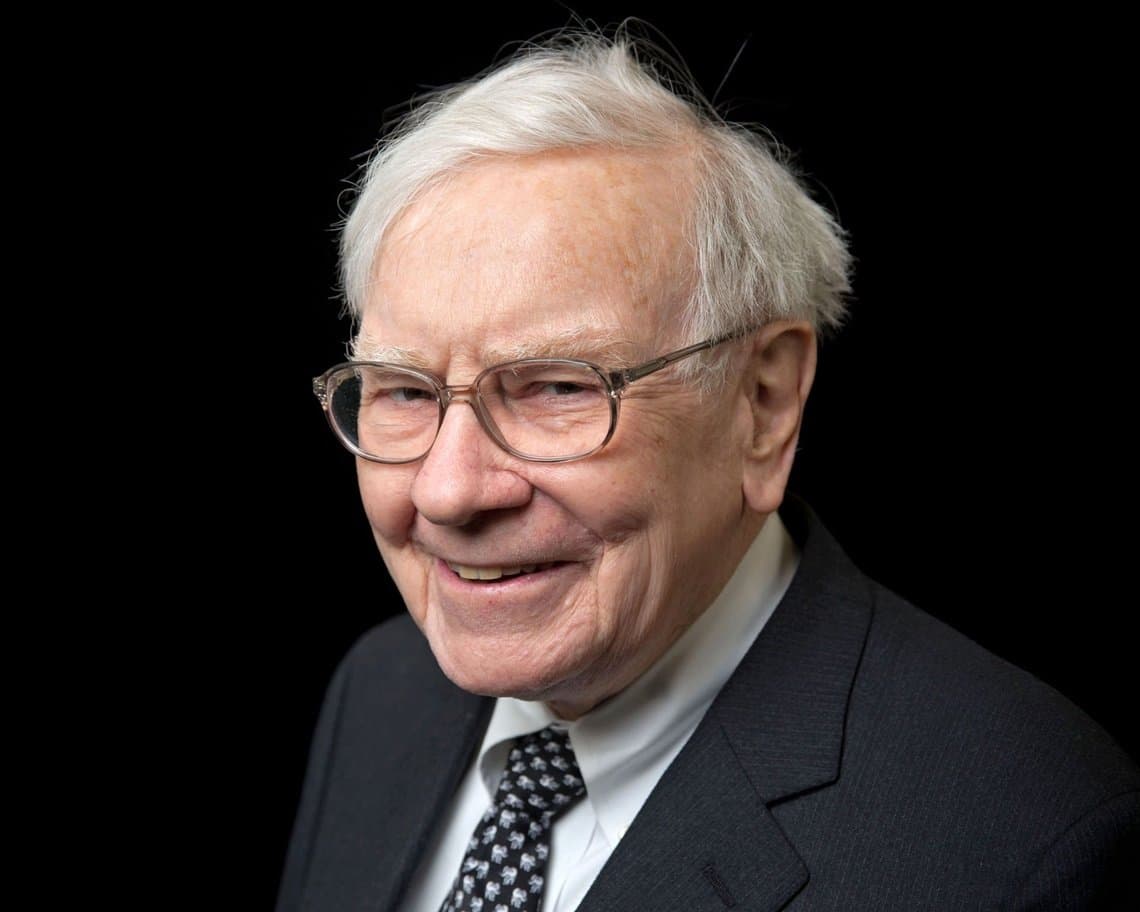
Prediction markets currently assign a 77% probability that Google co-founder Larry Page will be the world's second-richest person on March 31, 2026. This price, trading at 77¢ on Polymarket, indicates strong confidence in that outcome. The remaining 23% is distributed among other candidates, including Bernard Arnault, Elon Musk, Mark Zuckerberg, and Jeff Bezos. With only $43,000 in total volume, liquidity is thin. This suggests the current odds are driven by a relatively small pool of capital and could be volatile if new information emerges.
The high probability for Larry Page reflects a specific market thesis centered on asset concentration and tax policy. Page's wealth is overwhelmingly tied to his Alphabet (Google) stock. A major catalyst for a wealth surge is the potential passage of the 2025 Tax Cuts and Jobs Act extension, which is projected to maintain favorable capital gains rates. Analysts at Bloomberg Intelligence estimate this could trigger a historic rally in mega-cap tech stocks, including Alphabet, as investors avoid realizing gains before a potential 2027 rate hike. Page's net worth, currently around $165 billion, is highly sensitive to even a 20% move in Alphabet shares, a swing that could add over $30 billion to his fortune.
Historical patterns also support this view. During periods of anticipated tax change, such as late 2012, concentrated holdings in top-performing companies saw dramatic valuation jumps. The market is betting that Page, with his static, undiversified stake, is the prime beneficiary of this dynamic compared to peers like Arnault or Bezos, who have more complex asset structures or have been actively selling shares.
The consensus faces two primary risks. The first is legislative failure. If the proposed tax legislation stalls or fails in Congress before Q1 2026, the projected tech rally may not materialize, leaving Page's wealth growth more dependent on ordinary business performance. The second risk is a disproportionate surge by another individual. Elon Musk's fortune is tied to Tesla and SpaceX, with the latter undergoing a potential Starlink IPO that could add $50-$100 billion to his net worth if timed before March 2026. Similarly, a sudden downturn in the luxury goods market could impair Bernard Arnault's LVMH share price, possibly moving him out of the top two ranks entirely.
The market will closely watch Congressional tax negotiations in January 2026 and any official filings regarding a SpaceX IPO timeline. A negative development on tax policy or a positive Starlink IPO announcement would likely cause the 77% probability for Page to drop significantly.
AI-generated analysis based on market data. Not financial advice.
This prediction market asks participants to forecast who will be the world's second-wealthiest individual on March 31, 2026, as determined by the Bloomberg Billionaires Index. The market resolves based on the ranking published at 5:30 PM Eastern Time on that date. If Bloomberg's data is unavailable, the Forbes Real-Time Billionaires List will serve as the backup resolution source. This market tracks the volatile competition for elite wealth status, a position shaped by stock market fluctuations, private company valuations, and macroeconomic trends. The identity of the second-richest person is often more dynamic than the top spot, which has been dominated by Bernard Arnault and Elon Musk in recent years. Interest stems from the market's reflection of broader economic forces, the performance of specific industries like technology and luxury goods, and the personal fortunes of high-profile entrepreneurs. It functions as a speculative gauge on which sectors and business models will generate the most concentrated wealth over a defined period.
The modern era of tracking billionaire wealth began with Forbes' inaugural list in 1987, which was topped by Japanese real estate tycoon Yoshiaki Tsutsumi. For decades, the rankings were dominated by heirs to family fortunes and industrialists. A major shift occurred in the late 1990s and early 2000s with the rise of technology entrepreneurs like Bill Gates, who held the top spot for many years. The creation of the Bloomberg Billionaires Index in 2012 introduced daily updates, making wealth rankings a real-time financial indicator. This increased frequency highlighted the extreme volatility of tech fortunes. The 2010s saw the ascent of Bezos and Musk, whose wealth was directly tied to their companies' market capitalizations, unlike the more diversified holdings of traditional industrialists. The 2020s introduced new dynamics: Arnault's luxury empire proved resilient during the pandemic, while tech stocks experienced a boom and bust cycle. The position of second-richest has changed hands frequently. For example, in 2021, Bezos, Musk, and Arnault all occupied the spot at different times within a single year, demonstrating the competitiveness of the ranking.
The competition for second place is a concentrated lens on global capital allocation. It shows which industries—technology, luxury, energy, or retail—are creating the most value at a given time. Significant shifts in ranking can signal broader economic trends, such as a rotation from growth stocks to value stocks, or changing patterns in global consumer spending. For policymakers and economists, the composition of the top ranks can inform discussions on wealth concentration, tax policy, and the economic impact of founder-led companies. The identities and nationalities of the top billionaires also reflect geopolitical economic power. The consistent presence of American tech founders underscores the dominance of U.S. capital markets, while the rise of figures like Arnault and Adani highlights the financial clout of Europe and emerging economies. For the public, these rankings often drive narratives about entrepreneurship, inequality, and the societal role of extreme wealth.
As of late 2024, Bernard Arnault and Elon Musk continue to trade the top two positions with regularity. Arnault's lead has been sustained by strong earnings from LVMH's fashion and leather goods divisions, particularly in European and Japanese markets. Musk's position remains tethered to Tesla's performance, which faces increased competition in electric vehicles and questions about demand growth. Other contenders like Jeff Bezos and Mark Zuckerberg remain within striking distance, with their fortunes buoyed by resilient performances from Amazon's AWS and Meta's advertising recovery, respectively.
The index uses a closing market prices methodology. It values publicly traded holdings using current share prices and exchange rates. For private companies, it employs a variety of metrics including comparable public company valuations, recent transaction prices, and financial statements.
For much of 2024, Elon Musk and Bernard Arnault alternated between first and second place on a near-daily basis. By year's end, Arnault often held a narrow lead for the top spot, with Musk frequently in second.
A major drop is typically caused by a steep decline in the value of their primary asset. This can be a falling stock price for their company, a devaluation of a private holding, a large charitable donation, or a significant tax payment. Sector-wide sell-offs can also trigger declines for multiple billionaires simultaneously.
No. Since Jeff Bezos was overtaken by Elon Musk in 2021, the number one position has been held exclusively by either Musk or Bernard Arnault. Bill Gates was the last person outside this trio to hold the top spot, which he last did in 2017.
Differences arise from their valuation methodologies for private assets, the timing of data updates (Bloomberg is daily, Forbes is real-time but may use different source data), and how they account for certain liabilities, philanthropic pledges, and family wealth structures.
Educational content is AI-generated and sourced from Wikipedia. It should not be considered financial advice.
10 markets tracked

No data available
| Market | Platform | Price |
|---|---|---|
![]() | Poly | 78% |
![]() | Poly | 11% |
![]() | Poly | 4% |
![]() | Poly | 3% |
![]() | Poly | 3% |
![]() | Poly | 3% |
![]() | Poly | 2% |
![]() | Poly | 2% |
![]() | Poly | 0% |
![]() | Poly | 0% |


No related news found
Add this market to your website
<iframe src="https://predictpedia.com/embed/DTnn2m" width="400" height="160" frameborder="0" style="border-radius: 8px; max-width: 100%;" title="2nd richest person on March 31?"></iframe>