Trader mode: Actionable analysis for identifying opportunities and edge
3%
Top Probability
$51.79K
Volume
1
Markets
1
Platforms
About This Event
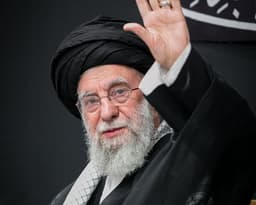
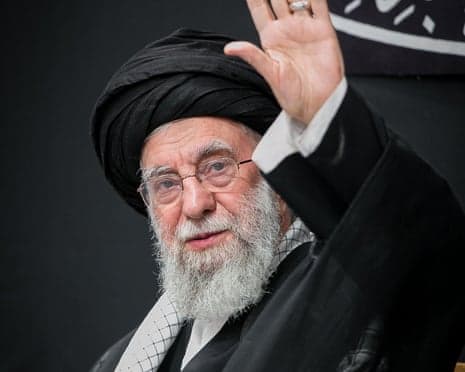
This market will resolve to "Yes" if U.S. government personnel (including U.S. military, CIA, or any U.S. federal law enforcement agency) directly participate on the ground in an operation that results in the capture of Supreme Leader of Iran Ali Khamenei by December 31, 2026, 11:59 PM ET. Otherwise, this market will resolve to "No".
For the purposes of this market, “capture” means Khamenei is taken into physical custody and detained (including arrest, detention, or seizure) such that he is no
AI-generated analysis based on market data. Not financial advice.
This prediction market addresses the possibility of U.S. government personnel capturing Iran's Supreme Leader, Ali Khamenei, by the end of 2026. The market resolves to 'Yes' only if U.S. military, intelligence, or federal law enforcement agents directly participate in an on-the-ground operation that results in Khamenei being taken into physical custody and detained. The scenario is a hypothetical but extreme escalation of the long-standing adversarial relationship between the United States and the Islamic Republic of Iran. Interest in this market stems from heightened geopolitical tensions, particularly surrounding Iran's nuclear program, its regional proxy activities, and the history of targeted U.S. operations against foreign leaders. While no credible intelligence or official policy suggests such an operation is planned, the market allows participants to speculate on the probability of a low-likelihood, high-impact event that would constitute an act of war. The topic gained traction in prediction communities following the 2020 U.S. drone strike that killed Iranian General Qasem Soleimani, which demonstrated a U.S. willingness to conduct lethal operations against senior Iranian officials, though capture represents a far more complex and escalatory objective.
Historical Context
The U.S.-Iran conflict has deep roots, beginning with the 1953 CIA-backed coup that overthrew Prime Minister Mohammad Mosaddeq and restored the Shah to power. The 1979 Iranian Revolution and subsequent hostage crisis, where 52 American diplomats were held for 444 days, severed diplomatic relations and established enduring hostility. In the 1980s, the U.S. supported Iraq during the Iran-Iraq War, and later designated Iran a state sponsor of terrorism in 1984. The U.S. has a history of conducting lethal operations against Iranian officials. In January 2020, a U.S. drone strike ordered by President Donald Trump killed Qasem Soleimani, commander of the IRGC's Quds Force, in Baghdad. This was an unprecedented escalation, marking the first time the U.S. directly targeted a senior Iranian military leader. Iran responded with missile strikes on U.S. bases in Iraq. The U.S. has also captured high-value targets abroad, most notably the 2011 operation in Pakistan that killed Osama bin Laden and the 2013 capture of terrorist Abu Anas al-Libi in Libya. However, no precedent exists for the capture of a sitting head of state with which the U.S. is not formally at war.
Why It Matters
The capture of Iran's Supreme Leader would be a geopolitical earthquake, likely triggering immediate and severe retaliation. Iran could launch missile attacks on U.S. bases and allies in the region, activate proxy forces in Iraq, Syria, Lebanon, and Yemen to strike American interests, and potentially attempt to close the Strait of Hormuz, through which about 20% of the world's oil passes. Such actions would spike global oil prices and could draw other regional powers into a broader conflict. Domestically in Iran, the event could either cripple the theocratic system or galvanize nationalist sentiment, potentially leading to massive unrest or a severe crackdown. For the United States, the operation would constitute an act of war, likely requiring a massive military buildup in the Middle East, straining alliances, and diverting resources from other global priorities like competition with China. The international legal ramifications would be profound, challenging norms of sovereignty and potentially encouraging other nations to conduct similar operations against foreign leaders.
Current Status
As of late 2024, there are no public indications from U.S. or allied intelligence officials that planning for the capture of Ali Khamenei is underway. The Biden administration's public focus remains on diplomatic efforts to constrain Iran's nuclear program and countering its proxy attacks in the region through sanctions and defensive military actions. Tensions remain high, particularly due to Iran's advancing uranium enrichment and its support for groups that have attacked U.S. forces. The Israeli war in Gaza and related regional instability have further complicated U.S.-Iran dynamics, but have not shifted public U.S. policy toward regime-change objectives. The Supreme Leader continues to make public appearances in tightly controlled settings, and Iranian state media regularly showcases the loyalty of the security apparatus around him.
Frequently Asked Questions
Has the US ever captured a foreign head of state?
The United States captured Panamanian dictator Manuel Noriega in 1989 during Operation Just Cause, a full-scale military invasion. Noriega was brought to the U.S., tried, and convicted on drug charges. This remains the primary modern precedent for capturing a de facto national leader, but it occurred during an overt invasion, not a covert operation.
What is the legal authority for the US to capture a foreign leader?
The U.S. President's authority would likely be based on Article II of the Constitution as Commander-in-Chief and the 2001 Authorization for Use of Military Force (AUMF) against perpetrators of the 9/11 attacks, though applying the AUMF to Iran's leader would be legally contentious. Such an act would likely be justified as self-defense against an imminent threat, but would face significant challenges under international law governing sovereignty.
How is Ali Khamenei protected?
Khamenei's security is managed by the IRGC's Protection Office, a dedicated unit separate from the national police. He resides and works in a secure compound in central Tehran, travels with a large motorcade and advance teams, and his schedule is highly classified. The security apparatus employs extensive surveillance, counterintelligence, and layered physical defenses.
What would happen in Iran if Khamenei was captured?
The Iranian constitution has a clear succession plan. The Assembly of Experts would be required to appoint a new Supreme Leader, likely from within the clerical establishment. However, the immediate shock and perceived national humiliation could trigger mass protests, a severe security crackdown by the IRGC, or internal power struggles, making a smooth transition uncertain.
Could US special forces conduct such an operation inside Iran?
While U.S. special forces have unparalleled capabilities, a mission to capture a heavily guarded leader deep inside a large, hostile country like Iran would be extraordinarily risky. It would require flawless intelligence, air support, and an exfiltration plan, with a high probability of mission failure, casualties, and the sparking of a major war.
Was this helpful?
Updated Mar 1, 2026
Educational content is AI-generated and sourced from Wikipedia. It should not be considered financial advice.