$404.81K
1
9

$404.81K
1
9
Trader mode: Actionable analysis for identifying opportunities and edge
This market will resolve according to the total number of transit calls that IMF Portwatch reports for the Strait of Hormuz for all days from March 17, 2026, through March 23, 2026, inclusive. Transit calls include container, dry bulk, roll-on/roll-off, general cargo, and tanker ships. Ships not reported by IMF Portwatch will not be considered. This market will resolve as soon as data has been published for the final date in the specified period. If no data has been published for the final dat
AI-generated analysis based on market data. Not financial advice.
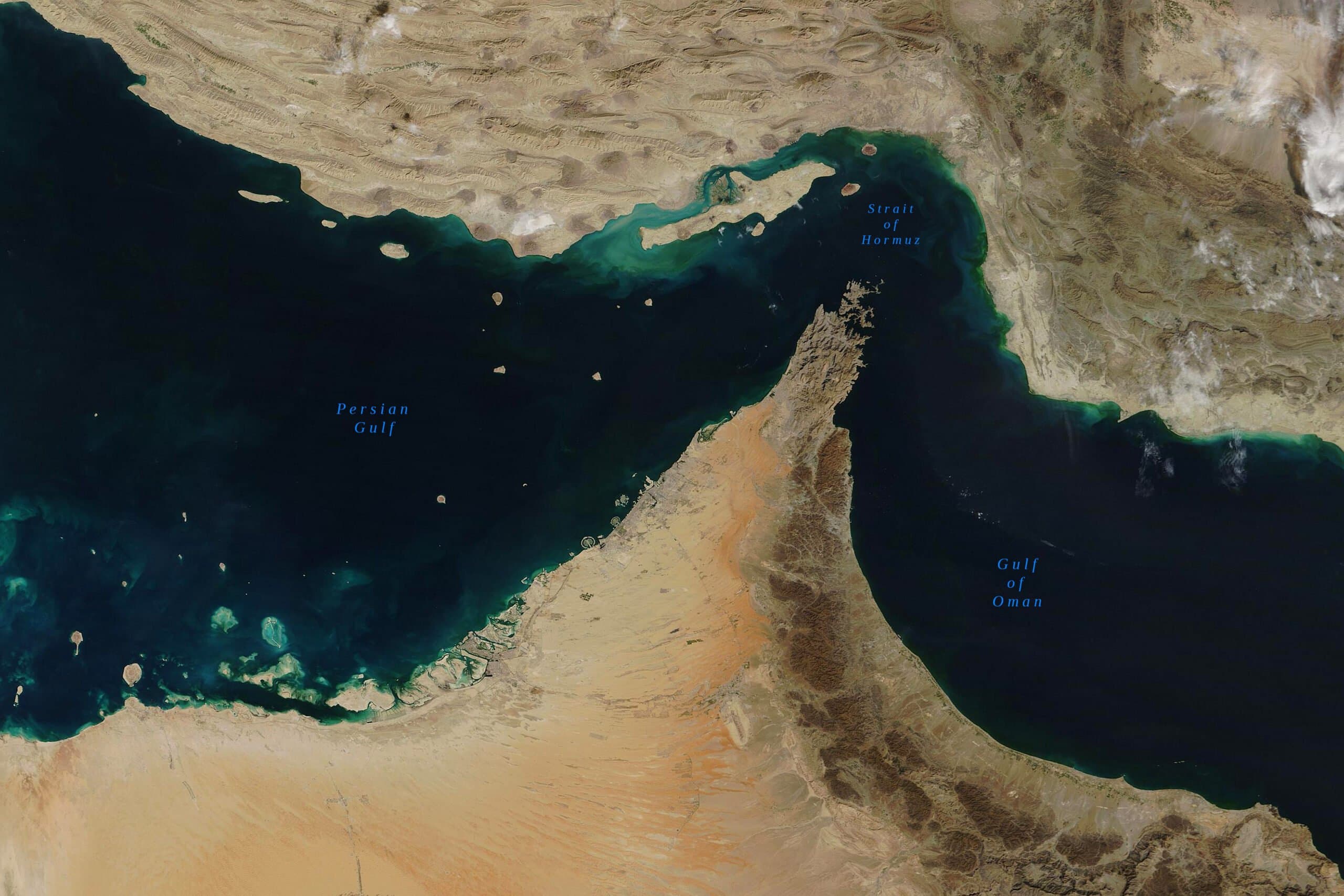
This prediction market focuses on the weekly maritime traffic through the Strait of Hormuz, a narrow waterway between the Persian Gulf and the Gulf of Oman. The market resolves based on data from the International Monetary Fund's Portwatch platform, which tracks transit calls for commercial vessels including tankers, container ships, and bulk carriers from March 17 to March 23, 2026. The Strait of Hormuz is the world's most important oil transit chokepoint, with about one-fifth of global oil consumption passing through it daily. Monitoring ship traffic provides a real-time indicator of global energy flows and regional stability. Interest in this specific metric stems from its sensitivity to geopolitical tensions, particularly involving Iran, which controls the northern coast of the strait, and the security of maritime trade routes. Fluctuations in transit numbers can signal disruptions from military exercises, diplomatic incidents, or attacks on shipping, all of which have occurred with increasing frequency since 2019. Analysts, energy traders, and policymakers watch these figures closely as an early warning system for potential supply shocks that could affect oil prices worldwide.
The strategic importance of the Strait of Hormuz dates to the 1970s oil boom, when Gulf states became primary global suppliers. The 1980-1988 Iran-Iraq War marked the first major modern disruption, with the 'Tanker War' phase seeing 451 commercial ships attacked. Iraq targeted Iranian oil terminals, and Iran retaliated against vessels from Kuwait and Saudi Arabia, leading to the U.S. reflagging Kuwaiti tankers and naval escorts in Operation Earnest Will (1987-1988). A more recent crisis began in May 2019, when four tankers were damaged by limpet mines near Fujairah. That June, Iran shot down a U.S. Navy RQ-4A Global Hawk drone over the strait. In July 2019, Iran's IRGCN seized the British-flagged tanker Stena Impero, holding it for two months. These events established a pattern of periodic escalations that directly affect shipping volumes. The historical average weekly transit before 2019 was approximately 330-350 vessels. During tense periods, numbers have dropped by 15-20% as operators reroute or delay passages.
The number of ships transiting the Strait of Hormuz functions as a barometer for global energy security. Approximately 20.5 million barrels of oil per day moved through the strait in 2023, representing 21% of global petroleum liquids consumption. A sustained 10% reduction in traffic could remove 2 million barrels daily from the market, potentially increasing Brent crude prices by $15-20 per barrel. This affects gasoline prices worldwide and inflation rates in oil-importing nations. For Gulf Cooperation Council economies, which depend on hydrocarbon exports for 70-90% of government revenue, blocked access would be catastrophic. Saudi Arabia and the UAE have invested billions in alternative pipelines, but these have limited capacity. The strait's security also matters for liquefied natural gas (LNG) trade, with Qatar exporting 77 million tons annually through it, supplying key markets in Asia and Europe. Beyond economics, the waterway is a flashpoint for U.S.-Iran tensions, where a miscalculation could escalate into broader conflict, drawing in regional powers and affecting global shipping lanes far beyond the Middle East.
As of early 2026, regional tensions remain elevated following the collapse of the 2025 indirect U.S.-Iran talks on a nuclear agreement. Iran has increased its stockpile of 60% enriched uranium to 142 kg, according to the IAEA. In February 2026, the IRGCN conducted a major exercise, 'Great Prophet 19', simulating closures of the strait. The U.S. responded by deploying the USS Dwight D. Eisenhower carrier strike group to the Arabian Sea. Commercial shipping continues to transit, but some operators are reportedly considering longer routes around Africa for certain high-value cargoes. The IMF Portwatch data for early March 2026 shows weekly transits averaging 325-335 vessels, slightly below the pre-2019 average.
A complete blockade would require mining channels and anti-ship missile batteries, which Iran has threatened but never fully executed. The U.S. Fifth Fleet has mine-clearing capabilities and would likely intervene to reopen the strait. Oil prices would spike immediately, but Saudi Arabia and the UAE could redirect about 6.5 million barrels daily through alternative pipelines, mitigating some supply loss.
Portwatch uses AIS signals received by satellites and terrestrial stations, covering vessels over 300 gross tons. Its data aligns with commercial services like MarineTraffic but is validated by the IMF for economic analysis. The platform misses some vessels that turn off transponders, but this affects less than 2% of commercial traffic in the strait.
Saudi Arabia exports about 6.2 million barrels daily through the strait, Iraq 3.3 million, the UAE 2.9 million, Kuwait 2.1 million, and Iran 1.5 million. Qatar and Bahrain also depend entirely on the strait for their exports. Together, these nations account for nearly all OPEC production from the Middle East.
Yes, but with limited capacity. Saudi Arabia's East-West Petroline can carry 5 million barrels daily to the Red Sea. The UAE has the 1.5 million barrel/day Habshan-Fujairah pipeline. Iraq is expanding its pipeline to Turkey. These alternatives add 3-7 days to shipping times and cannot fully replace Hormuz for all exporters.
IMF Portwatch counts container ships, oil tankers (VLCCs, Suezmax, Aframax), chemical tankers, LNG carriers, dry bulk carriers, general cargo vessels, and roll-on/roll-off ships. It excludes naval vessels, fishing boats, small supply vessels under 300 tons, and passenger ships, which rarely use this route.
Educational content is AI-generated and sourced from Wikipedia. It should not be considered financial advice.
9 markets tracked

No data available
| Market | Platform | Price |
|---|---|---|
![]() | Poly | 47% |
![]() | Poly | 46% |
![]() | Poly | 5% |
![]() | Poly | 1% |
![]() | Poly | 1% |
![]() | Poly | 0% |
![]() | Poly | 0% |
![]() | Poly | 0% |
![]() | Poly | 0% |


No related news found
Add this market to your website
<iframe src="https://predictpedia.com/embed/E9QLkf" width="400" height="160" frameborder="0" style="border-radius: 8px; max-width: 100%;" title="How many ships transit the Strait of Hormuz this week? (Mar 17-23)"></iframe>