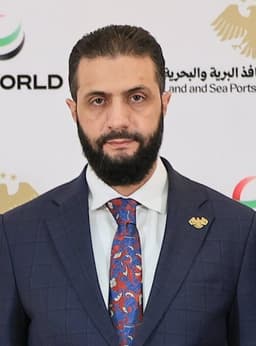
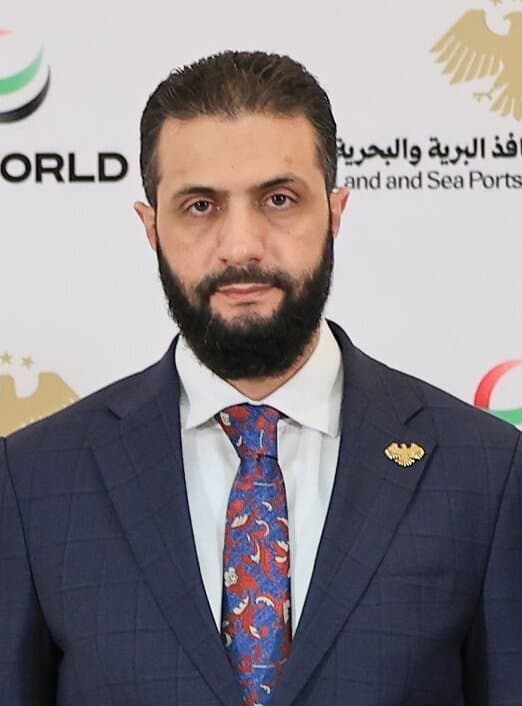
Ahmed al-Sharaa out as leader of Syria before 2027?
Platform StatsQuick Platform Comparison
Polymarket
1
markets · $52.59K
Kalshi
0
markets · $0.00
Price Spread
0.0%avg
max 0.0%
Arbitrage
0
of 0 cross-platform
Volume DistributionTotal: $52.59K
100%
Polymarket leads
Price ChartMatched Markets Price Graph
1 market tracked
Ahmed al-Sharaa out as leader of Syria before 2027?
No data available
Single-Platform Markets(1)
Market
Platform
Price
Ahmed al-Sharaa out as leader of Syria before 2027?
Poly
18%
AI Analysis
Trader mode: Actionable analysis for identifying opportunities and edge
18%
Top Probability
$52.59K
Volume
1
Markets
1
Platforms
About This Event
This market will resolve to "Yes" if Ahmed al-Sharaa, the President of Syria, is removed from power for any length of time by December 31, 2026, 11:59 PM ET. Otherwise, this market will resolve to "No".
Al-Sharaa will be considered to be removed from power if he resigns, is detained, is officially dismissed, or otherwise loses his position or is prevented from fulfilling his duties as leader of Syria within this market's timeframe.
The primary resolution source for this market will be a consen
AI-generated analysis based on market data. Not financial advice.
This prediction market topic asks whether Ahmed al-Sharaa, the President of Syria, will be removed from power before the end of 2026. The market resolves to 'Yes' if al-Sharaa resigns, is detained, is officially dismissed, or otherwise loses his position or is prevented from fulfilling his duties as Syria's leader by December 31, 2026. The question exists against the backdrop of Syria's ongoing civil war, which began in 2011, and the complex geopolitical struggle involving regional and global powers. Al-Sharaa, who assumed the presidency in 2024, leads a government that controls only part of the country's territory, with significant areas held by opposition forces, Kurdish-led administrations, and Islamist groups. The interest in this market stems from Syria's position as a persistent flashpoint in Middle Eastern politics and the potential for sudden leadership changes in conflict zones. Observers monitor factors including military stability, economic collapse, foreign patronage, and internal regime dynamics that could precipitate a change in leadership. The market provides a mechanism to aggregate collective intelligence on the likelihood of a major political shift in a nation that has experienced profound instability for over a decade.
Historical Context
Syria has been governed by the Assad family since Hafez al-Assad seized power in a 1970 coup. His son, Bashar al-Assad, succeeded him in 2000. The stability of this rule was shattered in March 2011 when protests inspired by the Arab Spring erupted in Daraa. The government's violent crackdown escalated into a full-scale civil war. By 2015, the Syrian government had lost control of roughly 80% of its territory to a fragmented array of rebel groups, the Islamic State, and Kurdish forces. The regime's survival was secured by the direct military intervention of Russia in September 2015 and continuous support from Iran. A series of offensives from 2016 to 2020 allowed the government to recapture major cities like Aleppo and large swathes of territory, but at a tremendous humanitarian cost. Bashar al-Assad's presidency ended in 2024 with a managed transition to Ahmed al-Sharaa, a figure from within the regime's security establishment. This transition demonstrated that leadership change is possible, but only under conditions tightly controlled by the existing power structure.
Why It Matters
The question of Syria's leadership stability has implications far beyond its borders. A sudden removal of President al-Sharaa could trigger renewed large-scale conflict, creating a power vacuum that various armed factions, including remnants of the Islamic State, might seek to exploit. This would risk another major wave of refugees into neighboring countries and Europe, destabilizing regions already under strain. For global powers, a change in Damascus could alter the strategic balance in the Middle East. Russia and Iran have invested billions of dollars and significant political capital in preserving the Syrian state as an ally. A new leadership less amenable to their interests could jeopardize Russian naval access to Tartus and Iranian land corridors to the Mediterranean. Domestically, any power struggle would occur amid a catastrophic economic situation, with over 90% of the population living in poverty according to UN estimates, potentially merging political crisis with widespread social unrest.
Current Status
As of early 2025, President Ahmed al-Sharaa remains in office. The front lines of the conflict have been largely static since the 2020 ceasefire in Idlib, though sporadic clashes continue. The primary challenges are economic, with the Syrian pound experiencing extreme devaluation and the government struggling to provide basic services like electricity and fuel. In late 2024, Syria was formally readmitted to the Arab League, a diplomatic step that suggests regional efforts to stabilize the status quo. However, this has not translated into significant economic relief or reconstruction funds. The United States maintains its Caesar Act sanctions, which target anyone doing business with the Syrian government. Internally, there are no visible, organized political movements capable of challenging al-Sharaa's rule from within the regime's core territories.
Frequently Asked Questions
How did Ahmed al-Sharaa become President of Syria?
Ahmed al-Sharaa assumed the presidency in 2024 following the departure of Bashar al-Assad. He was selected by the ruling Ba'ath Party and its security apparatus, and his election was ratified by the Syrian parliament, which is dominated by loyalist parties.
What are the main threats to al-Sharaa's presidency?
The main threats are economic collapse leading to popular unrest, a military setback against remaining insurgent groups, a withdrawal of support from key ally Russia, or an internal coup from within the Syrian military or intelligence services.
Does the United States recognize Ahmed al-Sharaa as Syria's leader?
No, the United States government does not recognize Ahmed al-Sharaa as the legitimate president of Syria. The U.S. position, stated by the State Department, is that it does not recognize any legitimacy for the Syrian government under the Ba'ath Party.
Who would replace Ahmed al-Sharaa if he was removed?
There is no clear constitutional successor. Any replacement would likely be chosen by a coalition of senior military, intelligence, and Ba'ath Party figures, potentially including current Vice President Mazhar al-Sharaa or a senior general from the security establishment.
What is the role of Turkey in Syrian politics?
Turkey controls large areas of northern Syria through its military and allied Syrian rebel groups. It is a primary opponent of the Syrian government and any change in Damascus would require Turkish acquiescence or could trigger a Turkish military response.
Was this helpful?
Updated Mar 1, 2026
Educational content is AI-generated and sourced from Wikipedia. It should not be considered financial advice.
<iframe src="https://predictpedia.com/embed/F0xxjb" width="400" height="160" frameborder="0" style="border-radius: 8px; max-width: 100%;" title="Ahmed al-Sharaa out as leader of Syria before 2027?"></iframe>