Events
GroupPOLYMARKET
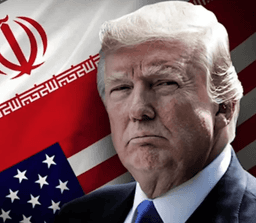
Event GroupPOLYMARKETPolitics
Trump invokes War Powers against Iran by...?
Total Volume
$158.21K
Events
1
Markets
1
Trump invokes War Powers against Iran by...?
Platform StatsQuick Platform Comparison
Polymarket
1
markets · $158.21K
Kalshi
0
markets · $0.00
Price Spread
0.0%avg
max 0.0%
Arbitrage
0
of 0 cross-platform
Volume DistributionTotal: $158.21K
100%
Polymarket leads
Price ChartMatched Markets Price Graph
1 market tracked
Trump invokes War Powers against Iran by March 31, 2026?
No data available
Single-Platform Markets(1)
| Market | Platform | Price |
|---|---|---|
| Poly | 97% |
AI Analysis
Trader mode: Actionable analysis for identifying opportunities and edge
97%
Top Probability
$158.21K
Volume
1
Markets
1
Platforms
About This Event
This market will resolve to “Yes” if the Trump Administration submits a 48-hour report consistent with the War Powers Resolution regarding the introduction of U.S. armed forces into hostilities or imminent hostilities against Iran between the date of market creation and the specified date, 11:59 PM ET. Otherwise, this market will resolve to “No.” The market will resolve based on the listed date of the report. This market may stay open until 10 days after the listed date (ET) to allow for a qual
What Prediction Markets Are Forecasting
Prediction markets currently give roughly a 19 in 20 chance that the Trump administration will formally invoke the War Powers Resolution regarding Iran by the end of March 2026. In simpler terms, traders collectively believe it is almost certain that the U.S. will report to Congress that American forces have been introduced into hostilities, or imminent hostilities, against Iran within that timeframe. This reflects an extremely high level of confidence in a significant military or national security action being officially declared.
Why the Market Sees It This Way
The high probability stems from a combination of policy history and recent geopolitical tension. During his first term, the Trump administration ordered the drone strike that killed Iranian General Qasem Soleimani in January 2020, an action that required a War Powers notification to Congress. Traders likely see this as a precedent for a willingness to use force and formally report it.
Second, ongoing proxy conflicts and nuclear program disputes between the U.S. and Iran have not been resolved. The market may be pricing in the expectation that a renewed Trump administration would adopt a more confrontational stance than the current one, increasing the odds of a direct clash that triggers the legal reporting requirement.
Finally, the specific mechanism matters. The War Powers Resolution requires the President to notify Congress within 48 hours of introducing forces into hostilities. The market isn't necessarily predicting a full-scale war, but it is betting that some level of armed engagement will occur that is significant enough to require this formal report.
Key Dates and Events to Watch
The resolution date for this market is March 31, 2026. Any major incident in the Persian Gulf involving U.S. and Iranian forces would be an immediate catalyst. Watch for escalations like seizures of commercial ships, attacks on U.S. bases by Iranian-linked groups, or a breakdown in nuclear negotiations. A direct military strike on Iranian nuclear facilities or senior military officials would almost certainly trigger the War Powers report. The market will close about 10 days after the deadline to allow for any delayed official notification.
How Reliable Are These Predictions?
Prediction markets have a mixed record on geopolitical events that depend on a single leader's decision. They are often good at aggregating intelligence about known tensions and historical patterns, as seen here. However, they can be overly sensitive to recent news and sometimes underestimate the chance of diplomatic solutions that avoid conflict. The 95% probability is very high for any future political event, suggesting traders see this more as a question of when a triggering event happens under this administration, not if. This leaves little room for scenarios where tensions exist but no reportable hostilities occur.
Current Market Outlook
Prediction markets assign a 95% probability that the Trump administration will invoke the War Powers Resolution against Iran by March 31, 2026. This price, trading at 95¢ for a "Yes" outcome on Polymarket, indicates near-certainty among traders. With $158,000 in volume, the market has attracted significant capital, reinforcing the strength of this consensus view. A probability this high suggests traders see the event as almost inevitable within the contract's timeframe.
Key Factors Driving the Odds
Two primary drivers explain the extreme market confidence. First, the geopolitical posture of a potential second Trump administration is a major factor. During his 2017-2021 term and throughout the 2024 campaign, Trump maintained a consistently hawkish stance toward Iran, exemplified by the 2020 drone strike that killed Qasem Soleimani. Traders are pricing in a return to, and likely an escalation of, this confrontational policy. Second, recent escalations provide immediate context. Attacks by Iran-aligned groups on U.S. forces in the Middle East and continued tensions over Iran's nuclear program create a baseline of hostility that markets expect a Trump administration would address with military force, triggering the War Powers reporting requirement.
What Could Change These Odds
The 5% price for a "No" outcome represents the main risk scenario. A decisive de-escalation in the region before the end of 2025, perhaps through a renewed or unexpected diplomatic breakthrough, could lower probabilities. Alternatively, a shift in U.S. military posture to sustained, covert action or proxy support that avoids a direct "introduction of U.S. armed forces into hostilities" as defined by the War Powers Resolution could cause the contract to resolve "No." The market's 30-day window until resolution is long in geopolitical terms, but the current pricing shows traders discounting the potential for a fundamental diplomatic reset.
AI-generated analysis based on market data. Not financial advice.