Events
GroupPOLYMARKET

Event GroupPOLYMARKETPolitics
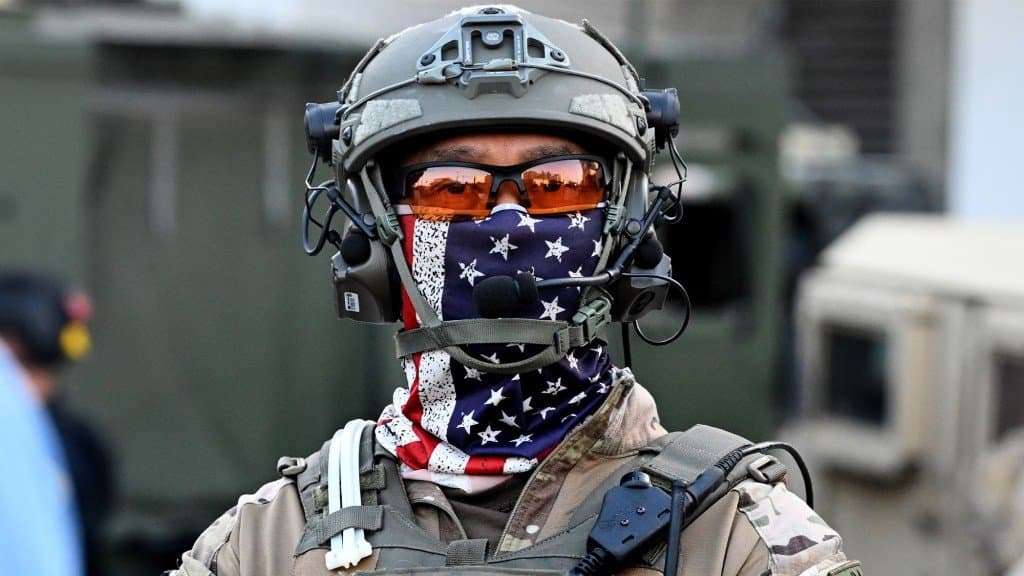
ICE forced to unmask by February 28?
Total Volume
$80.19K
Events
1
Markets
1
ICE forced to unmask by February 28?
Vol
AI Analysis
Trader mode: Actionable analysis for identifying opportunities and edge
0%
Top Probability
$80.19K
Volume
1
Markets
1
Platforms
About This Event
This market will resolve to “Yes” if either of the following conditions are met by February 28, 2026, 11:59 PM ET. Otherwise, this market will resolve to “No”. 1) A bill, measure, or resolution that mandates, compels, or formally calls for a general ban on the wearing of masks by Immigration and Customs Enforcement (ICE) agents becomes federal law in the United States. 2) A consensus of credible reporting indicates that an applicable directive or order has been issued by the leadership of ICE,
What Prediction Markets Are Forecasting
Traders on Polymarket currently give this event about a 15% chance of happening. This means the collective view is that a ban on ICE agents wearing masks is unlikely to be in place by the deadline. In simple terms, the market sees roughly a 1 in 7 chance. This shows low confidence that either Congress will pass a law or that ICE leadership will issue such an order in the next few days.
Why the Market Sees It This Way
The low probability stems from a few clear factors. First, the deadline of February 28 is very soon, leaving almost no time for the legislative process, which is typically slow. For a bill to become law, it must pass both the House and Senate and be signed by the President, a tall order in just days.
Second, this topic sits within a larger political debate about immigration enforcement and agent safety. Some lawmakers have proposed bans on agents wearing masks, arguing it promotes accountability. Others and the agency itself contend that masks are sometimes needed for operational safety, like during raids or health emergencies. There hasn't been a major recent push suggesting a breakthrough is imminent.
Finally, the second condition requires a "consensus of credible reporting" on an ICE directive. No such reports have surfaced, and issuing a last-minute internal order would be a significant policy shift likely to leak. The absence of any news flow supports the low probability.
Key Dates and Events to Watch
The main date is the deadline itself: February 28, 2026, at 11:59 PM ET. Any action would need to be finalized by then.
Watch for two things before the clock runs out. One is any sudden legislative action, such as a bill being fast-tracked or voted on in Congress. The other is any credible news report from major outlets like Reuters or the AP indicating ICE has issued a formal internal directive banning masks. Without such a report, the market will almost certainly resolve to "No."
How Reliable Are These Predictions?
Prediction markets are generally reliable for near-term events with clear yes/no outcomes, as this one is. Their accuracy comes from aggregating many informed views. However, for very niche political questions like this with low trading volume, the odds can be more sensitive to small bets and may not represent a deep consensus. The main limitation here is the extremely short timeline, which makes the event highly predictable. Barring a true surprise, the current low probability is likely correct.
Current Market Outlook
The Polymarket contract "ICE forced to unmask by February 28?" is trading at 1¢, indicating a near-zero 1% probability of a successful outcome. This price reflects market consensus that the event will not happen. With only $80,000 in total volume, liquidity is thin, but the extreme price shows strong conviction. The resolution deadline has passed, and the market is awaiting final settlement based on the February 28, 2026, cutoff.
Key Factors Driving the Odds
The 1% price is a direct reflection of political reality. A federal law banning ICE agents from wearing masks lacks any legislative pathway. The current Congress is deeply divided on immigration enforcement, with most Republican efforts focused on expanding agency authority, not restricting its operational protocols. No serious legislative proposal matching the market's criteria has been introduced. Furthermore, an internal ICE directive ordering agents to unmask would contradict standard operational security and safety practices for federal law enforcement, especially during civil disturbances or operations where agent identification could pose a risk. The Biden administration has not signaled any policy shift in this area.
What Could Change These Odds
For this specific market, the odds are effectively fixed at zero because the resolution date has passed. The outcome will be determined by whether a qualifying law was enacted or an internal directive was issued by the deadline. Traders are now waiting for market resolvers to review evidence. A "Yes" outcome would require presenting verified proof of a federal law or a credible consensus of reporting on an ICE order, both of which are absent. The only potential for a last-minute price shift would be the discovery of an obscure, previously unreported legislative action or leaked memo, which analysts consider highly improbable.
AI-generated analysis based on market data. Not financial advice.