$3.61K
1
2

$3.61K
1
2
Trader mode: Actionable analysis for identifying opportunities and edge
This market will resolve according to the winner of the 2026 Pennsylvania gubernatorial election. A candidate shall be considered to represent a party in the event that he or she is the nominee of the party in question. Candidates other than the Democratic or Republican nominee (e.g., Greens, Libertarian, independent) may be added at a later date. Candidates who run as independents will not be encompassed by the “Democrat” or “Republican” options regardless of any affiliation they may have wit
Prediction markets currently price a Democratic victory in the 2026 Pennsylvania gubernatorial election as highly probable. On Polymarket, the contract "Will the Democrats win the Pennsylvania governor race in 2026?" is trading at 93 cents, implying a 93% probability. This price suggests the market views the outcome as nearly certain, with extreme confidence in the Democratic nominee's chances. The thin trading volume, approximately $4,000 across related markets, indicates this is an early, illiquid consensus rather than one tested by significant capital.
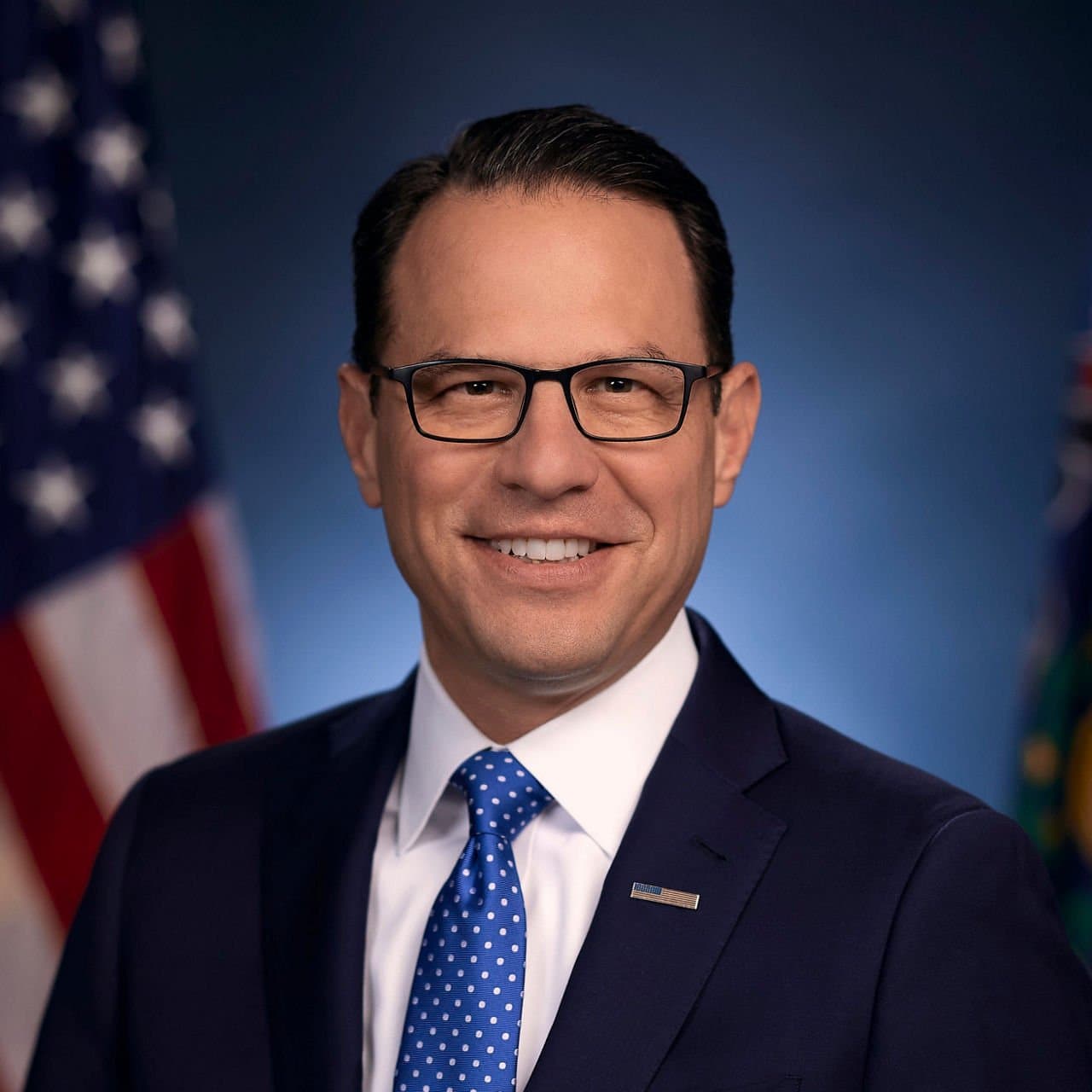
Two structural factors are primarily responsible for this lopsided pricing. First, Pennsylvania's incumbent Democratic Governor, Josh Shapiro, is eligible for and widely expected to seek re-election. Historical data strongly favors incumbents in gubernatorial races, especially those without major scandals. Second, the state's recent electoral history shows a competitive but shifting landscape. Governor Shapiro's decisive 15-point victory in 2022, coupled with strong Democratic performances in key 2024 statewide races, has cemented a market view that Pennsylvania's governorship is firmly in the Democratic column for this cycle. The market is essentially pricing a Shapiro re-election bid as the default, high-likelihood scenario.
The current 93% probability leaves little room for error and could be vulnerable to specific political shocks. The most significant near-term catalyst would be Governor Shapiro announcing he will not seek re-election, which would immediately create volatility and likely lower the Democratic contract price. A serious primary challenge from within his own party, though currently seen as unlikely, could also weaken his general election position. For Republicans, the odds would only shift meaningfully if they recruit a uniquely strong, well-funded nominee who can appeal to the state's swing voters, a scenario the market currently discounts. Key dates to watch are filing deadlines and the primary election in Spring 2026, which will finalize the candidate matchup.
AI-generated analysis based on market data. Not financial advice.
The Pennsylvania Governor Election Winner prediction market focuses on forecasting the outcome of the 2026 gubernatorial election in the Commonwealth of Pennsylvania. This election will determine who succeeds Democratic Governor Josh Shapiro, who is term-limited and cannot seek re-election. The market resolves based on the official winner certified by the Pennsylvania Department of State, with options initially representing the Democratic and Republican party nominees. The race is expected to be a critical battleground in the 2026 midterm cycle, reflecting Pennsylvania's status as a perennial swing state with significant influence over national politics and policy. Interest in this market stems from Pennsylvania's electoral importance, its shifting political demographics, and the high stakes for control of a key executive office that oversees a large industrial economy and plays a major role in presidential elections. The outcome will shape state policy on energy, education, and elections for the next four years, with national implications for party momentum heading into the 2028 presidential race. Early speculation centers on potential candidates from both parties jockeying for position in what is anticipated to be a highly competitive and expensive contest.
Pennsylvania's gubernatorial elections have followed a distinct pattern for decades, with voters typically limiting governors to two consecutive terms. The office has alternated between parties for much of the modern era, though Democrats have held it since 2015 with Tom Wolf's two terms followed by Josh Shapiro's election in 2022. The 2022 election itself was a major contest, with Shapiro defeating Republican state Senator Doug Mastriano by a margin of 14.8 points, one of the largest victories for a non-incumbent in recent state history. That race was notable for its nationalization, with Mastriano's staunchly conservative platform on issues like election denial becoming a central focus. Historically, Pennsylvania governors have wielded significant power, including a strong line-item veto and control over a large executive branch, influencing everything from energy policy in the Marcellus Shale region to education funding formulas. The 2026 election will mark the first open-seat gubernatorial contest since 2014, when Tom Wolf was first elected, setting the stage for a competitive battle without an incumbent. This historical pattern of competitive open-seat races, such as the 2010 election of Republican Tom Corbett, suggests a closely fought campaign is likely.
The winner of the 2026 Pennsylvania gubernatorial election will command one of the most powerful governorships in the United States, with direct authority over a state budget exceeding $100 billion and a population of nearly 13 million people. The governor appoints the heads of major departments, including Environmental Protection and Education, and holds significant sway over the implementation of federal programs within the state. This influence extends to critical economic sectors like energy, where Pennsylvania is the nation's second-largest natural gas producer, making the governor's regulatory stance pivotal for both the industry and climate policy. Furthermore, the governor plays a crucial role in certifying presidential election results, a function that gained intense scrutiny after the 2020 election. The political ramifications are equally profound, as the outcome will either solidify Democratic control of a key swing state ahead of the 2028 presidential election or provide Republicans a vital foothold and momentum. The election will also determine the trajectory of state-level policies on abortion access, school funding, and voting laws, directly impacting the lives of millions of Pennsylvanians.
As of mid-2024, the 2026 Pennsylvania gubernatorial race is in its earliest speculative phase, with no official candidates declared. Potential contenders from both parties are engaged in behind-the-scenes fundraising, coalition-building, and strategic planning. The political landscape is shaped by Governor Josh Shapiro's ongoing first term, his policy initiatives, and his public approval ratings, which will create the environment for his successor. On the Republican side, discussions are focused on rebuilding after significant losses in the 2022 and 2023 elections, with figures like Dave McCormick assessing their prospects. The Democratic field is also forming, with Lieutenant Governor Austin Davis and other statewide figures considering runs. Both national parties are expected to invest heavily in the race, given Pennsylvania's pivotal role in the Electoral College and congressional redistricting after the 2030 census.
The general election will be held on Tuesday, November 3, 2026. The primary elections to select party nominees are typically held in May of that election year, though the exact date is set by the state legislature.
To run for governor, a candidate must be at least 30 years old, a U.S. citizen for at least seven years, and a resident of Pennsylvania for at least seven years preceding the election. They cannot have been convicted of embezzlement of public money, bribery, perjury, or other infamous crimes.
Key issues historically include the economy and jobs, education funding, energy policy (particularly related to the Marcellus Shale natural gas industry), infrastructure, election administration, and healthcare. The specific issues will crystallize closer to 2026 based on the state's economic conditions and national political debates.
The governor of Pennsylvania serves a four-year term. Since a 1968 constitutional amendment, governors have been limited to two consecutive terms, though they can run again after a break in service.
While possible, it is historically very difficult. The last independent or third-party candidate to receive a significant share of the vote was Constitution Party candidate Ken Krawchuk, who won 1.8% in 2002. The state's election laws and campaign finance system heavily favor the two major parties.
The governor signs the Certificate of Ascertainment that appoints the state's presidential electors after the election results are certified by the Secretary of the Commonwealth. This became a nationally scrutinized procedural step following the 2020 election.
Educational content is AI-generated and sourced from Wikipedia. It should not be considered financial advice.
Share your predictions and analysis with other traders. Coming soon!
2 markets tracked

No data available
| Market | Platform | Price |
|---|---|---|
![]() | Poly | 93% |
![]() | Poly | 8% |


No related news found
Add this market to your website
<iframe src="https://predictpedia.com/embed/FX_yBP" width="400" height="160" frameborder="0" style="border-radius: 8px; max-width: 100%;" title="Pennsylvania Governor Election Winner"></iframe>