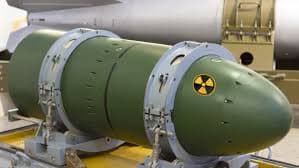
Will a US ally get a nuke before 2027?
PM $215.3K
1
1
Will a US ally get a nuke before 2027?
PM $215.3K
1
1
Current odds
Snapshot from
As of Oct 27, 2026, 3:00 AM UTC, Yes is priced at 4.3% on Polymarket.
Polymarket
- Yes4.3%
Yes prices. They are not order quotes; check each platform's rules, fees and live prices before trading.
AI Analysis
Trader mode: Market mechanics, assumptions and risks
PM $215.3K
Reported volume · provider units
1
Saved contracts
0
Same-question pairs
Source snapshot: Oct 27, 2026, 3:00 AM UTC
About This Event
This market will resolve to "Yes" if credible reports from international nuclear agencies, a claimant government, or a consensus of credible global news sources officially confirm that a US ally which did not possess nuclear weapons as of November 12, 2025, possesses a nuclear weapon by December 31, 2026, 11:59 PM ET. If a US ally participates in a nuclear sharing agreement that does not include independent control over nuclear weapons, this will not qualify for "Yes" resolution. Only full control over an operational nuclear weapon will count. Any admission from Israel of the possession of a nuclear weapon will not qualify for a "Yes" resolution. For the purposes of this market, a "US ally" is defined as a country that is a member of NATO or a Major Non-NATO Ally (https://www.state.gov/major-non-nato-ally-status/) as of November 12, 2025. Otherwise, this market will resolve to "No".
This analysis is awaiting a background update, so its prices may be older than the odds above.
Snapshot observed 2026-10-15T16:13:13.851Z. This analysis describes that snapshot and is not a live news update.
What the contract measures
The market asks whether a US ally will get a nuke before 2027. It resolves "Yes" only if credible reports from international nuclear agencies, a claimant government, or a consensus of credible global news sources officially confirm that a qualifying country possesses a nuclear weapon by December 31, 2026, 11:59 PM ET [1]. The contract defines a "US ally" as a NATO member or a Major Non-NATO Ally as of November 12, 2025, and a country outside that definition resolves the market to "No" [1]. Nuclear sharing arrangements without independent control over weapons do not qualify, and any admission from Israel of possessing a nuclear weapon does not qualify [1].
The listed end time is 2027-01-01T04:59:00.000Z, which corresponds to the 11:59 PM ET deadline in the rules [1]. Readers comparing this contract with a similarly titled market should check the exact wording, the eligibility definition, and the listed close time, since small differences in any of these can change what a "Yes" outcome requires.
Reading the snapshot
The saved snapshot was observed on October 15, 2026 at 16:13 UTC and retrieved at 18:24 UTC on the same day [1]. It shows a single active market with a "Yes" price of 0.0375 and a "No" price of 0.9625 [1]. These are snapshot prices, not executable quotes, and they should not be treated as verified probabilities.
The coverage record lists one market for this event, and the sample is not partial [1]. Because only one contract is included, there is no comparison across outcomes or platforms in this snapshot. The prices simply show what the saved snapshot recorded for the two outcomes of this one contract.
What remains uncertain
The evidence does not explain why the price is where it is, and it does not show how many traders hold each position. Volume is not a measure of liquidity or trader count, and this snapshot does not provide liquidity data. The evidence also does not include news about the underlying question, so readers should not infer any development from the price alone. The provider's sampling note states that the saved markets do not establish that every possible real-world outcome is listed [1]. Finally, this snapshot records prices at one moment; it does not show the current price, and any later reading would need its own retrieval time.
References
- Polymarket: Will a US ally get a nuke before 2027?. Provider data observed 2026-10-15T16:13:13.851Z.
AI-generated analysis based on market data. Not financial advice.
Saved Oct 15, 2026 UTCAI-written background. References identify the evidence used; Wikipedia links under Learn More are additional reading. Prices and provider rules are dated snapshots. This is not financial advice.
Related prediction markets
Prices are catalog snapshots and may have changed. Check each market's rules and observation time.
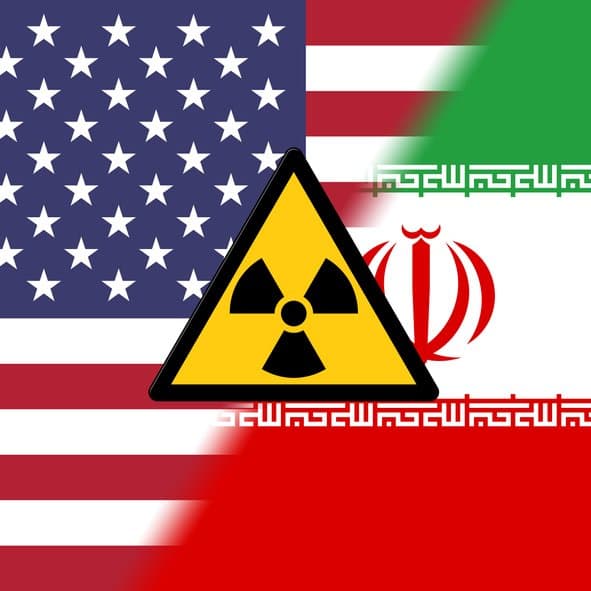
US-Iran nuclear deal?
PM $20.41M · K 4.03M contractsUS-Iran Final Nuclear Deal by December 31, 2026?
Kalshi: Will the US agree to a new Iranian nuclear deal this year? (Before Jan 1, 2027)
Related contracts
US-Iran Final Nuclear Deal by November 30, 2026?
Kalshi: Will the US agree to a new Iranian nuclear deal this year? (Before Dec 1, 2026)
Related contracts
US-Iran Final Nuclear Deal by October 31, 2026?
Kalshi: Will the US agree to a new Iranian nuclear deal this year? (Before Nov 1, 2026)
Related contracts
Related or unreviewed contracts may settle differently. Their gap is not an equivalent-contract comparison.
Saved prices; check contract rules.

Will Kenya and the US reach a critical minerals deal?
K 2.4K contracts
Pete Hoekstra out as US Ambassador to Canada?
K 2.0K contracts
US recognizes Russian sovereignty over Ukraine by...?
PM $193.0K
Will the US create a national AI regulator?
K 3.1K contracts
Who will leave their role in the Trump administration in 2026?
PM $1.46M · K 4.64M contractsWill Susie Wiles leave the Trump administration before 2027?
Kalshi: Will Susie WIles leaves Chief of Staff in before 2027?
Needs review
Will Pete Hegseth leave the Trump administration before 2027?
Kalshi: Will Pete Hegseth leaves Secretary of Defense in before 2027?
Needs review
Will Tom Homan leave the Trump administration before 2027?
Kalshi: Will Tom Homan leaves White House Border Czar in before 2027?
Needs review
Related or unreviewed contracts may settle differently. Their gap is not an equivalent-contract comparison.
Saved prices; check contract rules.
Market Insights
Price gaps of 2 pp+
0
Same-question pairs
0
No outcomes on this page have been reviewed as the same question on both platforms yet.
Price differences do not establish arbitrage. Check each pair's review, current order prices, fees and settlement rules.