This event is no longer in the live catalog. Showing its last saved snapshot.

Highest temperature in Busan on November 6?
PM $54.3K
1
11
AI Analysis
Trader mode: Market mechanics, assumptions and risks
PM $54.3K
Reported volume · provider units
11
Saved contracts
0
Same-question pairs
Source snapshot: Nov 6, 2026, 12:00 PM UTC
Snapshot observed Nov 6, 2026, 12:00 PM UTC. This event is archived. This analysis describes that snapshot and is not a live news update.
What the contract measures
The event asks for the highest temperature at Gimhae Intl Airport (RKPK) in Busan on 6 November 2026, and each market covers one whole-degree Celsius range [1]. The rules count only routine METAR observations. A report beginning with SPECI does not count, and the hourly temperature remark (the T group) governs when present. If it is absent, the whole-degree temperature in the observation body is used [1].
Rounding matters. The qualifying value is rounded to the nearest whole degree, with exact halves rounded up, so 16.5°C counts as 17°C and 17.4°C counts as 17°C [1]. The rules also name fallbacks: the Weather Underground Daily Observations table applies if the Aviation Weather Center has no qualifying routine report by the deadline, and the lowest bracket applies if neither source is sufficient [1].
Reading the snapshot
The saved snapshot was observed on 2026-11-06 at 12:00:06 UTC and retrieved on 2026-11-11 at 15:08:03 UTC. It is archived, so it describes market prices at the observation time, not current prices [1]. The listed end time is 2026-11-06 at 12:00 UTC, and the market status in the snapshot is "active" [1].
The sample contains all 11 saved markets for this event, and it is not marked as partial [1]. At the observation time, the "Yes" contract for 17°C was priced at 0.9995, while the 16°C, 18°C, 15°C, 14°C, 19°C or higher, 13°C, 12°C, 11°C, 10°C, and 9°C or below contracts were each priced at 0.0005 [1]. These are quoted snapshot prices, not executable quotes or verified probabilities. Volume and the number of participants are not included, so the snapshot says nothing about liquidity or trader agreement.
Each range is a separate contract with its own wording. Do not compare these prices with markets on other platforms or other events unless their rules match exactly.
What remains uncertain
The evidence does not show the observed temperature, the resolved outcome, or whether the market has closed or settled since the snapshot. The sample warning also states that the listed ranges do not establish that the provider has covered every possible real-world outcome [1]. The snapshot does not explain why prices were set at these levels.
References
- Polymarket: Highest temperature in Busan on November 6?. Provider data observed Nov 6, 2026, 12:00 PM UTC.
AI-generated analysis based on market data. Not financial advice.
Saved Nov 11, 2026 UTCOverview
The contract "Highest temperature in Busan on November 6?" is a Polymarket event in the Climate category. Its rules state that it resolves to the temperature range that contains the highest temperature reported at Gimhae Intl Airport (RKPK) on 6 Nov '26 [1]. The background sources describe Busan as South Korea's second most populous city, with a port that is the country's busiest [2]. They do not describe the airport's location or weather records, so this article relies on the contract rules for how the market works. The qualifying value comes from routine METAR observations. The rules use the hourly temperature remark, a group that begins with the letter T followed by eight digits. The first digit gives the sign (0 for positive, 1 for negative), and the next three give the temperature in tenths of a degree Celsius. The rules give T01390133 as an example of 13.9°C [1]. Reports beginning with SPECI are special observations and do not count. If a routine observation lacks the hourly remark, the temperature group in the body of the report is used instead, in whole degrees Celsius [1]. Each range is stated in whole degrees Celsius. The qualifying value is rounded to the nearest whole degree, and a value ending in exactly half is rounded up. The rules give examples such as 16.5°C counting as 17°C and -8.5°C counting as -8°C [1]. An observation counts for a date if its timestamp, converted to the station's local time including any daylight-saving shift, falls on that date [1]. The rules set a resolution deadline. The market resolves when the first METAR for the station on the following day is issued, or by 11:59 PM ET on the following day, whichever comes first [1]. If the Aviation Weather Center has published no routine observation reporting a temperature for the observation date by that deadline, the Weather Underground Daily Observations table is used. If neither source has published enough data to determine a temperature by the deadline, the market resolves to the lowest bracket [1]. Corrected reports (COR) count in the same way as other reports, and changes are considered until the first datapoint for the following date is published [1]. If a source publishes clearly erroneous data from a technical or operational error, the market may remain open for up to seven calendar days (ET) for a correction [1]. The saved event lists 11 bracket markets, ranging from 9°C or below to 19°C or higher [1]. The event's listed end time is recorded as 2026-11-06T12:00:00.000Z [1]. The rules describe resolution on the following day, and the supplied source does not explain how the listed end time relates to that rule, so the two should not be read as the same event. The observation snapshot was taken on 2026-11-06, and the source material was retrieved on 2026-11-11. Neither record shows the market's status today, and the background pages are general reference material rather than verification of any current event.
Why It Matters
The contract measures the highest temperature reported at one airport station on one date, expressed as a whole-degree Celsius bracket [1]. Its value depends on which reports count (routine METAR hourly remarks, not SPECI reports), how values are rounded, the local-time window, and the fallback rules if data is missing [1]. The market snapshot from the observation date lists the 17°C bracket at a Yes price of 0.9995 and the other ten brackets at 0.0005 [1]. These are snapshot prices from that date, not executable quotes or verified probabilities. The saved sample contains all 11 markets for this event, which means the figures do not show every possible real-world outcome.
Snapshot context
The archived provider snapshot for this topic was observed on 2026-11-06 at 12:00 UTC. It contains listings from Polymarket. Market descriptions and listed closing times define the contracts; they do not establish that the real-world outcome has occurred. This article does not include a separately verified news update. [1]
Frequently Asked Questions
Which temperature reading does the contract use?
The contract uses the highest hourly temperature remark in routine METAR observations for Gimhae Intl Airport (RKPK) on the observation date. Special observations beginning with SPECI do not count [1].
How is a temperature converted into a bracket?
The qualifying value is rounded to the nearest whole degree Celsius, with exact halves rounded up. The rounded value determines which range contains it, so 13.9°C counts as 14°C and 16.5°C counts as 17°C [1].
What happens if the primary source has no data?
If the Aviation Weather Center has published no routine temperature observation for the date by 11:59 PM ET on the following day, the Weather Underground Daily Observations table is used. If neither source has enough data by that deadline, the market resolves to the lowest bracket [1].
What happens if a source publishes an error?
If the resolution source publishes clearly erroneous data from a technical or operational error, the market may remain open for up to seven calendar days (ET) to allow for a correction. If no corrected value is published, Polymarket may issue a Clarification [1].
AI-written background. References identify the evidence used; Wikipedia links under Learn More are additional reading. Prices and provider rules are dated snapshots. This is not financial advice.
Related prediction markets
Prices are catalog snapshots and may have changed. Check each market's rules and observation time.
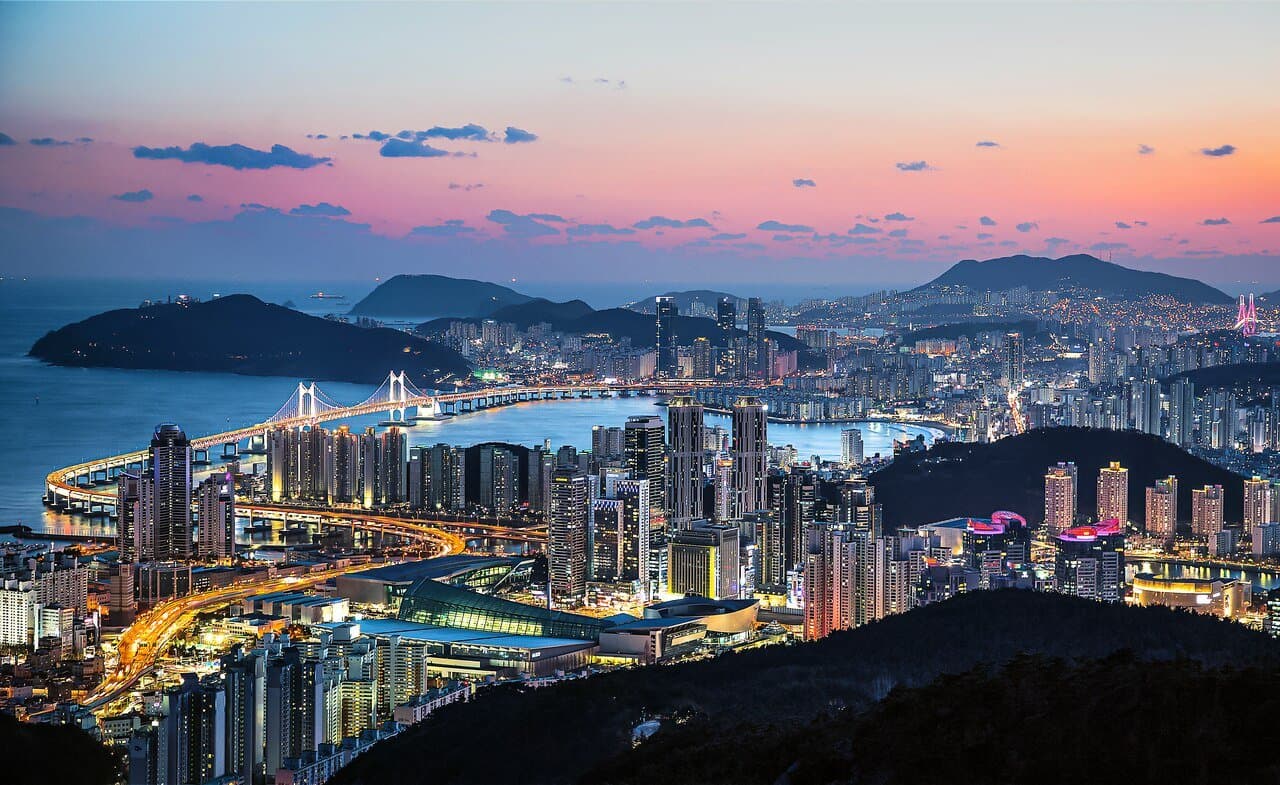
Highest temperature in Busan on November 23?
PM $2.6KHighest temperature in Busan on November 24?
PM $1.5K
Highest temperature in Paris on November 23?
PM $12.7K
Highest temperature in Helsinki on November 23?
PM $9.7K
Highest temperature in London on November 23?
PM $8.5K
Highest temperature in Warsaw on November 23?
PM $7.9KMarket Insights
Price gaps of 2 pp+
0
Same-question pairs
0
No outcomes on this page have been reviewed as the same question on both platforms yet.
Price differences do not establish arbitrage. Check each pair's review, current order prices, fees and settlement rules.