$6.26K
1
1

1 market tracked

No data available
| Market | Platform | Price |
|---|---|---|
![]() | Poly | 57% |
Trader mode: Actionable analysis for identifying opportunities and edge
This market will resolve to “Yes” if the U.S. District Court in the Northern District of California sides with Elon Musk in Elon Musk v. Sam Altman et al by December 31, 2026, 11:59 PM ET. Otherwise, this market will resolve to “No”. If the case reaches a determination without settlement, the court will be considered to side with Musk based on the following criteria (in order of priority): 1. If Elon Musk receives a larger net monetary award than Altman et al (after offsetting any awards again
Prediction markets currently assign a 57% probability that Elon Musk will win his lawsuit against Sam Altman and OpenAI by the end of 2026. This price, trading on Polymarket, indicates the market views a Musk victory as slightly more likely than not, but remains highly uncertain. With only $6,000 in total trading volume, this is a thin, speculative market where prices can be volatile and may not yet reflect a deep consensus.
The current pricing reflects a nuanced view of Musk's high-profile breach-of-contract and fiduciary duty lawsuit. First, the core legal argument that OpenAI abandoned its founding nonprofit mission to develop artificial general intelligence (AGI) "for the benefit of humanity" in favor of a for-profit partnership with Microsoft is a compelling narrative that could resonate with a court. Musk's legal team has presented internal emails that may support his claims.
Second, market odds likely incorporate Musk's history as a litigant. While he engages in frequent legal battles, his resources and willingness to pursue lengthy litigation apply significant pressure, often leading to settlements or favorable outcomes. The market may be pricing in a non-zero chance of a settlement that functionally benefits Musk, which could be interpreted as a "win" within the market's specific resolution criteria focused on net monetary award.
The primary catalyst for a major odds shift will be key pre-trial rulings from the U.S. District Court in Northern California. A decision on OpenAI's motion to dismiss, expected in the coming months, will be critical. If the judge allows most of Musk's claims to proceed to discovery, his odds could rise significantly as the path to evidence gathering opens. Conversely, a strong dismissal would likely crash the "Yes" probability.
Furthermore, the discovery process itself could dramatically move the market. The release of damaging internal communications from OpenAI or, conversely, evidence undermining Musk's claims about the original agreements would provide concrete information to traders. Any formal settlement negotiations becoming public would also cause immediate repricing, likely upward for the "Yes" share if Musk extracts a substantial monetary concession.
AI-generated analysis based on market data. Not financial advice.
$6.26K
1
1
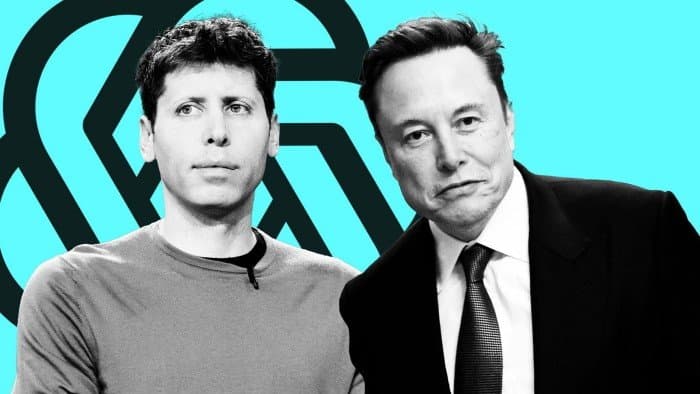
This prediction market concerns the outcome of a high-profile lawsuit filed by Elon Musk against Sam Altman and other OpenAI entities in the Northern District of California. The case, officially titled Elon Musk v. Sam Altman et al, centers on allegations that OpenAI, originally founded as a non-profit dedicated to developing artificial intelligence for the benefit of humanity, breached its founding agreement and fiduciary duties by transitioning to a for-profit model and entering into a close partnership with Microsoft. The market resolves based on whether the court sides with Musk by December 31, 2026. A ruling in Musk's favor is defined by a hierarchy of outcomes, primarily a larger net monetary award for Musk than for Altman, a court order compelling OpenAI to revert to open-source principles, or a judicial finding that OpenAI breached its contractual or fiduciary duties. The lawsuit represents a dramatic public fracture between two of Silicon Valley's most prominent figures and a fundamental dispute over the governance and mission of one of the world's most influential AI companies. Interest in the case is exceptionally high due to the celebrity of the parties, the staggering valuations involved, and the foundational questions it raises about corporate control and ethical development in the AI industry.
The conflict has its roots in the founding of OpenAI in December 2015. The organization was established as a non-profit with a charter stating its goal was to develop artificial general intelligence (AGI) 'for the benefit of humanity as a whole' and to 'freely collaborate' with other institutions by making its patents and research open to the public. Elon Musk was a leading co-founder and donor during this period. In 2018, Musk departed the board, citing a potential conflict of interest with Tesla's AI work, though reports suggest growing disagreements over the company's direction and pace. A critical turning point came in March 2019, when OpenAI created a 'capped-profit' entity, OpenAI LP, to attract investment while still being governed by the non-profit's charter. This structure enabled the company to accept a $1 billion investment from Microsoft in July 2019, a partnership that has since expanded dramatically. The launch of ChatGPT in November 2022 catapulted OpenAI to global prominence and intensified scrutiny of its governance and its relationship with Microsoft, setting the stage for Musk's legal challenge. The lawsuit, filed in February 2024, argues this entire evolution represents a fundamental betrayal of the 2015 founding agreement.
The outcome of this lawsuit has profound implications for the governance and trajectory of the entire artificial intelligence industry. A ruling in Musk's favor could force a radical restructuring of OpenAI, potentially mandating a return to open-source practices and limiting commercial partnerships. This would disrupt the current competitive landscape, where proprietary models from OpenAI, Google, and Anthropic dominate, and could accelerate the development of open-source alternatives. Beyond one company, the case tests the legal enforceability of mission-driven corporate charters in the face of immense commercial pressure. It raises fundamental questions about who controls powerful AI technology and whether founding ideals can legally constrain a company's evolution as its value and influence explode. The precedent set could influence how future AI and tech startups structure their governance to balance ethical promises with the need for capital.
As of mid-2024, the case is in its early procedural stages in the U.S. District Court for the Northern District of California. The defendants, Sam Altman and OpenAI, filed a motion to dismiss the lawsuit in May 2024, arguing that Musk's claims are based on a fictional contract and that the dispute is an improper attempt to exert control over a successful competitor. The court has not yet ruled on this motion to dismiss. The next major milestone will be the court's decision on whether to dismiss the case entirely or allow it to proceed to the discovery phase, where both sides would exchange evidence and take depositions. The recent internal governance crisis at OpenAI in November 2023, which saw Sam Altman briefly ousted and then reinstated, is likely to be explored in discovery if the case moves forward.
Musk alleges breach of contract, breach of fiduciary duty, and unfair business practices. The core claim is that OpenAI and Sam Altman abandoned the company's founding mission as an open-source, non-profit dedicated to benefiting humanity, instead becoming a closed-source, for-profit entity effectively controlled by Microsoft for commercial gain.
The lawsuit requests a judicial order forcing OpenAI to revert to its open-source principles, potentially making its advanced AI research public. It also seeks an injunction to prevent OpenAI from commercializing its technology for the exclusive benefit of Microsoft or its executives, and requests unspecified compensatory and punitive damages.
Potentially, yes. One of Musk's requested remedies is for the court to issue an injunction requiring OpenAI to make its AGI technology open-source, adhering to its original charter. A ruling in his favor on that point could fundamentally change access to models like GPT-4.
This federal district court, based in San Francisco, has jurisdiction because OpenAI is headquartered in San Francisco, California. It is a common venue for major technology industry litigation due to its location and judges' familiarity with complex corporate and intellectual property disputes.
If the parties reach a private settlement agreement before the court issues a final ruling, the prediction market would resolve to 'No', as the condition requires the court itself to side with Musk. A settlement would prevent a judicial determination on the merits of the claims.
Educational content is AI-generated and sourced from Wikipedia. It should not be considered financial advice.
Share your predictions and analysis with other traders. Coming soon!

No related news found
Add this market to your website
<iframe src="https://predictpedia.com/embed/G42Q8x" width="400" height="160" frameborder="0" style="border-radius: 8px; max-width: 100%;" title="Will Elon Musk win his case against Sam Altman?"></iframe>