$535.42K
1
1

1 market tracked

No data available
| Market | Platform | Price |
|---|---|---|
![]() | Poly | 12% |
Trader mode: Actionable analysis for identifying opportunities and edge
On January 24, 2026, a federal immigration agent shot and killed a man in Minneapolis, Minnesota, during a federal immigration enforcement operation (see: https://www.cnn.com/us/live-news/ice-minneapolis-shooting-01-24-26). This market will resolve to “Yes” if any Federal or State jurisdiction of the United States formally charges or otherwise announces a criminal indictment of the federal immigration agent who fired the shots in the January 24, 2026 Minneapolis shooting, for any alleged crime
Prediction markets currently give about a 1 in 8 chance that the federal immigration agent involved in the Minneapolis shooting will face criminal charges. With the probability at 12%, traders collectively see an indictment as unlikely. This reflects a significant degree of skepticism that a prosecution will move forward.
Two main factors are likely shaping this low probability. First, there is a historical precedent. Federal agents, especially those involved in on-duty shootings during enforcement actions, are rarely charged. Legal standards like "qualified immunity" and the high bar for proving a federal agent acted outside their authority make prosecutions uncommon.
Second, the specific circumstances matter. Initial reports from January 24 indicate the shooting happened during an immigration enforcement operation. If official investigations determine the agent perceived a credible threat, it becomes very difficult for prosecutors to prove criminal intent beyond a reasonable doubt. The market is essentially weighing these institutional and legal hurdles against public and political pressure for accountability.
The most important signals will come from official investigations. Watch for any public statements or preliminary findings from the FBI, which typically investigates shootings involving federal officers, or from the U.S. Attorney’s office in Minnesota. A grand jury being convened would be a major development that could shift predictions. The market resolves in about 38 days, but a formal charging decision could come at any point before then.
For questions about legal and political outcomes, prediction markets have a mixed but often insightful record. They aggregate many viewpoints about complex bureaucratic and judicial processes. However, their accuracy can be limited by a lack of clear, public information. In this case, the investigation details are not fully public, so the market is making a best guess based on historical patterns rather than known facts. This means the probability could change quickly if new, definitive information emerges.
Prediction markets assign a low 12% probability that the federal immigration agent involved in the January 24 Minneapolis shooting will face criminal charges. With shares priced at 12¢ for a "Yes" outcome, the consensus strongly expects no indictment. A 12% chance means the market views prosecution as a remote possibility, though not entirely impossible. The market has attracted significant attention, with over $534,000 in wagers, indicating serious capital is backing this low-probability assessment.
Two primary elements explain the 88% probability against charges. First, legal precedent heavily favors federal agents in use-of-force incidents during operations. Prosecutors face a high bar to prove an agent acted outside the bounds of their authority or violated clearly established law. Historical data shows federal criminal charges in such cases are exceptionally rare. Second, the initial framing from federal authorities will shape the narrative. Early reports describing the operation as a federal enforcement action and the deceased as a "man" without immediate public details about his status suggest a controlled information environment that typically protects agents from immediate legal jeopardy.
The odds could shift dramatically with new evidence. If body camera footage or witness accounts contradict the official use-of-force report, public and political pressure for charges could mount. The involvement of the Minnesota state attorney general's office, known for pursuing police accountability cases, is a specific risk to the "No" position. A formal investigation announcement by state or county prosecutors before the March 31 resolution date would likely cause the "Yes" probability to spike. Market movement will depend on leaks or official statements in the coming weeks, making this a news-driven contract.
AI-generated analysis based on market data. Not financial advice.
$535.42K
1
1
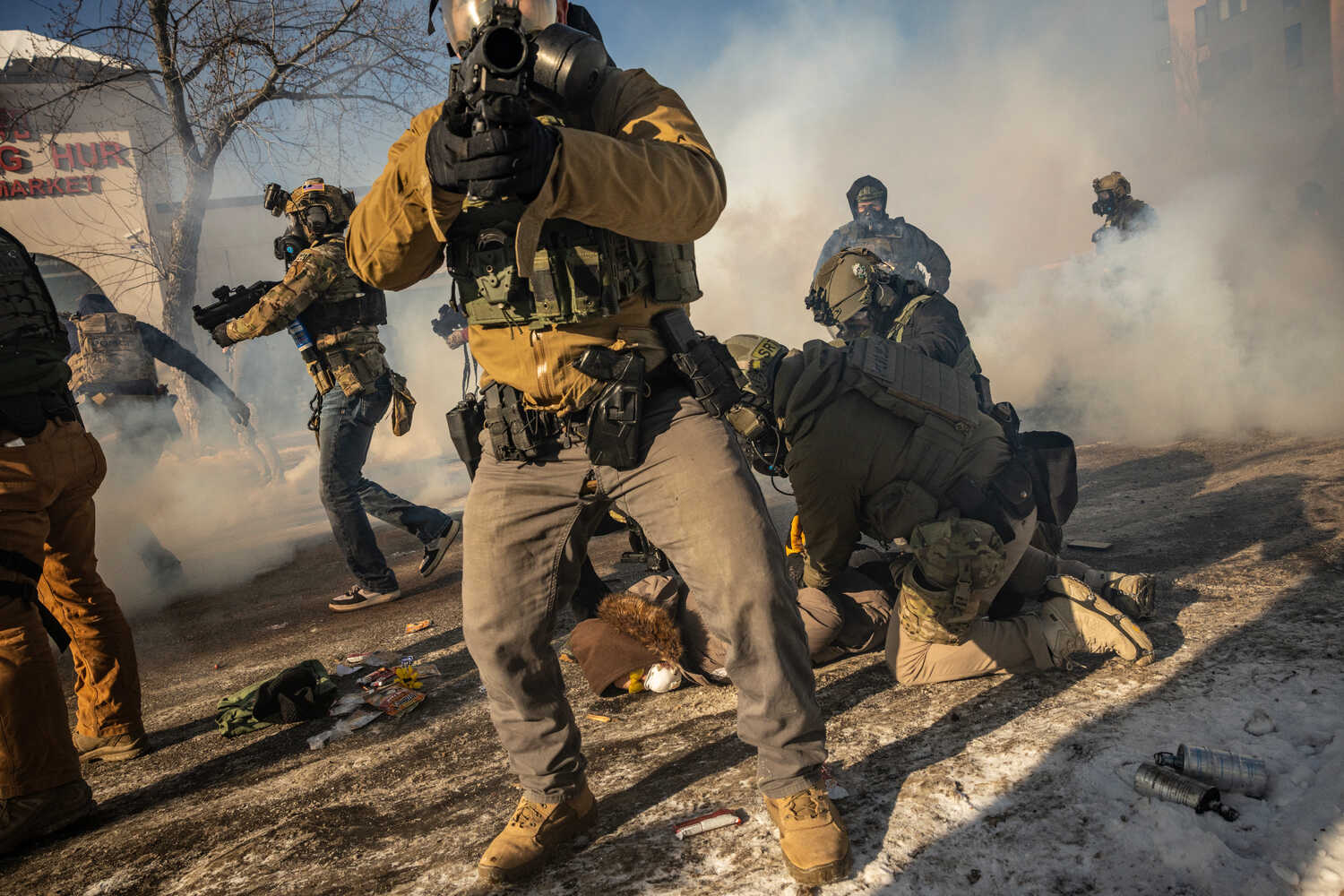
This prediction market concerns whether criminal charges will be filed against a federal immigration agent involved in a fatal shooting in Minneapolis on January 24, 2026. According to initial reports from CNN, the agent, identified as a member of a U.S. Border Patrol tactical unit, shot and killed a man during an immigration enforcement operation. The incident occurred in a residential area of Minneapolis, sparking immediate protests and calls for a transparent investigation from community leaders and immigrant rights organizations. The market resolves to 'Yes' if any federal or state jurisdiction in the United States formally charges or indicts the agent for any alleged crime related to the shooting. The shooting took place during an operation led by U.S. Immigration and Customs Enforcement (ICE) and involved personnel from the Border Patrol's BORTAC unit, a specialized tactical team. Local law enforcement was reportedly not directly involved in the operation that led to the shooting. The identity of the deceased man has not been officially released by federal authorities, though community groups have identified him as a 32-year-old man from Guatemala who had lived in Minneapolis for several years. Public interest in this case stems from several factors, including ongoing national debates about immigration enforcement tactics, the use of force by federal agents, and police accountability. The involvement of a Border Patrol unit in an interior immigration raid, rather than near the border, has drawn particular scrutiny. Legal experts note that the decision to charge a federal law enforcement officer is complex, involving reviews by the U.S. Department of Justice and potentially conflicting with qualified immunity doctrines. The case is being monitored by civil rights groups, immigration advocates, and political commentators as a potential test case for accountability in federal immigration operations.
The Minneapolis shooting occurs against a backdrop of contentious immigration enforcement and police use-of-force cases. In 2014, the shooting of Michael Brown in Ferguson, Missouri, sparked nationwide protests and the Black Lives Matter movement, leading to increased scrutiny of police killings. The 2020 murder of George Floyd by Minneapolis police officer Derek Chauvin resulted in Chauvin's conviction on state murder charges and federal civil rights charges, demonstrating that prosecutions of law enforcement officers are possible but remain statistically rare. Federal immigration enforcement has faced legal challenges regarding the use of force. In 2010, a Border Patrol agent was convicted of second-degree murder for shooting a Mexican teenager through the border fence in Arizona, marking one of few successful prosecutions. More commonly, agents involved in fatal shootings face administrative discipline rather than criminal charges. The 2018 shooting of Claudia Patricia Gómez González, a Guatemalan woman, by a Border Patrol agent in Texas resulted in no criminal charges after a Justice Department review. The legal doctrine of qualified immunity presents a significant barrier to prosecuting law enforcement officers. Established through Supreme Court precedents, this doctrine shields government officials from liability unless they violate 'clearly established' constitutional rights. In the 2021 case Torres v. Madrid, the Supreme Court ruled that a police shooting constitutes a 'seizure' under the Fourth Amendment, potentially relevant to the Minneapolis case. Minnesota state law does not provide the same qualified immunity protections as federal law, which may influence charging decisions.
This case tests the accountability mechanisms for federal law enforcement operations that result in civilian deaths. A decision to charge the agent could establish that immigration enforcement personnel are not exempt from criminal liability for use of force, potentially altering how ICE and Border Patrol conduct operations in communities. Conversely, a decision not to charge would reinforce perceptions of impunity for federal agents and likely intensify protests and political pressure for legislative reforms. The outcome carries significant political implications during an election year. Immigration policy remains a divisive issue, and this shooting has already become a talking point in congressional races and the 2026 midterm elections. Advocacy groups are using the case to push for the Federal Law Enforcement Accountability Act, proposed legislation that would make it easier to prosecute federal officers. The financial cost of the shooting is also substantial, with the city of Minneapolis likely facing civil litigation regardless of criminal outcomes, similar to the $27 million settlement paid to George Floyd's family.
As of early February 2026, the Minnesota Bureau of Criminal Apprehension continues its criminal investigation into the shooting. The BCA has collected physical evidence from the scene and is interviewing witnesses. Federal investigators from the Department of Homeland Security's Office of Inspector General are conducting a parallel administrative review. No body camera footage has been released publicly, though the Hennepin County Attorney has confirmed its existence. The involved Border Patrol agent has been placed on administrative leave pending investigation outcomes, a standard procedure. Community protests have occurred weekly outside the Minneapolis Federal Building, organized by immigrant rights groups including the Minnesota Immigrant Rights Action Committee.
Yes, state prosecutors have jurisdiction to charge federal agents for violations of state law. The Supreme Court affirmed this principle in the 1992 case United States v. Alvarez-Machain. However, the federal government may seek to move the case to federal court or assert immunity defenses.
Administrative leave is a paid status during an investigation, while suspension is typically unpaid disciplinary action. The agent remains on CBP's payroll during administrative leave. A suspension would only occur if CBP's internal investigation finds policy violations.
No. CBP policy typically does not release names of agents involved in shootings until criminal investigations conclude or charges are filed. Some state laws, like Minnesota's data practices act, may eventually require disclosure if charges are brought.
Federal and state prosecutors can independently decide whether to bring charges based on the same incident. This dual sovereignty doctrine means an agent could face state charges even if federal prosecutors decline to charge, or vice versa. The cases would proceed in separate court systems.
Minnesota law requires all police shooting cases to be presented to a grand jury if prosecutors consider charges. Since 2016, Minnesota grand juries have considered eight police shooting cases, returning indictments in three of them.
Educational content is AI-generated and sourced from Wikipedia. It should not be considered financial advice.

No related news found
Add this market to your website
<iframe src="https://predictpedia.com/embed/G5NsR_" width="400" height="160" frameborder="0" style="border-radius: 8px; max-width: 100%;" title="Minneapolis Border Patrol shooter charged?"></iframe>