
How many states will adopt data center moratoriums in 2026?
K 19.2K contracts
1
5
- Reported volume
- K 19.2K contracts
- Events
- 1
- Markets
- 5
Current odds
Snapshot from
As of Nov 28, 2026, 12:00 PM UTC, the highest-priced outcome on Kalshi is At least 4 at 42%.
Kalshi
- At least 442%
- At least 533.5%
- At least 67%
- At least 73.5%
- At least 83%
Yes prices. They are not order quotes; check each platform's rules, fees and live prices before trading.
AI Analysis
Trader mode: Market mechanics, assumptions and risks
K 19.2K contracts
Reported volume · provider units
5
Saved contracts
0
Same-question pairs
Source snapshot: Nov 28, 2026, 12:00 PM UTC
This analysis was written from an earlier market snapshot, so its prices may be older than the odds above.
Snapshot observed Nov 24, 2026, 12:00 PM UTC. This analysis describes that snapshot and is not a live news update.
What the contract measures
This event asks how many U.S. states will formally adopt a binding state-level moratorium on data-center development during 2026. Under the rules quoted in the source, a state counts once it adopts a binding law, executive order, regulation, or agency order that "expressly targets data centers and prohibits or suspends a material governmental approval, permitting, interconnection, construction, expansion, or operation pathway for new or expanded data centers" [1]. The rules say that local measures, project-specific holds, pending legislation, studies, and tax-incentive changes do not qualify [1].
The event contains five separate Yes/No contracts, each with a different threshold: at least 4, 5, 6, 7, or 8 states. Each contract resolves Yes only if the count reaches its own threshold.
Reading the snapshot
The saved observation is timestamped Nov 24, 2026, 12:00 PM UTC. It is a record of prices at that time, not a live reading. The listed contract end date for every market in the set is Jan 1, 2027, 2:59 PM UTC [1].
The Yes prices in the snapshot were 0.53 for at least 4 states, 0.36 for at least 5, 0.075 for at least 6, 0.045 for at least 7, and 0.03 for at least 8 [1]. These are prices from one provider's snapshot. They are not executable quotes or verified probabilities. The higher thresholds have lower Yes prices, which is consistent with the thresholds being harder to reach, but the snapshot does not explain why any price is where it is.
The event page records a count of 1 as of July 21, 2026, namely New York, which issued Executive Order 62 on July 14 [1]. The source does not give a count from a later date, so this snapshot does not show how many states currently qualify.
The reported volume of 18,817 contracts is a total that Kalshi reports for its own event [1]. It is not a measure of liquidity or the number of traders.
What remains uncertain
The sample includes all five saved Kalshi markets for this event, and the record marks it as not partial [1]. The source also states that this does not establish that the provider lists every possible outcome. Because there is only one provider here, no cross-platform comparison is available.
The source's status line says "Listed end time: not supplied," while the market records list an end date of Jan 1, 2027, 2:59 PM UTC [1]. The end date is a provider field, and the rules quoted in the source do not state a separate end date. Readers should check the provider's current contract terms before relying on either date.
References
- Kalshi: How many states will adopt data center moratoriums in 2026?. Provider data observed Nov 24, 2026, 12:00 PM UTC.
Snapshot observed Nov 26, 2026, 12:00 AM UTC. This analysis describes that snapshot and is not a live news update.
What the contract measures
The event asks how many U.S. states will formally adopt a binding state-level moratorium on data-center development in 2026 [1]. A state qualifies upon final adoption of a binding law, executive order, regulation, or agency order that expressly targets data centers and prohibits or suspends a material governmental approval, permitting, interconnection, construction, expansion, or operation pathway [1]. Local measures, project-specific holds, pending legislation, studies, and tax-incentive changes do not qualify [1]. A qualifying state stays counted if its measure later expires, is repealed, or is enjoined, provided it became legally operative [1].
The five saved markets are threshold contracts asking whether the count will be at least 4, 5, 6, 7, or 8 [1]. Each is a separate Yes or No contract, so the thresholds are not a single probability distribution and should not be combined.
Reading the snapshot
The provider observation time is Nov 26, 2026, 12:00 AM UTC, and the source was retrieved at Nov 26, 2026, 2:08 AM UTC [1]. At that snapshot, the Yes prices were about 0.445 for at least 4 states, 0.335 for at least 5, 0.075 for at least 6, 0.04 for at least 7, and 0.03 for at least 8 [1]. These are snapshot prices, not executable quotes or verified probabilities.
The excerpt's state count is dated separately: "Count as of July 21, 2026: 1 — New York" [1]. That figure describes New York Executive Order 62, issued July 14, which directs holds on certain incomplete discretionary-permit applications for data centers consuming or capable of consuming at least 50 megawatts [1]. It is not a count at the snapshot time.
The markets list an end date of Jan 1, 2027, 2:59 PM UTC, while the question text refers to adoption "in 2026" [1]. The excerpt does not explain this difference, so readers should check the provider's full rules. The event status is listed as active, and the listed end time is "not supplied" in the source excerpt [1].
Kalshi reports 19,099 contracts for this event [1]. That is the provider's own total in its own units. It is not liquidity or a count of traders. All five saved markets are included, and the sample is not marked partial [1]. The sample does not establish that every possible outcome is listed.
What remains uncertain
The supplied evidence does not explain why prices are at these levels, does not report how many participants hold any view, and does not describe state actions after the excerpt. It names only one qualifying state. Whether any other state adopts a qualifying measure before the listed end date cannot be determined from this material. Differences in price between thresholds reflect separate contracts and do not by themselves indicate an arbitrage opportunity.
References
- Kalshi: How many states will adopt data center moratoriums in 2026?. Provider data observed Nov 26, 2026, 12:00 AM UTC.
AI-generated analysis based on market data. Not financial advice.
Saved Nov 26, 2026 UTCOverview
PredictPedia's contract tracks how many U.S. states formally adopt a binding state-level moratorium on data center development during 2026. The Kalshi event sets out several thresholds, asking whether the count will be at least 4, 5, 6, 7 or 8 [1]. Each threshold is a separate yes or no contract that resolves based on the final count for the calendar year. Under the contract rules, a state counts when it finally adopts a binding law, executive order, regulation or agency order that expressly targets data centers and prohibits or suspends a material approval, permitting, interconnection, construction, expansion or operation pathway for new or expanded data centers [1]. The measure does not need to use the word moratorium, and a permanent prohibition also qualifies. It may apply only to a defined class of data centers, such as facilities above a set power, water-use, computing-capacity or size threshold, and it may grandfather existing facilities or applications [1]. The rules also exclude several kinds of action. Local measures, project-specific holds, pending legislation, studies, reporting requirements, tax-incentive changes and regulatory requirements that do not suspend development do not count [1]. A qualifying state stays counted even if its measure later expires, is repealed, rescinded, superseded or enjoined, as long as it became legally operative [1]. As of the July 21, 2026 count stated in the rules, one state had qualified: New York, through Executive Order 62, issued July 14. The order directs the Department of Environmental Conservation to hold certain incomplete discretionary-permit applications for data centers that consume or can consume at least 50 megawatts in abeyance [1]. That July count is a historical reference point written into the rules, not a live tally.
Historical Context
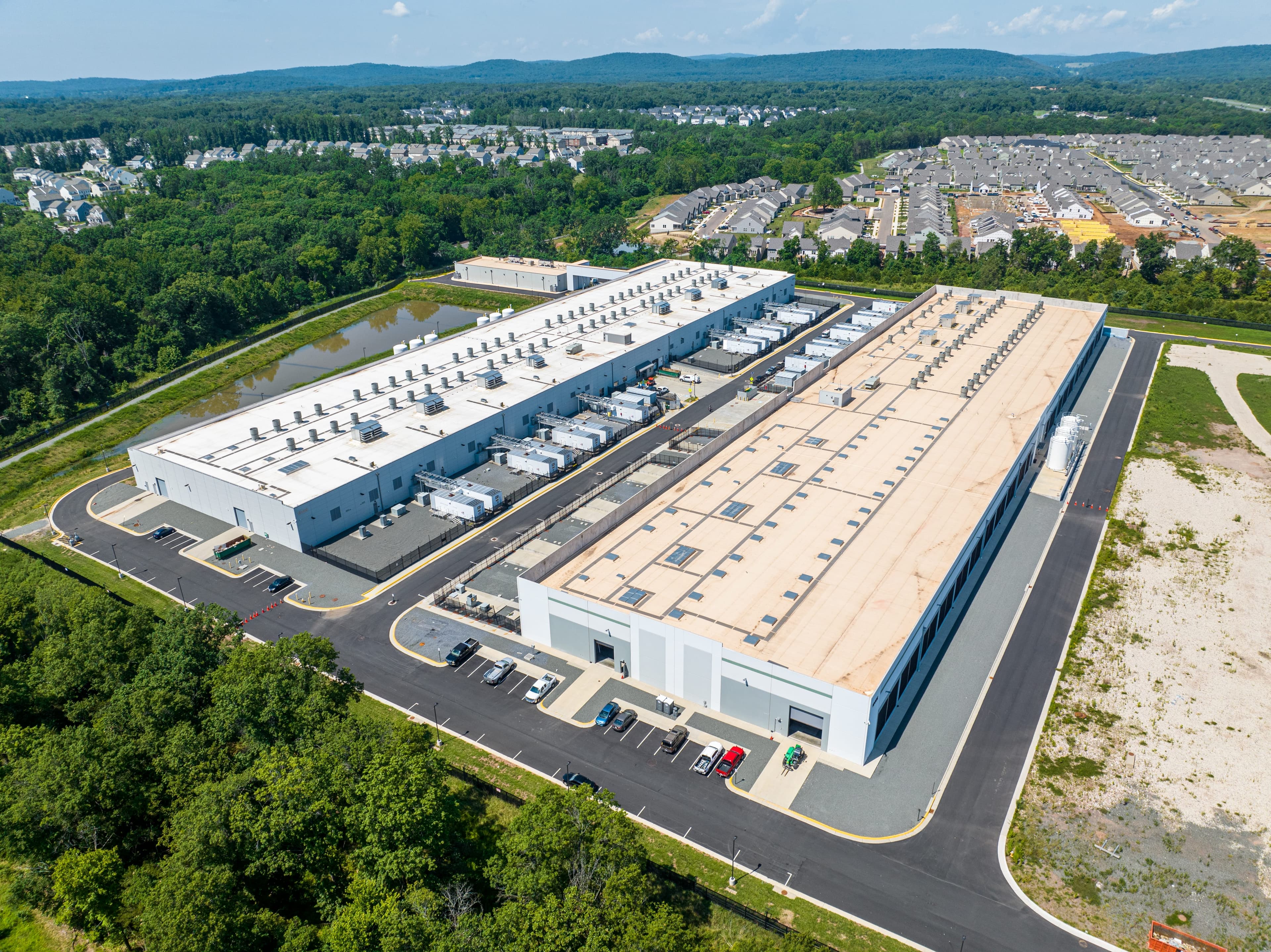
A data center is a facility dedicated to housing computer equipment for storing, manipulating and transmitting digital information, and it typically includes servers, storage devices, networking equipment, electricity distribution, cooling systems and security measures [2]. Opposition to AI data centers has taken the form of political and grassroots opposition, amid a drive in construction during the AI boom of the 2020s [3]. The contract's July 2026 reference to New York's order sits within that period of debate, though the supplied sources do not describe other state actions in detail.
Why It Matters
The contract measures a policy outcome rather than a company result: the number of states that adopt binding rules restricting new or expanded data center development in 2026 [1]. Because the rules count final adoption of a binding measure and keep states counted even if the measure is later enjoined or repealed, the contract tracks legal adoption events rather than the status of any measure at a given moment [1]. The contract's thresholds let a reader compare outcomes at different levels of state activity within one event [1].
Snapshot context
The latest published provider snapshot for this topic was observed on 2026-11-26 at 06:00 UTC. It contains listings from Kalshi. Market descriptions and listed closing times define the contracts; they do not establish that the real-world outcome has occurred. This article does not include a separately verified news update. [1]
Frequently Asked Questions
Does a city or county moratorium count toward the total?
No. Local measures are excluded from the contract, as are project-specific holds [1].
Does a state measure stop counting if a court blocks it?
No, provided the measure became legally operative. The rules keep a qualifying state counted if its measure later expires, is repealed, rescinded, superseded or enjoined [1].
Does a measure need to be called a moratorium?
No. The rules say the measure need not use the word moratorium, and a permanent prohibition also qualifies [1].
Does a pending bill or study count?
No. Pending legislation, studies, reporting requirements and tax-incentive changes do not qualify under the rules [1].
When does the market end?
The market data lists an end date of January 1, 2027 at 14:59 UTC [1]. This is the listed date in the market data, not an announced event, and the rules do not supply a separate end time.
AI-written background. References identify the evidence used; Wikipedia links under Learn More are additional reading. Prices and provider rules are dated snapshots. This is not financial advice.
Related prediction markets
Prices are catalog snapshots and may have changed. Check each market's rules and observation time.
Which states will enact data center moratoriums before 2028?
PM $6.51M · K 17.6K contractsWill Indiana enact a data center moratorium by December 31, 2027?
Kalshi: Will any state enact data center moratorium legislation before Jan 1, 2028?
Related contracts
Will Indiana enact a data center moratorium by June 30, 2027?
Kalshi: Will any state enact data center moratorium legislation before Jul 1, 2027?
Related contracts
Will Indiana enact a data center moratorium by December 31, 2027?
Kalshi: Will Indiana enact a data center moratorium before 2028?
Related contracts
Related or unreviewed contracts may settle differently. Their gap is not an equivalent-contract comparison.
Saved prices; check contract rules.

US private data center construction spending in October
K 470.2 contracts
Americas data center capacity at the end of 2026
K 1.6K contracts
Which bills will become law in 2026?
PM $231.4K · K 749.3K contractsWill Export-control chip security become law this year?
Kalshi: Will legislation that requires location-verification security mechanisms on certain advanced chips before export become law before Jan 1, 2027?
Same question, fine print differs
Will AI-chip export licensing become law this year?
Kalshi: Will legislation that subjects covered AI-chip exports to mandatory congressional review with a statutory blocking period become law before Jan 1, 2027?
Same question, fine print differs
Will Data center utility cost protection become law this year?
Kalshi: Will legislation that prohibits data center power usage from increasing consumers' electric utility bills become law before Jan 1, 2027?
Same question, fine print differs
Related or unreviewed contracts may settle differently. Their gap is not an equivalent-contract comparison.
Saved prices; check contract rules.

What will Jensen Huang say during the Senate Oversight hearing?
K 5.7K contracts
Closest Governor race in 2026?
K 222.7K contractsMarket Insights
Price gaps of 2 pp+
0
Same-question pairs
0
No outcomes on this page have been reviewed as the same question on both platforms yet.
Price differences do not establish arbitrage. Check each pair's review, current order prices, fees and settlement rules.
