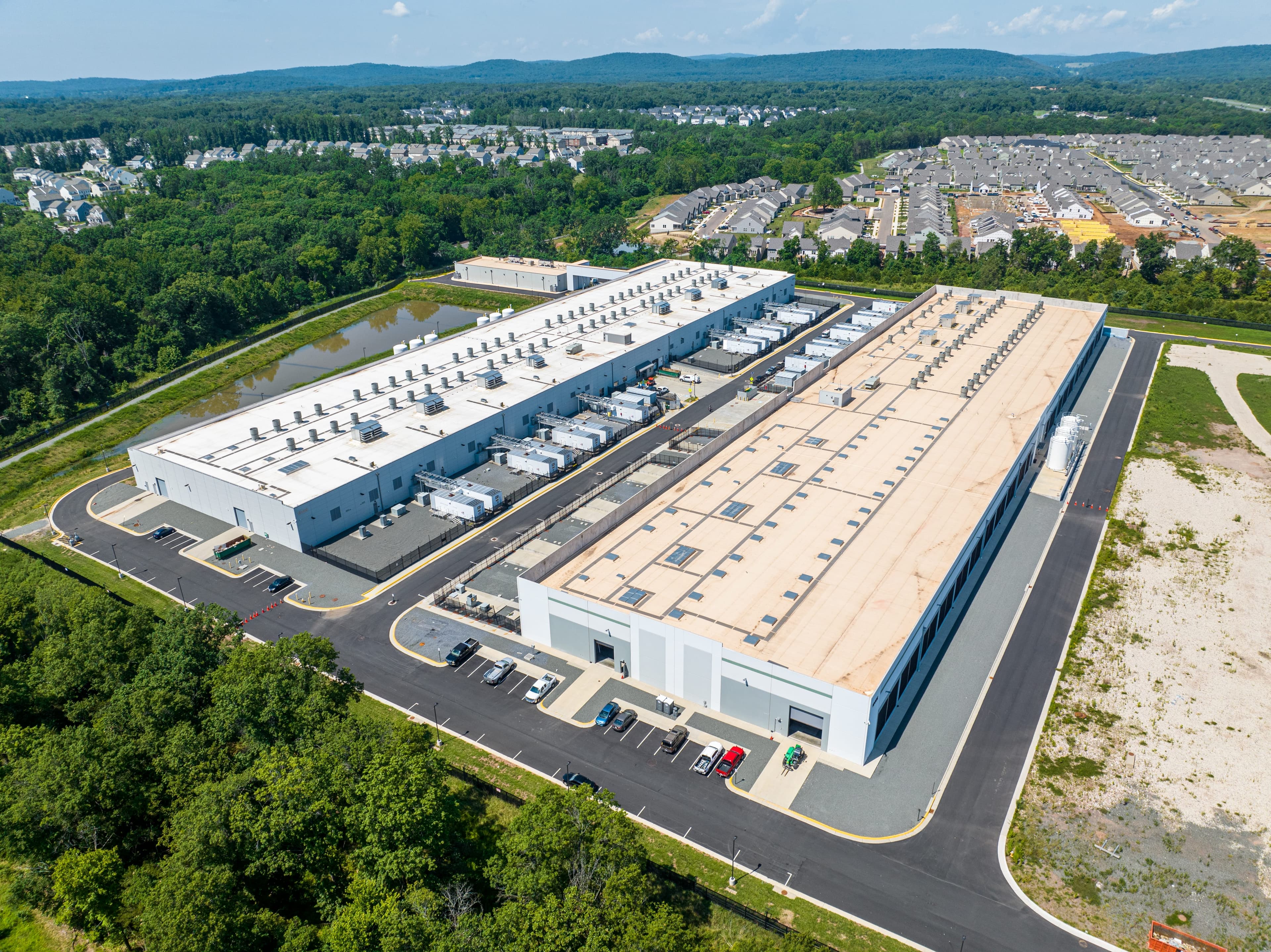
Indiana enacts data center moratorium by...?
PM $7.13M · K 40.2K contracts
5
15
- Reported volume
- PM $7.13M · K 40.2K contracts
- Events
- 5
- Markets
- 15
Polymarket vs Kalshi
Snapshot from
As of Nov 22, 2026, 12:00 PM UTC, Yes is priced at 24.6% on Polymarket and 25% on Kalshi.
| Outcome (Yes price) | Polymarket | Kalshi | Gap |
|---|---|---|---|
| Yes | 24.6% | 25% | 0.5 pts |
| Same question, fine print differs | |||
Yes prices for outcomes an automated review found to ask the same question on both platforms. They are not order quotes; check each platform's rules, fees and live prices before trading.
AI Analysis
Trader mode: Market mechanics, assumptions and risks
PM $7.13M · K 40.2K contracts
Reported volume · provider units
15
Saved contracts
1
Same-question pairs
Source snapshot: Nov 22, 2026, 12:00 PM UTC
This analysis was written from an earlier market snapshot, so its prices may be older than the odds above.
Snapshot observed Nov 18, 2026, 12:00 PM UTC. This analysis describes that snapshot and is not a live news update.
What the contract measures
These markets ask whether a qualifying statewide data center moratorium becomes law within a stated window. The Kalshi event asks whether any state will enact such legislation, and its wording covers a moratorium that "temporarily or indefinitely prohibits, suspends, or pauses" approval, permitting, construction, grid connection, or operation of new data centers, or a defined category of them [1]. Executive orders, agency or utility-commission decisions, citizen ballot measures, and local ordinances do not count [1].
The Polymarket state-level contracts use a similar but not identical test. For Indiana and Ohio, a qualifying measure must establish a statewide moratorium, and tax-incentive suspensions alone, local moratoriums, and partial-state measures do not qualify [3][4]. Resolution depends on the enactment date, not the effective date [3][4]. A general Polymarket contract asks about any state, with a deadline of December 31, 2026, 11:59 PM ET, and says a vetoed bill that does not take effect does not qualify [2].
Reading the snapshot
The saved prices were observed at 12:00 UTC on November 18, 2026. They are snapshots, not executable quotes or verified probabilities, and they may no longer match current markets.
Kalshi's "any state" contracts rise with the deadline: Yes was 0.265 for enactment before January 1, 2027, 0.615 before July 1, 2027, and 0.915 before January 1, 2028 [1]. Polymarket's general contract showed Yes at 0.2465 for December 31, 2026 [2]. Those two December 2026 figures come from different providers, with different wording and listed close times, so they should not be averaged or treated as one measure.
For Indiana, Yes was 0.0195 for December 31, 2026, 0.105 for June 30, 2027, 0.195 for December 31, 2027, and 0.305 for December 31, 2028 [3]. Ohio's Yes prices were 0.0255, 0.095, 0.195, and 0.275 for the same respective deadlines [4]. The sampled markets are complete for each saved event, but the sample does not establish that every possible outcome is listed.
Reported volume is not liquidity or a count of traders. Polymarket reports dollars and Kalshi reports contracts, so the totals cannot be compared or added.
What remains uncertain
The evidence does not explain why any price changed, and it contains no recent legislative news or upcoming scheduled votes. Some Kalshi rule text contains unclear date placeholders, so the exact wording should be checked on the provider page. Several listed close times also differ from the stated deadline. Kalshi's close dates fall about a week after its nominal dates, and Polymarket's close times fall in early January 2027 and later, so the close time should be read alongside each contract's own rules. Neither the snapshot nor the rules establish an outcome, and a price is not a forecast of which result will occur.
References
- Kalshi: Will any state enact a data center moratorium law?. Provider data observed Nov 18, 2026, 12:00 PM UTC.
- Polymarket: Will any state enact a data center moratorium by December 31?. Provider data observed Nov 18, 2026, 12:00 PM UTC.
- Polymarket: Indiana enacts data center moratorium by...?. Provider data observed Nov 18, 2026, 12:00 PM UTC.
- Polymarket: Ohio enacts data center moratorium by...?. Provider data observed Nov 18, 2026, 12:00 PM UTC.
Snapshot observed Nov 18, 2026, 12:00 PM UTC. This analysis describes that snapshot and is not a live news update.
What the contract measures
These contracts ask whether a data center moratorium becomes law within a stated scope and window. The wording differs across platforms, so the contracts are not interchangeable. Kalshi's event asks whether "any state" enacts a qualifying law, and its rules say a law that "temporarily or indefinitely prohibits, suspends, or pauses" new data centers, or a defined category of them, can qualify [1]. Polymarket's any-state contract requires a statewide moratorium enacted "by December 31, 2026, 11:59 PM ET," and names official state records and, as a fallback, "a consensus of credible reporting" as resolution sources [2]. The Indiana and Ohio contracts require a statewide measure, with a subset of data centers above 100 MW counting, and state that resolution depends on the enactment date rather than the effective date [3][4].
Reading the snapshot
The provider data was observed at Nov 18, 2026, 12:00 PM UTC and retrieved at 12:22:42Z, so these are prices from that earlier observation, not live quotes. Kalshi's "before Jan 1, 2027" Yes price was 0.265, while Polymarket's any-state "by December 31" Yes price was 0.2465 [1][2]. These figures use different wording and different windows, so they should not be averaged or treated as one estimate.
Within Polymarket's Indiana event, the Yes prices rise with the deadline: 0.0195 for December 31, 2026, 0.105 for June 30, 2027, 0.195 for December 31, 2027, and 0.305 for December 31, 2028 [3]. Ohio's Yes prices follow a similar sequence, from 0.0255 to 0.275 across the same deadlines [4]. Listed end times in the provider data, such as Jan 1, 2027, 4:59 AM UTC for the December 2026 contracts, reflect the provider's close setting and are not announced event dates. Kalshi's listed end dates also differ from the wording, for example January 8, 2028 for a contract phrased "before Jan 1, 2028" [1].
Reported volumes are each provider's own totals in different units and should not be compared or added.
What remains uncertain
The sample includes every saved market for these four events, but the source states that this "does not establish that the providers list every possible real-world outcome" [1][2][3][4]. The data does not explain why any price moved, how many traders hold each view, or what legislative activity is underway. Prices are not verified probabilities, and differences between contracts are not, by themselves, an arbitrage opportunity.
References
- Kalshi: Will any state enact a data center moratorium law?. Provider data observed Nov 18, 2026, 12:00 PM UTC.
- Polymarket: Will any state enact a data center moratorium by December 31?. Provider data observed Nov 18, 2026, 12:00 PM UTC.
- Polymarket: Indiana enacts data center moratorium by...?. Provider data observed Nov 18, 2026, 12:00 PM UTC.
- Polymarket: Ohio enacts data center moratorium by...?. Provider data observed Nov 18, 2026, 12:00 PM UTC.
AI-generated analysis based on market data. Not financial advice.
Saved Nov 18, 2026 UTCThis article was written from an earlier market snapshot and may be out of date. Use the dated market data and provider rules above for current information.
Overview
This contract family asks whether a U.S. state will enact a statewide moratorium on new data centers. Provider rules describe a qualifying measure as binding legislation that temporarily or indefinitely prohibits, suspends, or pauses the approval, permitting, construction, grid connection, or operation of new data centers, or a defined category of them, within the enacting state [1][2][3]. Each provider event is a separate rulebook, so the wording that decides a market can differ from one event to the next. The saved provider observations were recorded at 03:00 UTC on 15 November 2026, and the source records were retrieved later that morning at 05:52 UTC. These are historical snapshots of contract rules and prices at those times. They do not show what has happened since, and they do not confirm any current legislative status. Enactment is the central test. Under the provider rules, passage by one or both legislative chambers does not count, and neither does a governor's announced intent to sign or a provisional passage [1][3][4]. The bill must complete the state's own constitutional and legal process, which can include a governor's signature, becoming law without signature, or a veto override [2][3]. Provider rules also differ on ballot measures. The Indiana and Ohio event rules say a statewide referendum approval counts on the election day it was approved [3][4], while the Kalshi rules exclude citizen-initiated ballot measures [1]. The rules also narrow what qualifies. Executive orders, agency or utility-commission decisions, and local ordinances do not count under the Kalshi rules [1]. The Indiana and Ohio rules exclude suspensions of tax incentives or economic development awards and measures adopted by a local government or limited to part of the state [3][4]. The Indiana and Ohio rules also treat a measure covering all new data centers above a 100 MW interconnection capacity as a qualifying subset [3][4]. Under the Kalshi rules, laws that only limit tax incentives, set electricity rates or cost allocation, set siting standards, or order a study do not qualify [1]. Timing is handled in specific ways. The Indiana and Ohio rules say resolution depends on the enactment date, not the effective date, and that later judicial invalidation, repeal, or failure to implement a law does not change the outcome [3][4]. The Kalshi rules say enactment occurs regardless of pending judicial challenges [1]. The general Polymarket rules say vetoed bills that do not take effect do not qualify [2]. The saved snapshot includes several deadlines for the same underlying question. The Polymarket rule for a December 31, 2026 deadline lists an end time of 2027-01-01T04:59 UTC, which corresponds to 11:59 PM ET on December 31, 2026 [2]. These are deadlines written into contract rules, not announced legislative events. Because each deadline is a separate contract, differences in their prices reflect different time windows and should not be read as an arbitrage opportunity on their own.
Why It Matters
The contract measures whether a qualifying statewide moratorium on new data centers becomes binding state law by a stated deadline. Its meaning depends on the exact provider rules, especially the definition of a moratorium, the enactment process, and whether the measure must cover all new data centers or a defined subset [1][2][3][4]. A reader comparing contracts should check which rulebook applies, because a ballot measure, a local ordinance, or a tax-incentive suspension may count under one event and not another [1][3][4]. The prices in the snapshot are provider observations at the recorded times. They are not executable quotes or verified probabilities. Reported volume is also limited in use. Each provider reports volume for its own event in its own units, so Polymarket dollars and Kalshi contracts cannot be added or compared. Volume does not measure liquidity or the number of participants.
Snapshot context
The latest published provider snapshot for this topic was observed on 2026-11-15 at 03:00 UTC. It contains listings from Kalshi and Polymarket. Market descriptions and listed closing times define the contracts; they do not establish that the real-world outcome has occurred. This article does not include a separately verified news update. [1]
Frequently Asked Questions
What counts as enactment under these contracts?
Enactment generally requires that the bill complete the state's constitutional and legal process, such as a governor's signature, becoming law without signature, or a veto override [2][3]. Passage by one or both chambers, a governor's announced intent to sign, or provisional passage does not count [1][3][4].
Does a court challenge prevent a Yes resolution?
Under the Kalshi rules, enactment occurs regardless of pending judicial challenges [1]. The Indiana and Ohio rules say later judicial invalidation does not change resolution, which depends on the enactment date [3][4].
Would a local data center ban count?
No. The Kalshi rules exclude local ordinances [1], and the Indiana and Ohio rules exclude measures adopted by a local government or limited to part of the state [3][4].
Would a ballot measure count?
It depends on the provider. The Kalshi rules exclude citizen-initiated ballot measures [1]. The Indiana and Ohio rules count a statewide referendum approval on the election day it was approved, as reflected in certified results [3][4].
Why are there several deadlines for the same state question?
Each deadline is a separate contract with its own end date in the provider rules, such as December 31, 2026 or June 30, 2027 [1][2][3][4]. These dates are deadlines written into contract terms, not announced legislative events.
AI-written background. References identify the evidence used; Wikipedia links under Learn More are additional reading. Prices and provider rules are dated snapshots. This is not financial advice.
Related prediction markets
Prices are catalog snapshots and may have changed. Check each market's rules and observation time.

Which states will enact data center moratoriums before 2028?
K 3.7K contracts
Louisiana enacts data center moratorium by...?
PM $925.4K
Missouri enacts data center moratorium by...?
PM $918.5K
Oklahoma enacts data center moratorium by...?
PM $869.4K
Texas enacts data center moratorium by...?
PM $839.3K
North Carolina enacts data center moratorium by...?
PM $354.3KMarket Insights
Price gaps of 2 pp+
0
Same-question pairs
1
Largest saved gap: 0.5 percentage points.
Price differences do not establish arbitrage. Check each pair's review, current order prices, fees and settlement rules.