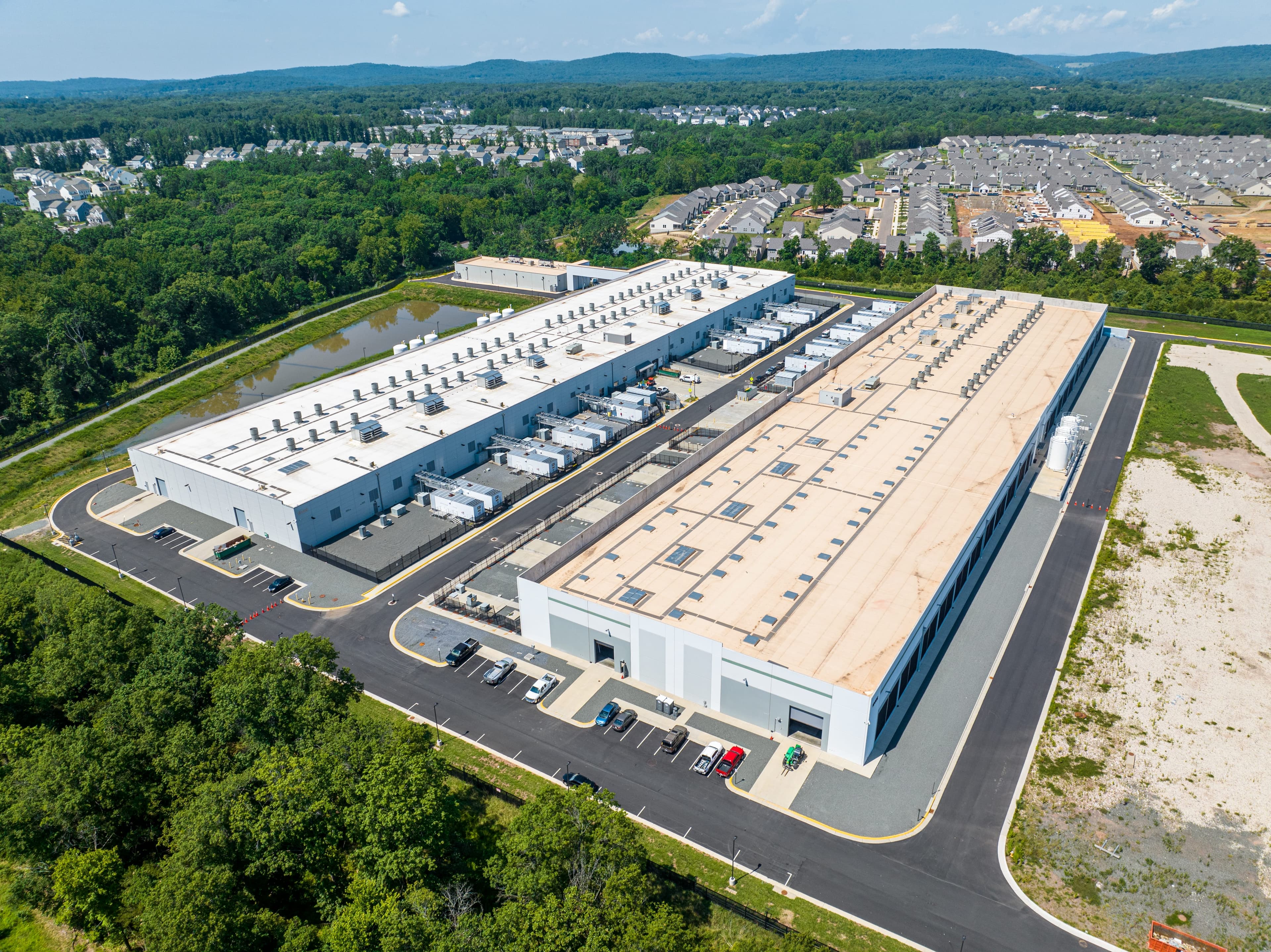
Will any state enact a data center moratorium law?
PM $62.5K · K 10.5K contracts
2
4
Will any state enact a data center moratorium law?
PM $62.5K · K 10.5K contracts
2
4
Polymarket vs Kalshi
Snapshot from
As of Oct 31, 2026, 9:00 AM UTC, Yes is priced at 27.1% on Polymarket and 28.5% on Kalshi.
| Outcome (Yes price) | Polymarket | Kalshi | Gap |
|---|---|---|---|
| YesSame question, fine print differs | 27.1% | 28.5% | 1.5 pts |
Yes prices for outcomes an automated review found to ask the same question on both platforms. They are not order quotes; check each platform's rules, fees and live prices before trading.
AI Analysis
Trader mode: Market mechanics, assumptions and risks
PM $62.5K · K 10.5K contracts
Reported volume · provider units
4
Saved contracts
1
Same-question pairs
Source snapshot: Oct 31, 2026, 9:00 AM UTC
About This Event
Before Jan 1, 2028 If legislation that temporarily or indefinitely prohibits, suspends, or pauses the approval, permitting, construction, connection to the electrical grid or other utility infrastructure, or operation of new data centers, or a defined category of new data centers, within the enacting state has become law in any U.S. state before X 1, Y then the market resolves to Yes. Enactment requires completion of all constitutional and legal requirements for the legislation to become binding law. Standard legislation requiring executive approval: final passage by all required legislative bodies, executive signature OR becoming law despite executive inaction OR successful veto override, and satisfaction of any required waiting periods Legislation not requiring executive approval: final passage and completion of required waiting periods The following do NOT constitute enactment: Legislative passage without completed executive action Passage by only some required bodies Provisional passage Non-binding resolutions Draft orders Enactment occurs when all requirements are completed, regardless of pending judicial challenges. Only legislation enacted by a state legislature after Issuance qualifies. Executive orders, agency, utility-commission or permitting decisions, citizen-initiated ballot measures, and local ordinances do not qualify. X law that only limits tax incentives, sets electricity rates or cost allocation, sets siting standards, or orders a study does not qualify. X moratorium limited to a defined category of new data centers, such as those above a power-demand threshold, qualifies. This market will close and expire early if the law is enacted
This analysis is awaiting a background update, so its prices may be older than the odds above.
Snapshot observed 2026-10-16T00:00:06.034Z. This analysis describes that snapshot and is not a live news update.
What the contract measures
This event asks whether any U.S. state will enact a data center moratorium law. According to the saved rules, a qualifying law is one that "temporarily or indefinitely prohibits, suspends, or pauses the approval, permitting, construction, connection to the electrical grid or other utility infrastructure, or operation of new data centers, or a defined category of new data centers" [1]. The rules state that "Enactment occurs when all requirements are completed, regardless of pending judicial challenges" [1]. Laws that only limit tax incentives, set electricity rates, set siting standards, or order a study do not qualify, and neither do executive orders or local ordinances [1].
The three saved Kalshi markets share this rule text but have different deadlines: before January 1, 2027, before July 1, 2027, and before January 1, 2028 [1]. The rule text in the saved excerpt still shows placeholder dates ("before X 1, Y"), so readers should confirm the operative date in the live contract. The listed end dates for the three markets differ, and the excerpt itself says the listed end time was "not supplied" [1]. Because each market asks about a different window, their prices are not estimates of one shared outcome.
Reading the snapshot
The saved prices were observed at 2026-10-16T00:00:06Z and retrieved at 01:52 UTC the same day [1]. They describe that moment only and are not executable quotes or verified probabilities.
- Before January 1, 2027: Yes 0.265, No 0.735 [1].
- Before July 1, 2027: Yes 0.60, No 0.40 [1].
- Before January 1, 2028: Yes 0.90, No 0.10 [1].
Within each market, the Yes and No prices sum to about 1. Across markets, the Yes prices rise as the deadline lengthens, which is consistent with the longer windows covering more time, but the snapshot does not explain why any price is where it is. The three prices should not be averaged or combined into a single figure. Their differing close times mean a gap between them does not signal an arbitrage opportunity.
What remains uncertain
All three markets come from one provider event, and the saved sample includes all three of its markets, so this is not a partial sample [1]. The sample warning states that this "does not establish that the providers list every possible real-world outcome" [1]. The evidence does not include trading volume, the number of participants, or any recent legislative developments, so it cannot show whether these prices reflect liquidity or current events. Readers should check the live contract for the current status, closing times, and final rule wording.
References
- Kalshi: Will any state enact a data center moratorium law?. Provider data observed 2026-10-16T00:00:06.034Z.
AI-generated analysis based on market data. Not financial advice.
Saved Oct 16, 2026 UTCThis saved content is awaiting a background update. It may contain outdated claims; use the dated market data and provider rules for the latest available information.
Overview
This PredictPedia contract asks whether any U.S. state will enact a law that pauses or prohibits new data centers before a set date. The contract is listed on Kalshi under the event title "Will any state enact a data center moratorium law?" [1]. The category is Politics, and the saved event includes three related markets with different deadlines: January 1, 2027, July 1, 2027, and January 1, 2028 [1]. A data center is a physical room, building, or facility used to store, manage, and disseminate data and information. It houses IT infrastructure and can also be used to train artificial intelligence [2]. The United States' Energy Independence and Security Act of 2007 defines a data center as "any facility that primarily contains electronic equipment used to process, store, and transmit digital information" [2]. Data centers in general are not new. According to IBM, as cited in the same reference, they date back to the 1940s, with the U.S. military's ENIAC computer given as an early example [2]. The contract's rules focus on state legislation. A Yes outcome requires legislation that temporarily or indefinitely prohibits, suspends, or pauses the approval, permitting, construction, grid connection, or operation of new data centers, or of a defined category of new data centers, within the enacting state [1]. A moratorium limited to a category, such as facilities above a power-demand threshold, can qualify [1].
Historical Context
The supplied background describes state and federal governments as having developed some regulation of artificial intelligence, including executive orders, federal laws, and state laws, along with sector-specific agency rules [3]. Data centers have a long history as computing facilities, with ENIAC cited as an early example [2]. The sources do not describe any specific state data center moratorium law, its history, or its legislative path, so no further history of such laws is provided here.
Why It Matters
The contract measures whether a specific type of legislative action happens at the state level. Under the listed rules, a law must be fully enacted to count. Legislative passage without completed executive action does not qualify, and neither does passage by only some required bodies, provisional passage, non-binding resolutions, or draft orders [1]. Enactment occurs once all requirements are completed, even if a judicial challenge is pending [1]. The rules also exclude several kinds of actions. Executive orders, agency, utility-commission, or permitting decisions, citizen-initiated ballot measures, and local ordinances do not qualify [1]. A law that only limits tax incentives, sets electricity rates or cost allocation, sets siting standards, or orders a study also does not qualify [1]. These distinctions matter because a state could take many data center related actions that would not resolve the contract. The listed prices are snapshots from the observation time shown in the header, not executable quotes or verified probabilities. In the saved sample, the Yes price was 0.265 for the January 1, 2027 deadline, 0.60 for July 1, 2027, and 0.90 for January 1, 2028 [1]. The No prices were the complements in each market. These figures reflect what the platform showed at that moment. They do not indicate how likely enactment is, and the three markets have different deadlines, so their prices should not be read as a single forecast.
Snapshot context
The latest published provider snapshot for this topic was observed on 2026-10-16 at 00:00 UTC. It contains listings from Kalshi. Market descriptions and listed closing times define the contracts; they do not establish that the real-world outcome has occurred. This article does not include a separately verified news update. [1]
Frequently Asked Questions
What counts as enactment under this contract?
Enactment requires completion of all constitutional and legal requirements for the legislation to become binding law. For legislation needing executive approval, this means final passage by all required bodies, followed by executive signature, becoming law without executive action, or a successful veto override, plus any required waiting periods [1].
Do executive orders or local ordinances count?
No. Executive orders, agency, utility-commission or permitting decisions, citizen-initiated ballot measures, and local ordinances do not qualify. Only legislation enacted by a state legislature qualifies [1].
Does a pending court challenge prevent a law from counting?
The listed rules state that enactment occurs when all requirements are completed, regardless of pending judicial challenges [1].
Why does the saved event include three markets?
The saved event lists three markets with different deadlines: January 1, 2027, July 1, 2027, and January 1, 2028. All three were included in the saved sample, which does not establish that the provider lists every possible outcome [1].
What does the contract say happens if a law is enacted early?
The rules state that the market will close and expire early if the law is enacted [1].
AI-written background. References identify the evidence used; Wikipedia links under Learn More are additional reading. Prices and provider rules are dated snapshots. This is not financial advice.
Related prediction markets
Prices are catalog snapshots and may have changed. Check each market's rules and observation time.

Which states will enact data center moratoriums before 2028?
K 1.6K contracts
How many states will adopt data center moratoriums in 2026?
K 15.2K contracts
Indiana enacts data center moratorium by...?
PM $6.40M
Missouri enacts data center moratorium by...?
PM $858.4K
Louisiana enacts data center moratorium by...?
PM $850.6K
Oklahoma enacts data center moratorium by...?
PM $849.2KMarket Insights
Price gaps of 2 pp+
0
Same-question pairs
1
Largest saved gap: 1.5 percentage points.
Price differences do not establish arbitrage. Check each pair's review, current order prices, fees and settlement rules.