$62.94K
1
2

$62.94K
1
2
Trader mode: Actionable analysis for identifying opportunities and edge
This market will resolve to "Yes" if Mahmoud Abbas ceases to be President of the Palestinian National Authority for any length of time by the specified date, 11:59 PM ET. Otherwise, this market will resolve to "No". Mahmoud Abbas will be considered to be removed from power if he resigns, is detained, or otherwise loses his position or is prevented from fulfilling his duties as President of the Palestinian National Authority within this market's timeframe. The primary resolution source for this
AI-generated analysis based on market data. Not financial advice.
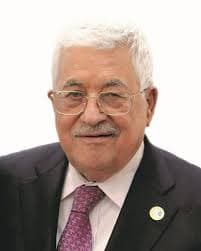
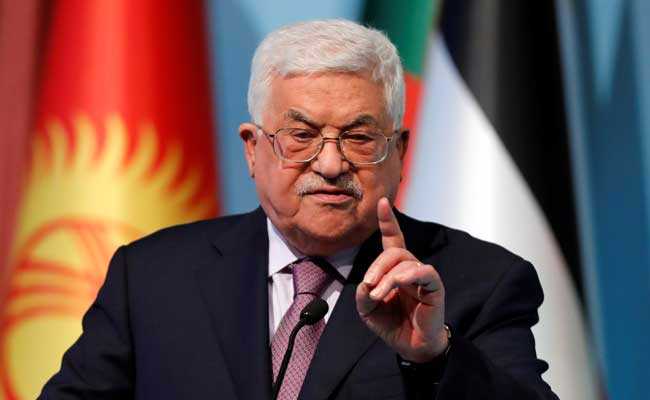
This prediction market addresses the potential departure of Mahmoud Abbas from the presidency of the Palestinian National Authority (PNA). Mahmoud Abbas, also known as Abu Mazen, has led the PNA since 2005 and the Palestine Liberation Organization (PLO) since 2004. The market resolves to 'Yes' if he ceases to hold the presidency for any period before the specified deadline, whether through resignation, detention, incapacitation, or any other form of removal. His continued rule has become a central point of political uncertainty within Palestinian governance, especially given his advanced age, the lack of a clear successor, and the PNA's declining legitimacy among Palestinians. Interest in this topic stems from its implications for Palestinian political stability, the future of Israeli-Palestinian relations, and the potential for internal conflict or realignment within Fatah, the dominant political faction. Recent years have seen increased public criticism of Abbas's leadership, particularly regarding his security coordination with Israel and the failure to hold national elections since 2006. The question of his departure is not merely about personnel change but touches on the fundamental structure of post-Oslo Palestinian authority and its capacity to represent Palestinian national aspirations.
The presidency of the Palestinian National Authority was established by the 1993 Oslo Accords as an interim administrative body. Yasser Arafat served as its first president from 1996 until his death in November 2004. Mahmoud Abbas, then the PLO Chairman, won a presidential election in January 2005 with 62% of the vote, succeeding Arafat. His original four-year term expired in January 2009. Since then, elections have been repeatedly postponed, leaving Abbas to govern by decree. The 2007 Fatah-Hamas split, which resulted in Hamas seizing control of Gaza, fundamentally fractured Palestinian territory and politics, weakening the PNA's authority. This division created a parallel governance structure that has lasted for over 17 years. The lack of a democratic mandate for over 15 years has eroded the PNA's domestic legitimacy. Past succession planning has been opaque. In 2009, Abbas created the post of Vice President but left it vacant. In 2015, he appointed long-time aide Mahmoud al-Aloul as his deputy in Fatah, but no formal vice president for the PNA was ever named, ensuring no clear constitutional line of succession exists.
The departure of Mahmoud Abbas could trigger a period of intense instability within the Palestinian political system. There is no agreed-upon mechanism for succession, raising the risk of a violent power struggle between Fatah factions, or between Fatah and Hamas. Such internal conflict could destabilize the West Bank, potentially leading to a security vacuum that Israel might feel compelled to fill with more direct military control, reversing decades of limited autonomy. For Israel, Abbas represents a known, predictable partner for security coordination. His replacement by a more militant or less cooperative figure could upend this arrangement, potentially increasing violence. For the United States and other international donors who provide billions in aid to the PNA, a chaotic transition threatens the institutions they fund and could jeopardize future assistance. Ultimately, the question of leadership is intertwined with the future of the Palestinian national project itself, influencing whether a unified, credible leadership can ever re-emerge to negotiate a potential two-state solution or if fragmentation becomes permanent.
As of early 2024, Mahmoud Abbas remains in power but faces mounting challenges. The war in Gaza that began in October 2023 has further weakened his standing, as many Palestinians view the PNA as ineffective and complicit. In February 2024, Abbas accepted the resignation of his Prime Minister, Mohammad Shtayyeh, and tasked his economic advisor, Mohammad Mustafa, with forming a new government. This move is widely interpreted as an attempt to introduce technocratic management and appease international demands for reform, but it does not address the fundamental succession question. Behind the scenes, factional maneuvering within Fatah continues, with figures like Hussein al-Sheikh consolidating administrative control while rivals like Mohammed Dahlan build external support. No formal process for selecting a successor has been announced.
The Palestinian Basic Law states that the Speaker of the Palestinian Legislative Council (PLC) assumes the presidency for 60 days until elections are held. However, the PLC has not functioned since 2007 due to the Fatah-Hamas split, and its speaker, Aziz Dweik, is a Hamas member. This creates a major constitutional crisis, making it likely that Fatah's internal mechanisms and power dynamics, not the law, would determine the interim leader.
There is no consensus successor. Hussein al-Sheikh, the PLO Secretary-General, is seen as a leading candidate from within Abbas's inner circle. Marwan Barghouti is the most popular figure but is imprisoned. Former security chief Mohammed Dahlan has significant external backing but faces fierce internal opposition. A collective leadership or a violent struggle between factions is a distinct possibility.
Elections have been repeatedly postponed due to the deep rift between Fatah and Hamas. Each side blames the other for preconditions. Fatah cites Hamas's refusal to disarm its militia in Gaza, while Hamas questions the neutrality of the electoral process under PNA control in the West Bank. Abbas has also been accused of avoiding elections to maintain his hold on power.
Educational content is AI-generated and sourced from Wikipedia. It should not be considered financial advice.
2 markets tracked

No data available
| Market | Platform | Price |
|---|---|---|
![]() | Poly | 47% |
![]() | Poly | 41% |


No related news found
Add this market to your website
<iframe src="https://predictpedia.com/embed/HFiMkt" width="400" height="160" frameborder="0" style="border-radius: 8px; max-width: 100%;" title="Mahmoud Abbas out as Palestinian President by...?"></iframe>