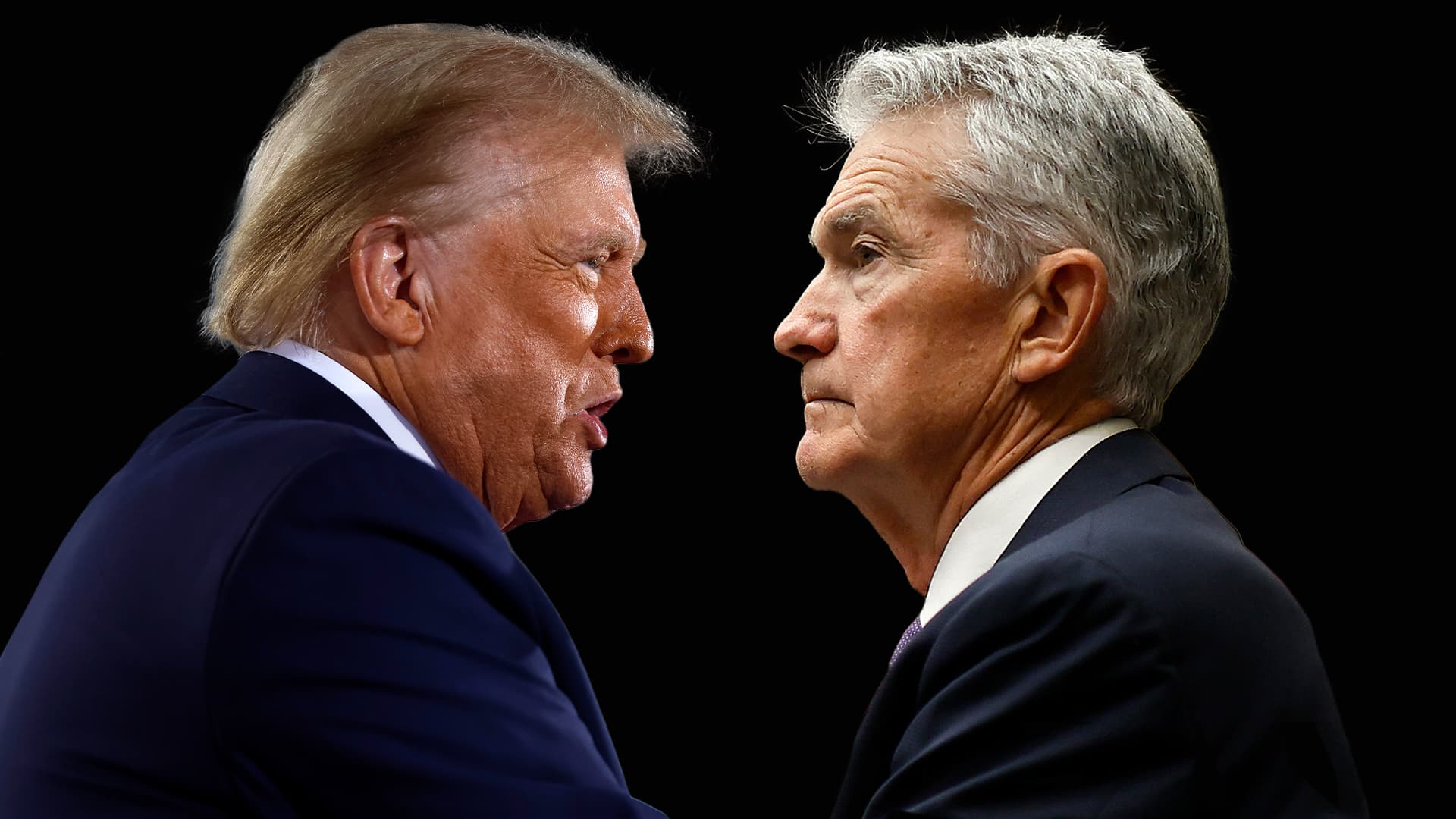
This event has ended. Showing historical data.
Jerome Powell out as Fed Chair by...?
$3.03M
1
5
Jerome Powell out as Fed Chair by...?
$3.03M
1
5
AI Analysis
Trader mode: Actionable analysis for identifying opportunities and edge
About This Event
This market will resolve to “Yes” if Jerome Powell ceases to be the Chair of the U.S. Federal Reserve for any period of time between this market's creation and the listed date, 11:59 PM ET. Otherwise, this market will resolve to “No”. The resolution source for this market will be information from the U.S. Government; however, a consensus of credible reporting will also suffice.
This saved analysis is awaiting a background update. Its prices and claims may be outdated; compare them with the dated market data above.
Current Market Outlook
Polymarket is pricing a 99% chance that Jerome Powell is out as Fed Chair by June 30, 2026. That's about as close to a certainty as prediction markets get, and for good reason: Powell's current term as Chair expires in May 2026, and President Trump has already stated publicly that he intends to nominate a successor. The market isn't predicting a scandal or a forced resignation. It's simply pricing in the calendar.
The $3.0 million in volume across five related markets shows traders are confident enough to put real money behind this outcome. A 99% price means the market views any scenario where Powell remains Chair past June 30 as a genuine surprise, not a plausible alternative.
Key Factors Driving the Odds
The biggest factor is simple math. Powell's four-year term as Chair ends in May 2026, and Trump has made no secret of his desire to replace him. The President told reporters in April 2025 that he was "very angry" with Powell over rate cuts and would replace him at the earliest opportunity. Trump has repeatedly criticized the Fed's monetary policy, particularly its independence and its handling of inflation.
There's also the legal dimension. While a President cannot fire a Fed Chair without cause under current statute, the Supreme Court's 2025 ruling in Trump v. Wilcox removed some of those protections, giving the White House more latitude over independent agency heads. That ruling shifted the legal landscape, though the market doesn't need it to resolve "Yes" anyway.
The Fed's own succession planning matters here too. The central bank typically prefers orderly transitions, and Powell himself has said he intends to serve out his term. But the White House controls the nomination, and Senate confirmation for a new Chair is likely given Republican control of the chamber.
What Could Change These Odds
The only realistic path to a "No" resolution would be Powell resigning early and being replaced before June 2026, which still resolves "Yes." For the market to be wrong, Powell would need to remain Chair past June 30, 2026, which would require either a failed nomination process or a dramatic political reversal.
There's also the possibility of a recession or market crisis that makes the White House reluctant to change Fed leadership mid-storm. But even that scenario only delays the inevitable. Powell's departure is a matter of when, not if, and the market's 99% price reflects that certainty. At these odds, the market is pricing in a foregone conclusion, and the only real question is who replaces him.
AI-generated analysis based on market data. Not financial advice.
Saved Aug 27, 2026 UTCThis saved content is awaiting a background update. It may contain outdated claims; use the dated market data and provider rules for the latest available information.
Overview
Jerome Powell, born February 4, 1953, has served as the 16th Chair of the Board of Governors of the Federal Reserve System since February 5, 2018. His current term as Chair expires on May 15, 2026, while his term as a member of the Board of Governors runs until January 31, 2028. This prediction market asks whether Powell will cease to be Fed Chair before a specified date, reflecting political and economic uncertainty surrounding his leadership. Powell, a Republican and former investment banker at Carlyle Group, was appointed by President Donald Trump in 2017 and later reappointed by President Joe Biden in 2022, making him the first Fed Chair in decades to be reappointed by a president of the opposing party. His leadership has been marked by significant monetary policy decisions, including the response to the COVID-19 pandemic, the post-pandemic inflation surge, and the aggressive interest rate hikes from 2022 to 2023. The market’s outcome depends on whether Powell resigns, is removed, or otherwise leaves the role before the market’s expiration date, which could occur due to political pressure, legal challenges, or personal decisions. Interest in this market has grown as former President Trump, now a candidate for the 2024 election, has publicly criticized Powell and suggested he might not reappoint him, though removing a sitting Fed Chair is legally complex and historically unprecedented. The Federal Reserve’s independence is a cornerstone of U.S. economic policy, and any change in leadership would have significant implications for markets, inflation, and global financial stability. Thus, this market captures a unique intersection of politics, economics, and institutional governance, making it a topic of broad interest to investors, policymakers, and the public.
Historical Context
The Federal Reserve’s independence has been a cornerstone of U.S. monetary policy since the Treasury-Fed Accord of 1951, which ended the practice of the Fed pegging interest rates to finance government debt. Since then, no president has successfully removed a sitting Fed Chair, though several have tried to exert pressure. In 1979, President Jimmy Carter appointed Paul Volcker, who raised rates dramatically to combat inflation, but Carter never attempted to remove him despite political concerns. In 1987, President Ronald Reagan reappointed Alan Greenspan, who served for 18 years across four presidents, demonstrating the tradition of continuity. The only instance of a Fed Chair leaving early was in 1951, when Thomas McCabe resigned due to policy disagreements, but that was voluntary and not due to political pressure. More recently, President Trump publicly criticized Powell in 2018 and 2019 over rate hikes, and even floated the idea of firing him, but Powell remained in office until Trump’s term ended. The legal framework for removing a Fed Chair is unclear; the Federal Reserve Act allows the President to remove a governor 'for cause,' but it is debated whether the Chair can be removed without cause. Some legal scholars argue that the Chair serves at the pleasure of the President, while others contend that the position is protected to ensure central bank independence. This historical context is crucial for understanding the current market, as any attempt to remove Powell would face significant legal and political hurdles, and no precedent exists for such an action in modern times.
Why It Matters
The outcome of this market has profound implications for the U.S. economy and global financial markets. The Federal Reserve’s independence is considered essential for credible monetary policy, and any perceived political interference could undermine investor confidence, leading to market volatility, higher borrowing costs, and a weaker dollar. If Powell were replaced by a more dovish chair, it could signal a shift toward lower interest rates, potentially fueling inflation but boosting short-term economic growth. Conversely, a more hawkish replacement might prioritize fighting inflation at the expense of employment, affecting the cost of mortgages, credit cards, and business loans for millions of Americans. Beyond the immediate economic impact, the market reflects broader political tensions around the Fed’s role in the economy, with some politicians advocating for greater oversight and others defending its independence. The decision could also set a precedent for future central bank governance, either reinforcing the tradition of independence or opening the door to more political control. For investors, the market offers a way to hedge against policy uncertainty, while for the public, it highlights the delicate balance between democratic accountability and expert decision-making in monetary policy. Ultimately, the question of Powell’s tenure is not just about one person, but about the future of economic governance in the United States.
AI-written background. References identify the evidence used; Wikipedia links under Learn More are additional reading. Prices and provider rules are dated snapshots. This is not financial advice.