$13.61K
1
1

1 market tracked

No data available
| Market | Platform | Price |
|---|---|---|
![]() | Poly | 7% |
Trader mode: Actionable analysis for identifying opportunities and edge
This market will resolve to "Yes" if a natural volcanic eruption with a Volcanic Explosivity Index (VEI) of 6 or higher occurs between the market's creation and December 31, 2026, 11:59 PM ET. Otherwise, this market will resolve to “No”. The primary resolution source will be the Smithsonian Institution Global Volcanism Program (GVP: https://volcano.si.edu/), specifically the ‘VEI 6’ figure for 2026 released on the page currently titled "Eruptions Avg 2000-2024 (N/T)" (https://volcano.si.edu/faq
Prediction markets are pricing in a low probability for a major volcanic eruption in 2026. On Polymarket, the "Yes" share trades at 7¢, implying just a 7% chance that a Volcanic Explosivity Index (VEI) 6 or higher eruption will occur before the end of 2026. A 7% chance suggests the market views this catastrophic geological event as very unlikely within the specified timeframe, though not impossible. With only $14,000 in total trading volume, liquidity is thin, indicating limited market consensus.
The low probability is anchored in historical frequency and current geological monitoring. A VEI 6 eruption, such as the 1991 Pinatubo event, is a century-scale phenomenon, with statistical averages suggesting roughly one to two occurrences globally per 100 years. The market is effectively pricing in the high likelihood that 2026 will be an uneventful year within this long-term cycle. Furthermore, global volcano monitoring networks have not identified any systems currently exhibiting the prolonged, escalating unrest typically required to build toward a super-eruptive state within a two-year window. The quiet seismic and deformation signals at known super-volcano calderas support the current low-risk assessment.
The odds could shift rapidly with new scientific data indicating accelerated unrest at a major volcanic system. A significant increase in earthquake swarms, ground deformation, or gas emissions at a caldera like Taupō in New Zealand, Campi Flegrei in Italy, or Yellowstone in the United States would be a primary catalyst. Such developments would likely be reported by geological surveys and covered extensively in scientific media before formal GVP updates. A major, precursory VEI 4 or 5 eruption in 2024 or 2025 that rewrites the understood timeline of a specific volcano could also force a market re-evaluation. However, barring such unambiguous warning signs, the market is likely to remain priced for quiet stability.
AI-generated analysis based on market data. Not financial advice.
$13.61K
1
1
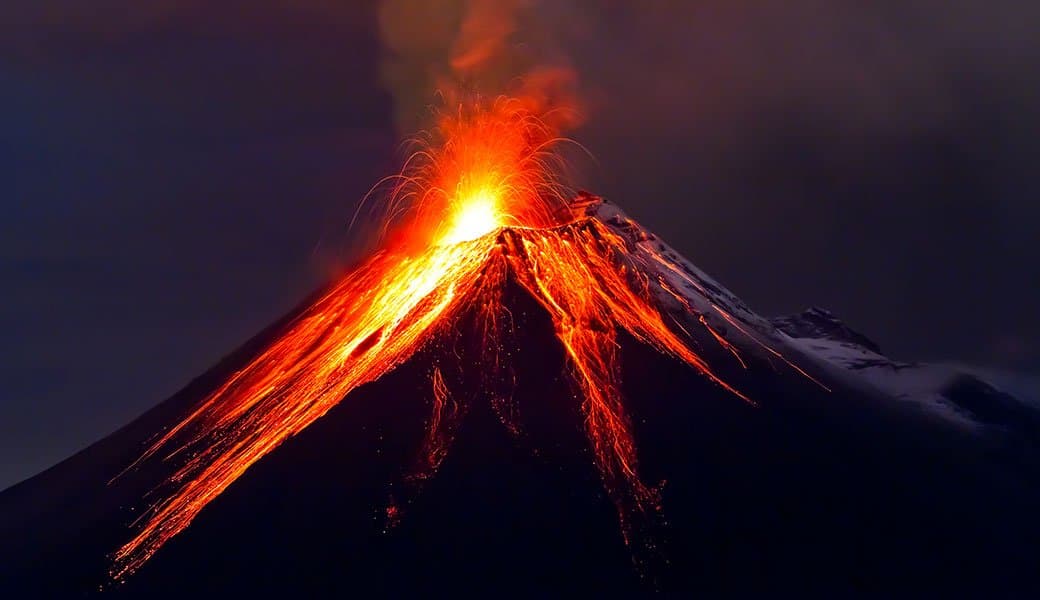
This prediction market addresses whether a major volcanic eruption, specifically one registering 6 or higher on the Volcanic Explosivity Index (VEI), will occur anywhere on Earth before the end of 2026. The VEI is a logarithmic scale from 0 to 8 that measures the explosivity of volcanic eruptions based on factors like volume of erupted material and plume height. A VEI 6 event, classified as 'colossal,' ejects at least 10 cubic kilometers of tephra and can have global climatic impacts. The market's resolution will be determined by the Smithsonian Institution's Global Volcanism Program, the authoritative global database for volcanic activity. Interest in this market stems from both scientific forecasting of geological hazards and the significant societal and economic disruptions such a rare but high-impact event would cause. While major eruptions are infrequent, their potential for altering global climate patterns, disrupting agriculture, and affecting air travel makes them a subject of intense study and public concern. The period leading to 2026 is of particular note as scientists monitor several active and potentially restless volcanoes worldwide that have the geological capacity for such powerful eruptions.
The historical record of VEI 6 and larger eruptions provides crucial context for assessing the likelihood of such an event by 2026. The 20th and 21st centuries have witnessed only a handful of VEI 6 events. The most recent was the 1991 eruption of Mount Pinatubo in the Philippines, which ejected approximately 10 cubic kilometers of material and caused a global temperature drop of about 0.5 degrees Celsius for several years. Before that, the 1912 eruption of Novarupta in Alaska was the largest of the century, with a VEI of 6. The 1883 eruption of Krakatoa in Indonesia is another classic example, also rated VEI 6. The recurrence interval for eruptions of this magnitude is estimated by geologists to be on the order of 50 to 100 years globally. Since Pinatubo in 1991, over three decades have passed without a VEI 6 event, leading some researchers to note that the planet is within a window where another such eruption becomes statistically more probable. These historical events demonstrate a pattern of profound local devastation combined with measurable, if temporary, global climatic impacts from the injection of sulfur dioxide into the stratosphere.
A VEI 6 volcanic eruption would have profound global consequences far beyond the immediate region of the blast. The primary global impact would be climatic. The massive injection of sulfur dioxide aerosols into the stratosphere would reflect sunlight, potentially leading to a period of global cooling for one to three years. This 'volcanic winter' effect could disrupt agricultural growing seasons worldwide, threatening food security and potentially causing economic instability. Furthermore, such an eruption would pose an extreme hazard to global aviation, as demonstrated by the 2010 Eyjafjallajökull eruption (a much smaller VEI 4 event) that paralyzed European air travel. A VEI 6 event could ground flights across continents for extended periods, severing global supply chains and causing billions in economic losses. The local and regional impacts would be catastrophic, including pyroclastic flows, widespread ashfall destroying infrastructure, and potential tsunamis if the volcano is coastal. The humanitarian and economic costs would be immense, requiring a massive international response.
As of late 2024, no volcano is exhibiting precursory activity that definitively indicates an imminent VEI 6 eruption. However, several volcanoes known for very large past eruptions remain actively monitored. These include Taal and Mayon in the Philippines, which have shown recent unrest, and volcanoes in the Aleutian Islands like Cleveland and Makushin. Globally, volcano observatories under the WOVO network continuously monitor seismic activity, ground deformation, gas emissions, and thermal signals. The scientific community emphasizes that while the probability of a VEI 6 eruption in any given year is low, the consequences are so high that sustained global monitoring and preparedness are essential. Research into long-term eruption forecasting and 'super-volcano' systems like Yellowstone, Campi Flegrei, and Toba continues, though these systems are not currently predicted to erupt at a VEI 6+ level in the near future.
The last confirmed volcanic eruption with a Volcanic Explosivity Index of 6 was the 1991 eruption of Mount Pinatubo in the Philippines. This eruption ejected an estimated 10 cubic kilometers of material, caused hundreds of deaths, and led to a global temperature decrease of approximately 0.5 degrees Celsius for several years.
Volcanoes located at subduction zones, where one tectonic plate slides beneath another, have the greatest potential for highly explosive, VEI 6 eruptions. High-risk regions include the Pacific Ring of Fire, encompassing the Aleutian Islands, the Cascades, Japan, the Philippines, and Indonesia. Specific volcanoes with a history of very large eruptions, like Taal or those in the Aleutian arc, are closely watched.
A VEI 6 eruption injects massive amounts of sulfur dioxide gas high into the stratosphere. There, it forms sulfate aerosols that reflect sunlight back into space, reducing the amount of solar energy reaching the Earth's surface. This can cause a temporary global cooling effect, often called a 'volcanic winter,' which can last for several years and disrupt agricultural patterns worldwide.
The Volcanic Explosivity Index is a logarithmic scale, meaning each whole number increase represents a tenfold increase in explosivity. A VEI 6 eruption ejects at least 10 cubic kilometers of material, while a VEI 7 eruption, classified as 'super-colossal,' ejects at least 100 cubic kilometers. VEI 7 events, like Tambora in 1815, are far rarer and have more severe global impacts.
Educational content is AI-generated and sourced from Wikipedia. It should not be considered financial advice.
Share your predictions and analysis with other traders. Coming soon!

No related news found
Add this market to your website
<iframe src="https://predictpedia.com/embed/HencYp" width="400" height="160" frameborder="0" style="border-radius: 8px; max-width: 100%;" title="Major volcano eruption (VEI ≥6) in 2026?"></iframe>