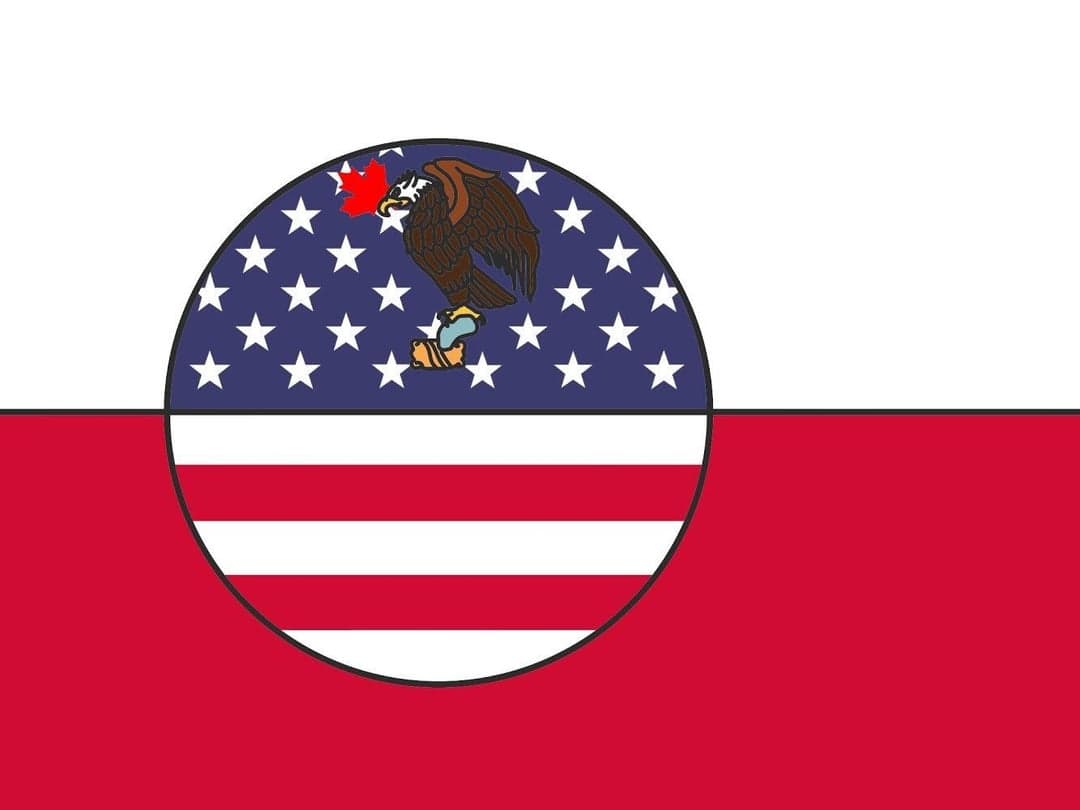
Will Trump acquire Greenland before 2027?
$35.67M
1
1
Will Trump acquire Greenland before 2027?
$35.67M
1
1
AI Analysis
Trader mode: Actionable analysis for identifying opportunities and edge
About This Event
This market will resolve to "Yes" if the United States officially announces that Greenland will come under US sovereignty by December 31, 2026, 11:59 PM ET. Otherwise this market will resolve to "No". Sovereignty is defined as the transfer of the majority of the territory of Greenland from its current status as an autonomous territory within the Kingdom of Denmark to being under the formal governance or jurisdiction of the United States, either as a state, territory, or other classification wit
This saved analysis is awaiting a background update. Its prices and claims may be outdated; compare them with the dated market data above.
Snapshot observed 2026-10-13T03:00:06.088Z. This analysis describes that snapshot and is not a live news update.
What the contract measures
This is a Polymarket market titled "Will Trump acquire Greenland before 2027?" [1]. It resolves "Yes" if "the United States officially announces that Greenland will come under US sovereignty by December 31, 2026, 11:59 PM ET," and "No" otherwise [1]. The rules define sovereignty as "the transfer of the majority of the territory of Greenland from its current status as an autonomous territory within the Kingdom of Denmark" to formal US governance or jurisdiction [1]. The saved excerpt cuts off partway through that definition, so the full classification language cannot be confirmed from this evidence [1].
The listed end time is 2027-01-01T04:59:00.000Z [1]. This matches the rule deadline of 11:59 PM ET on December 31, 2026, but the date in the rules is a resolution deadline, not an announced event date.
Reading the snapshot
The provider observation time is 2026-10-13T03:00:06 UTC, and the source was retrieved at 2026-10-13T04:08:08 UTC [1]. The prices below describe that observation, not a live quote. The saved outcomes are Yes at 0.0225 and No at 0.9775 [1]. These are snapshot prices, not executable quotes or verified probabilities. The recorded market status is active [1].
The evidence covers one market from one event, with no partial sampling flagged [1]. Because there is only one platform and one contract, there is no cross-platform or cross-contract comparison to draw. The evidence also contains no volume figures, so it says nothing about liquidity or how many traders hold positions.
What remains uncertain
The supplied evidence does not explain why the Yes price sits where it does. It contains no news, official statements, or other developments that would account for the snapshot. Whether a US announcement will occur before the deadline cannot be determined from this record.
The sample reflects only the saved provider event. The source notes that including all saved markets "does not establish that the providers list every possible real-world outcome" [1]. Because the observation is hours old at retrieval, the current status and prices should be checked on the live provider page before any reliance on them.
References
- Polymarket: Will Trump acquire Greenland before 2027?. Provider data observed 2026-10-13T03:00:06.088Z.
AI-generated analysis based on market data. Not financial advice.
Saved Oct 13, 2026 UTCOverview
This contract asks whether the United States will officially announce that Greenland will come under US sovereignty by December 31, 2026, at 11:59 PM ET. The provider's rules state that it resolves "Yes" if such an official announcement is made by that deadline, and "No" otherwise [1]. The contract's listed end time is 2027-01-01T04:59:00 UTC, which matches that December 31 deadline in Eastern Standard Time [1]. The rules define sovereignty as the transfer of the majority of Greenland's territory from its current status as an autonomous territory within the Kingdom of Denmark to the formal governance or jurisdiction of the United States, whether as a state, territory, or another classification [1]. The contract therefore turns on a formal announcement and a defined transfer of governance, not on rhetoric about acquisition or on informal statements of interest. The provider's excerpt for this contract describes the market as active at the time of observation [1]. That describes the provider record at the time it was saved, not the market's status today.
Historical Context
A diplomatic crisis began in 2025 when the Trump administration sought to annex Greenland [2]. The crisis intensified in early 2026, when Trump refused to rule out using military force for the annexation and threatened a 25% import tax on goods from several European nations unless Denmark ceded the territory [2]. Denmark's refusal was supported by the EU and several other NATO members, which revived earlier concerns about a US-EU trade war [2]. Within weeks, Trump backed down, pledging not to use force or tariffs to annex Greenland [2]. Wikipedia describes a longer pattern in which Trump has expressed a desire to expand US territory through both land purchases and military means across both presidencies [3].
Why It Matters
The contract measures whether a formal, official US announcement of sovereignty over Greenland will occur before the deadline [1]. Background reporting on the 2025 and 2026 disputes shows that the question has been widely discussed, but a discussion of annexation is not the same as a formal announcement that governance will transfer [1][2]. Because the rules require an official announcement that Greenland will come under US sovereignty, the contract's outcome depends on that specific event rather than on the broader political debate [1].
Snapshot context
The latest published provider snapshot for this topic was observed on 2026-10-13 at 03:00 UTC. It contains listings from Polymarket. Market descriptions and listed closing times define the contracts; they do not establish that the real-world outcome has occurred. This article does not include a separately verified news update. [1]
Frequently Asked Questions
What event must happen for this contract to resolve Yes?
The contract resolves Yes if the United States officially announces that Greenland will come under US sovereignty by December 31, 2026, 11:59 PM ET [1]. Sovereignty means transferring the majority of Greenland's territory to formal US governance or jurisdiction [1].
Does a Wikipedia article about the Greenland crisis determine the outcome?
No. The resolution rule refers to an official announcement by the United States [1]. The Wikipedia articles in the supplied background provide historical context about the 2025 and 2026 disputes and do not themselves resolve the contract [2][3].
What happened to the 2026 pressure campaign?
Sources describe that within weeks of threatening military force and tariffs, Trump backed down and pledged not to use force or tariffs to annex Greenland [2]. This describes the historical sequence in the supplied sources and does not indicate what has happened since the sources were retrieved.
AI-written background. References identify the evidence used; Wikipedia links under Learn More are additional reading. Prices and provider rules are dated snapshots. This is not financial advice.
Market Insights
Price gaps of 2 pp+
0
Saved price pairs
0
No exact saved pairs with both binary Yes prices are available.
Price differences do not establish arbitrage. Check each pair's review, current order prices, fees and settlement rules.