$1.24M
1
1

1 market tracked

No data available
| Market | Platform | Price |
|---|---|---|
![]() | Poly | 66% |
$1.24M
1
1
Trader mode: Actionable analysis for identifying opportunities and edge
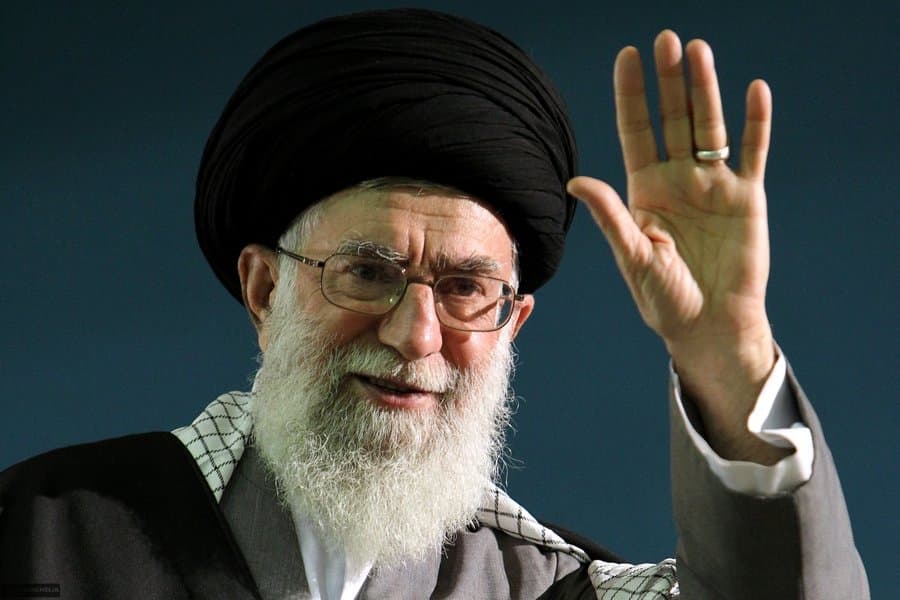
This market will resolve to "Yes" if Iran's Supreme Leader, Ali Khamenei, is removed from power for any length of time by December 31, 2026, 11:59 PM ET. Otherwise, this market will resolve to "No". Khamenei will be considered to be removed from power if he resigns, is detained, or otherwise loses his position or is prevented from fulfilling his duties as Supreme Leader of Iran within this market's timeframe. The primary resolution source for this market will be a consensus of credible reporti
Prediction markets currently assign a 21% probability that Supreme Leader Ali Khamenei will be removed from power by January 31, 2026. This price, translating to a roughly 1 in 5 chance, indicates the market views a leadership change within this 16-month window as a significant but unlikely tail risk. The market has attracted substantial liquidity, with over $27.7 million in volume, signaling serious trader interest despite the low base probability.
The primary factor suppressing the "Yes" probability is the entrenched political and religious structure of the Islamic Republic. The Supreme Leader holds a constitutionally protected, lifelong position, and Khamenei has systematically consolidated power over three decades, making a forced removal through institutional channels nearly impossible. Furthermore, at age 85, the dominant market narrative likely centers on succession due to natural causes rather than political removal. However, the 21% price is notably non-zero, reflecting persistent underlying risks. These include Khamenei's known health issues, the constant low-grade threat of internal regime fissures, and historical precedent, as Iran's first Supreme Leader, Ruhollah Khomeini, died in office.
The odds could see volatility from two primary catalysts. First, any credible official report or visible evidence of a significant, acute deterioration in Khamenei's health would cause the "Yes" probability to spike, as markets would price a higher likelihood of death in office before the deadline. Second, a major escalation in domestic unrest that directly challenges the core pillars of the regime could increase pricing for a political ouster, though this is considered a lower-probability scenario. The market will be most sensitive to news from Iranian state media or intelligence reports in the coming months, with the probability likely to drift upward as the January 2026 deadline approaches if Khamenei's public appearances become less frequent.
AI-generated analysis based on market data. Not financial advice.
This prediction market addresses the possibility of Ali Khamenei's removal as Supreme Leader of Iran before January 31, 2026. The Supreme Leader is the highest-ranking political and religious authority in Iran, holding ultimate power over the military, judiciary, and media. Khamenei has held this position since 1989, succeeding the founder of the Islamic Republic, Ruhollah Khomeini. His potential removal, whether through resignation, detention, or incapacitation, would represent the most significant political transition in Iran since the 1979 Revolution. The market timeframe coincides with a period of heightened domestic unrest, economic challenges, and international pressure on Iran's government. Interest in this topic stems from Khamenei's advanced age, persistent anti-government protests, and questions about the regime's long-term stability. Observers are closely monitoring succession mechanisms within Iran's complex political system, where power is concentrated among a small clerical and military elite. The outcome carries profound implications for Iran's domestic politics, regional influence, and international relations.
The position of Supreme Leader was established by Iran's 1979 Constitution following the Islamic Revolution. Ruhollah Khomeini served as the first Supreme Leader from 1979 until his death in 1989, creating the template for theocratic rule. Ali Khamenei, then president, was selected by the Assembly of Experts to succeed him, despite lacking Khomeini's religious credentials as a Marja' (source of emulation). This established the precedent of succession within the system. The 2009 Green Movement protests following Mahmoud Ahmadinejad's disputed re-election represented the most serious challenge to Khamenei's authority before recent unrest, but were ultimately suppressed. The office has never been vacated except by death, making scenarios of resignation or removal unprecedented. Iran's history of political transitions is limited, with power typically transferred through consensus among conservative elites rather than public mandate or constitutional crisis.
Khamenei's removal would trigger Iran's first leadership transition in over 35 years, testing the resilience of its political institutions. The succession process could expose factional divisions between hardliners, pragmatists, and military elements, potentially leading to internal conflict or a power struggle. Regionally, a leadership change could alter Iran's foreign policy, affecting conflicts in Syria, Yemen, and Lebanon, as well as nuclear negotiations with Western powers. Domestically, economic policy might shift depending on the successor's orientation, impacting inflation that exceeded 40% in 2023 and unemployment, particularly among youth. Socially, any transition could embolden protest movements or lead to further repression as competing factions consolidate power. The stability of global energy markets could be affected, given Iran's position as a major oil producer. International relations, especially with the United States and Gulf states, would enter a period of uncertainty as new leadership establishes its priorities.
As of late 2024, Ali Khamenei remains in power despite ongoing economic challenges and periodic protests. His public appearances continue, though sometimes with noticeable physical limitations. The government maintains tight control through security forces, with the IRGC playing an expanded domestic role. Succession planning appears to be occurring behind closed doors, with no official designation of a successor. International sanctions continue to pressure Iran's economy, while regional tensions persist. The next presidential election in 2025 may serve as an indicator of elite consensus ahead of any potential leadership transition.
The Supreme Leader is selected by the Assembly of Experts, an 88-member body of Islamic scholars elected by the public. The Assembly monitors the Leader's performance and can theoretically remove him, though this has never occurred. The constitution requires the Leader to be a Marja' (source of emulation) or recognized Islamic jurist.
Upon the Supreme Leader's death, the Assembly of Experts must convene to select a successor. A temporary leadership council consisting of the president, head of judiciary, and a clerical member from the Guardian Council would assume duties during the transition. This process has only been used once, following Khomeini's death in 1989.
Yes, the constitution allows for resignation, though no Supreme Leader has ever resigned. Article 111 states that if the Leader resigns or is removed, the Assembly of Experts must proceed to select a new Leader. The resignation process would likely involve formal notification to the Assembly.
Potential successors include President Ebrahim Raisi, Khamenei's son Mojtaba Khamenei, and senior figures like Alireza Arafi or Ahmad Jannati. However, no candidate has been officially endorsed, and succession likely depends on backroom negotiations among conservative elites and military leaders.
The IRGC wields significant political and economic power, controlling security forces and major industries. Its leadership's preferences could determine the succession outcome, as they can ensure stability or challenge candidates. The IRGC has increasingly intervened in domestic politics since the 2009 protests.
The Assembly of Experts has constitutional authority to supervise and potentially remove the Supreme Leader if he becomes incapable of fulfilling duties. However, the Assembly has never exercised this power, and its members are closely vetted by the Guardian Council, limiting independence.
Educational content is AI-generated and sourced from Wikipedia. It should not be considered financial advice.
Share your predictions and analysis with other traders. Coming soon!

No related news found
Add this market to your website
<iframe src="https://predictpedia.com/embed/I2ocJv" width="400" height="160" frameborder="0" style="border-radius: 8px; max-width: 100%;" title="Khamenei out as Supreme Leader of Iran by December 31, 2026?"></iframe>