$26.88K
1
8

$26.88K
1
8
Trader mode: Actionable analysis for identifying opportunities and edge
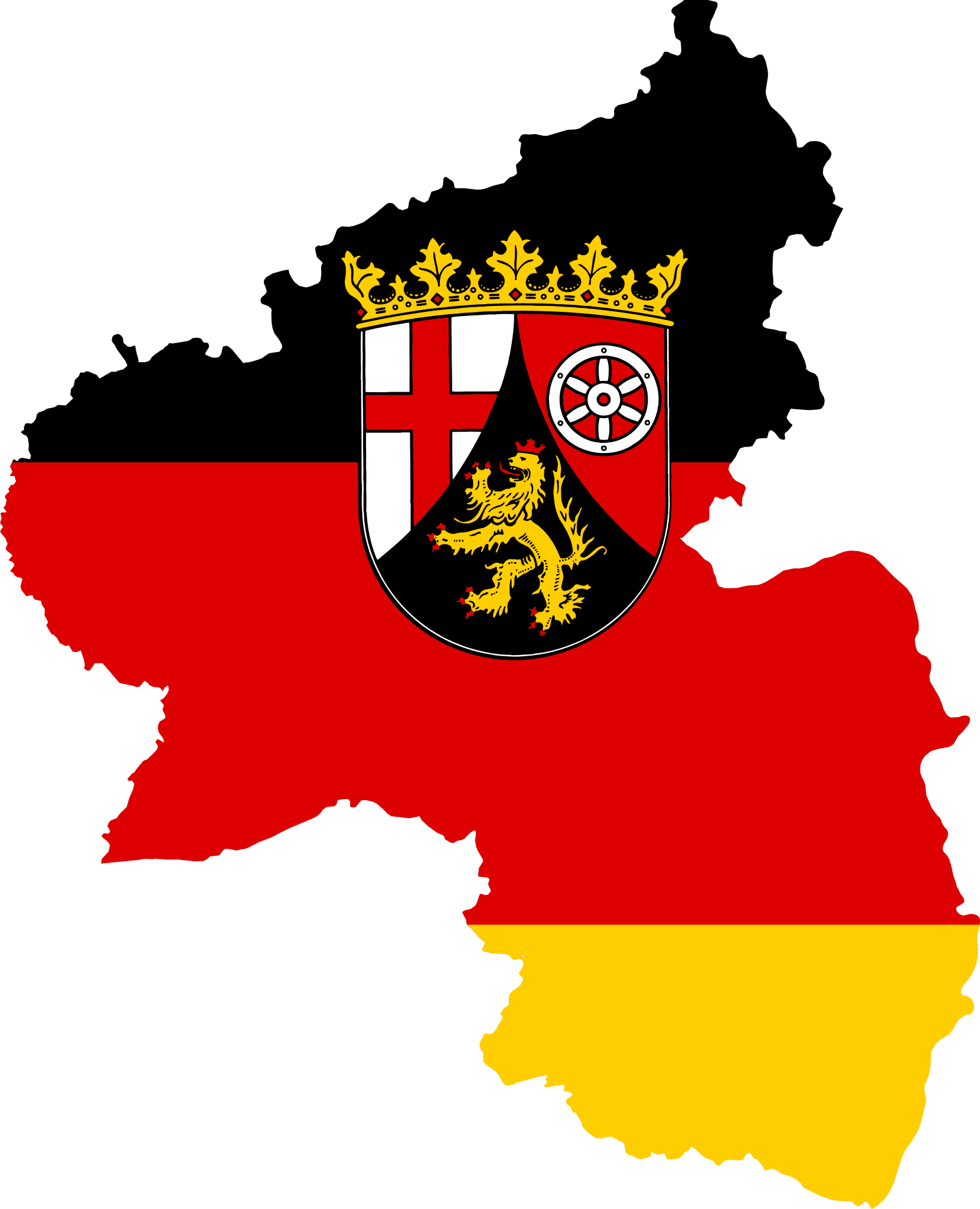
Parliamentary elections to elect the Landtag of Rhineland-Palatinate (Rheinland-Pfalz) are scheduled to take place on March 22, 2026. This market will resolve to the political party that wins the second-greatest number of seats in the formal deliberative assembly of Rhineland-Palatinate (Landtag) as a result of this election. If voting in the Rhineland-Palatinate election for the Landtag does not occur by July 31, 2026, this market will resolve to "Other". The named parties or coalitions will
Prediction markets currently give the Christian Democratic Union (CDU) a very slight edge to win the most seats in the Rhineland-Palatinate state election. The odds translate to roughly a 54% chance, which is essentially a coin flip. This means traders collectively see the race as extremely tight, with the CDU having a small but meaningful advantage over the incumbent Social Democratic Party (SPD).
Two main factors explain this nearly even split. First is the unique political history of Rhineland-Palatinate. The SPD, led by Minister-President Malu Dreyer, has governed the state since 2013. However, the CDU held power for decades before that. This creates a competitive dynamic where a change in government is always a real possibility, unlike in some other German states where one party dominates.
Second, national political trends are influencing the state race. The CDU is currently leading in national polls, and the federal governing coalition of the SPD, Greens, and Free Democrats (FDP) is unpopular. State elections often function as a protest vote against the national government. Traders are likely weighing whether this national dissatisfaction will be strong enough to overcome the SPD's local incumbency advantage in Rhineland-Palatinate.
The election is set for March 22, 2026. The most important signals before then will be the final state-level polls in the two weeks before voting. These will show if the CDU's narrow lead holds or if the SPD is gaining momentum. Also watch for any major campaign events or debates that could shift voter opinions in the final stretch. Since the race is so close, a single misstep or a particularly strong debate performance could tip the scales.
Prediction markets have a solid track record in forecasting election outcomes, often performing as well as or better than polls, especially in close races. They are good at aggregating many types of information, including polls, expert analysis, and sentiment. However, their accuracy improves as you get closer to the election. With the vote still over a year away, these odds are an early snapshot and will almost certainly shift. The main limitation is that unexpected events, a major scandal, or a change in party leadership could dramatically reshape the race in ways the current market cannot foresee.
Prediction markets currently price a 54% probability that the Christian Democratic Union (CDU) will win the most seats in the Rhineland-Palatinate (Rheinland-Pfalz) state election on March 22, 2026. This slim majority indicates the market views a CDU victory as marginally more likely than not, but the race is effectively a toss-up. The opposing "No" share trades at 46%, reflecting significant uncertainty. With $511,000 in total volume, the market has moderate liquidity, suggesting trader conviction is still forming.
Two primary factors shape the current pricing. First is the historical dominance of the Social Democratic Party (SPD) in the state. The SPD, led by Minister-President Malu Dreyer, has governed Rhineland-Palatinate since 1991. This incumbency advantage is a powerful force, making any challenger an underdog until proven otherwise. Second, national political trends are exerting pressure. The CDU leads in national polling, and the federal governing "traffic light" coalition of SPD, Greens, and FDP is deeply unpopular. Traders are likely weighing whether this national dissatisfaction will be strong enough to break the SPD's 35-year hold on the state, which explains the nearly even odds.
The next three weeks will be decisive as the final campaign unfolds. A major shift could come from state-specific polling released in the final days before the vote. If polls show the CDU breaking clearly ahead, its share price will surge. Conversely, evidence of the SPD consolidating its traditional lead would sink the CDU's odds. The performance of smaller parties is also critical. If the far-right Alternative for Germany (AfD) or the Free Democratic Party (FDP) poll near or above the 5% threshold to enter parliament, they could splinter the vote in ways that disproportionately help either major party. Watch for final rallies and televised debates, as a major gaffe or standout performance could move a small number of decisive voters.
AI-generated analysis based on market data. Not financial advice.
The Rheinland-Pfalz Parliamentary Election Winner prediction market focuses on determining which political party will secure the most seats in the Landtag of Rhineland-Palatinate following the state election scheduled for March 22, 2026. Rhineland-Palatinate is one of Germany's sixteen federal states, with its own parliament that holds significant legislative power over regional matters including education, policing, and cultural affairs. The election will determine the composition of the state government for the next five-year term, potentially leading to a continuation or change in political leadership. This specific market resolves based on the party winning the greatest number of seats in the formal Landtag assembly. If the election does not occur by July 31, 2026, the market resolves to 'Other'. Interest in this election stems from its position as a key political bellwether in southwestern Germany. The state has been governed by a coalition led by the Social Democratic Party (SPD) since 2016 under Minister-President Malu Dreyer. The 2026 contest will test whether the SPD can maintain its dominance against a resurgent Christian Democratic Union (CDU) and the continued presence of smaller parties like the Free Democratic Party (FDP), Alliance 90/The Greens, and the Alternative for Germany (AfD). The outcome will influence national politics by affecting the balance of power in the Bundesrat, Germany's upper legislative house where state governments are represented. Recent developments have increased scrutiny on this race. The 2021 state election saw the SPD win 39 seats, the CDU 31, the Greens 10, the AfD 9, and the FDP 6. Since then, national issues like energy policy following the Russian invasion of Ukraine, inflation, and migration have reshaped regional political debates. The performance of the AfD, which entered the Landtag for the first time in 2021, adds another layer of complexity. Observers are watching whether traditional centrist parties can hold their coalition or if new alliances will be necessary. People follow this market because state elections in Germany often signal shifts in national voter sentiment. The results will directly impact regional policies on infrastructure, education funding, and environmental regulations. Investors and political analysts use prediction markets to gauge probabilities of various outcomes, which can inform broader assessments of German political stability. The market provides a quantified measure of confidence in different electoral scenarios.
Rhineland-Palatinate has a distinct political history within Germany. The state was created in 1946 by the French military administration, merging parts of Prussia, Hesse, and Bavaria. For decades, political power alternated between the SPD and CDU. From 1971 to 1987, the SPD governed under Minister-President Bernhard Vogel, who later switched to the CDU and led the government from 1988 to 1991. This period established a pattern of relatively stable coalitions. The 1991 election marked a turning point when the SPD, led by Rudolf Scharping, formed a coalition with the FDP, ending 44 years of CDU-led governments. Since then, the SPD has maintained control, with only one interruption from 2006 to 2011 when Kurt Beck's SPD governed with the FDP. The 2016 election produced the first 'traffic light' coalition (SPD, FDP, Greens) in any German state, a model later adopted nationally in 2021. This coalition has governed since, making Rhineland-Palatinate a laboratory for three-party alliances. Electoral thresholds have shaped the Landtag's composition. The 5% clause, established in 1947, has prevented many smaller parties from gaining representation. The Greens first entered the Landtag in 1983. The AfD's entry in 2021 marked the first time a far-right party won seats since the Deutsche Reichspartei in 1959. Voter turnout has declined from 81.3% in 1971 to 69.8% in 2021, reflecting broader trends of political disengagement.
The election outcome will determine which policies are implemented in a state of 4.1 million people. A change in government could alter funding priorities for schools, roads, and broadband internet. The state's important wine industry, which employs about 50,000 people, depends on agricultural and tourism policies set in Mainz. Environmental regulations affecting the Rhine River and Moselle Valley are also decided at the state level. Politically, the results influence Germany's federal system. Rhineland-Palatinate holds four votes in the Bundesrat, where state governments vote on national legislation. A CDU victory would give the opposition more leverage against Chancellor Olaf Scholz's SPD-led federal coalition. The performance of the AfD will be analyzed for signs of far-right consolidation in western Germany. International observers view German state elections as indicators of European political stability.
As of late 2024, the SPD-led coalition government continues to govern with a majority of 55 out of 101 seats. Minister-President Malu Dreyer announced she will lead the SPD into the 2026 election. The CDU selected former interior minister Roger Lewentz as their lead candidate in October 2024, replacing Christian Baldauf. Campaign preparations are underway, with parties drafting their state election platforms. Recent opinion polls show a tight race. A Forschungsgruppe Wahlen poll from November 2024 projected the SPD at 32%, CDU at 30%, Greens at 12%, AfD at 11%, and FDP at 5%. The FDP hovering near the 5% threshold creates uncertainty about whether the current coalition could be renewed. Key issues in early campaigning include school quality, affordable housing, and support for farmers.
Voters cast two ballots: one for a direct candidate in their constituency and one for a party list. The 101 seats are allocated proportionally based on second votes, with a 5% threshold required for party list representation. Directly elected candidates always enter the Landtag.
The traffic light coalition refers to the governing alliance of the SPD (red), FDP (yellow), and Greens (green). Formed after the 2016 election, it was Germany's first state-level coalition of these three parties. The coalition holds 55 of 101 seats in the current Landtag.
The Christian Democratic Union last won the most votes in a state election in 1987, securing 45.1% under Minister-President Bernhard Vogel. The CDU last led the government in 1991 before losing power to an SPD-FDP coalition.
Parties must form a coalition to achieve at least 51 seats. If no coalition emerges, new elections could be called, though this has never happened in Rhineland-Palatinate. Typically, weeks of negotiations follow the election results.
The state is divided into 52 constituencies for Landtag elections. Each constituency elects one representative directly, while the remaining seats are filled from party lists to achieve proportional representation.
Educational content is AI-generated and sourced from Wikipedia. It should not be considered financial advice.
8 markets tracked

No data available
| Market | Platform | Price |
|---|---|---|
![]() | Poly | 49% |
![]() | Poly | 46% |
![]() | Poly | 4% |
![]() | Poly | 0% |
![]() | Poly | 0% |
![]() | Poly | 0% |
![]() | Poly | 0% |
![]() | Poly | 0% |


No related news found
Add this market to your website
<iframe src="https://predictpedia.com/embed/IPjd_U" width="400" height="160" frameborder="0" style="border-radius: 8px; max-width: 100%;" title="Rheinland-Pfalz Parliamentary Election: 2nd Place"></iframe>